

Magnetic Block Challenges for Rainy Days: 30-Minute Building Ideas
NOVEMBER 21, 2025

The cake is ordered, decorations hang, and fifteen kids arrive in twenty minutes. Your carefully planned craft station lasted exactly three minutes before devolving into glitter warfare. The outdoor games? Rain cancelled those dreams. But those magnetic tiles gathering dust could become your party salvation—if you know which games actually work with groups of sugar-fueled birthday guests.
These aren't theoretical activities from parenting blogs written by people who've never managed twelve seven-year-olds simultaneously. These games have survived real birthday parties, where attention spans measure in seconds and "that's not fair" becomes the party soundtrack. Each activity accounts for different skill levels, competitive spirits, and that one kid who always tries to eat the game pieces. Let's turn those magnetic tiles into party gold.
Players: 6-16 kids
Age Range: 5-12 years
Duration: 15-20 minutes
Tiles Needed: 100+ (divided equally)
Chaos Level: Controlled competitive
Divide party guests into teams of 3-4 kids. Each team receives an identical set of magnetic tiles counted out beforehand (prevents the "they got more" meltdown). The challenge: build the tallest freestanding tower in exactly 10 minutes. But here's the twist that prevents domination by one builder—every team member must add pieces in rotation. No skipping turns, no helping during someone else's turn.
This rotation rule brilliantly manages different skill levels. The eight-year-old engineering prodigy can't monopolize building while younger teammates watch. The nervous five-year-old must participate but only handles one piece at a time, reducing pressure. Teams naturally develop strategies—some go for solid foundations, others risk everything on height. Watch alliances form as kids coach each other through turns.
Use a visible timer (online classroom timers work perfectly on tablets). Play energetic music that stops when time expires—creates urgency without adult shouting. Measure towers with a tape measure for official results. Award categories beyond just height: "Most Creative Design," "Best Teamwork," "Most Dramatic Collapse" (kids love this one). Multiple awards prevent single-winner disappointment.
Position teams far enough apart to prevent "accidental" sabotage but close enough for competitive energy. Kids feed off neighboring team excitement, spurring creative solutions and faster building.
Players: 8-20 kids
Age Range: 6-14 years
Duration: 20-25 minutes
Tiles Needed: 60-80 total
Chaos Level: Energetic but manageable
Create two lines of kids facing building stations. The first player in each line draws a card showing simple objects (house, car, flower, robot, pizza). They have 45 seconds to build that object using magnetic tiles while their team guesses. Here's the relay twist: once guessed correctly, the builder runs to the back of the line and the next player draws a new card. First team to correctly guess 10 objects wins.
The beauty lies in speed versus clarity tension. Kids must build fast enough to win but clear enough for teammates to guess. A rushed triangle-square combo might be a house or mountain or tent. This ambiguity creates hilarious guessing chains where "IS IT A DINOSAUR?" becomes the default response to everything. The running component burns energy while waiting kids stay engaged by guessing.
Adapt difficulty by age: younger kids get concrete objects (sun, tree, dog), older kids get abstract concepts (happiness, speed, confusion). Mix ages within teams rather than against each other. Include picture cards for non-readers. The physical movement between turns prevents restless waiting, while the guessing component keeps everyone involved even when not building.
Players: 4-12 kids
Age Range: 7-13 years
Duration: 30 minutes total
Tiles Needed: 150+ tiles
Chaos Level: Focused collaboration
The entire party collaborates to build one massive maze on the floor. Section the building area into zones—each small group owns one section. The challenge: sections must connect perfectly to create a continuous path from START (one corner) to FINISH (opposite corner). After 15 minutes of building, kids take turns navigating remote control cars or hexbug robots through the completed maze.
This collaborative approach eliminates competition anxiety while maintaining engagement. Kids must communicate across zones: "We're putting our exit on the left side!" "Our path is two tiles wide!" The forced cooperation creates natural party mixing—shy kids integrate through building tasks rather than forced social interaction. The shared goal generates collective investment in success.
During navigation phase, create multiple challenges: fastest time through maze, reverse navigation, blindfolded driving with verbal directions from teammates. If you lack remote control vehicles, use marbles with tilting techniques or have kids navigate stuffed animals through on hands and knees. The building phase calms energy while the navigation phase ramps excitement back up.
Players: 6-15 kids
Age Range: 4-10 years
Duration: 10-15 minutes
Tiles Needed: 5-8 per child
Chaos Level: High energy with calm moments
While music plays, kids dance around holding their magnetic tiles. When music stops, announce a building challenge: "Build something taller than your head!" or "Create an animal!" Kids have 30 seconds to build before music resumes. Here's the twist: structures must remain standing while dancing. Anyone whose structure falls sits out one round (but gets special tile-sorting helper job to stay involved).
This game brilliantly manages party energy cycles. Dancing burns excess excitement while building moments require focus. The quick challenges prevent perfectionism—kids learn to build fast and stable rather than complex. Simple challenges work best: "Make a square!" "Build something blue!" "Create the letter T!" The combination of movement and construction appeals to different play styles.
Adapt intensity by music choice—use upbeat party music for maximum energy or calmer tunes as the party winds down. For younger kids, allow structures to be held while dancing. For older kids, add complexity: structures must connect to a neighbor's or incorporate specific color patterns. The elimination element stays gentle since kids return next round.
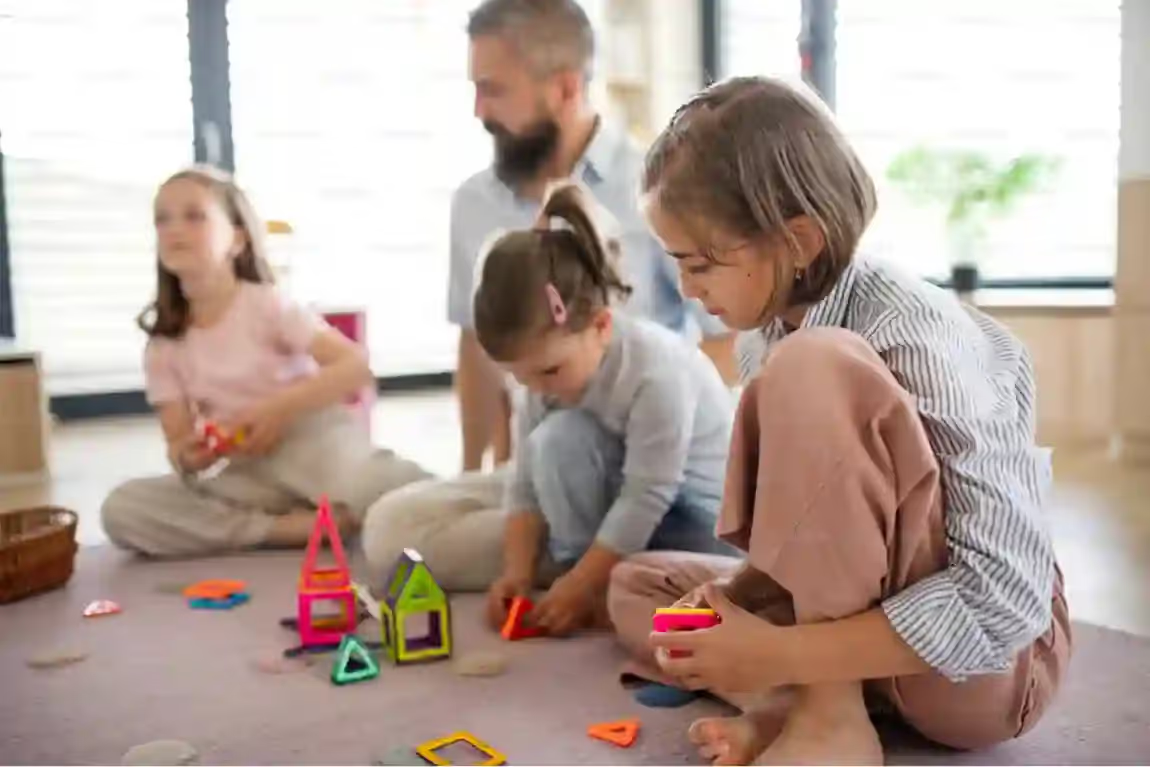
Assign "party jobs" to maintain involvement: Tile Keeper (sorts pieces), Time Master (watches timer), Music Manager (controls playlist), Score Keeper (tracks points), Photographer (takes building photos). Rotate jobs between games so everyone gets preferred roles.
Kids who "lose" or finish early become judges or helpers rather than spectators. This prevents hurt feelings and wandering guests who might discover where you hid the extra cake.
Players: 5-15 kids
Age Range: 5-11 years
Duration: 20 minutes
Tiles Needed: 100-150 tiles
Chaos Level: Creative collaboration
The entire party works together building one enormous magnetic tile creature. Assign body parts to different kids or pairs: "You two make the head," "You three build legs," "You design wings." Set a timer for 10 minutes building time. The catch: body parts must connect properly to create one unified creature. After assembly, the group collectively names their beast and creates its backstory.
This eliminates competition while maintaining individual contribution importance. Each child points proudly to "their" part of the creature. The forced collaboration requires communication: "How tall are you making the neck?" "Should we add claws or hooves?" Natural leadership emerges as some kids coordinate between groups. The storytelling phase validates different creativity types—quiet builders might excel at narrative creation.
Document the creation process with photos showing construction stages. Create a "Monster Certificate" on the spot with the creature's name, special powers (kids vote on these), and all builders' signatures. This becomes a party favor everyone contributed to. For themed parties, adapt the creature: build a dragon for fantasy parties, a robot for space themes, or a unicorn for magical celebrations.
Players: 6-12 kids
Age Range: 7-14 years
Duration: 15-20 minutes
Tiles Needed: 30-40 per team
Chaos Level: Focused competition
Build a simple structure using 10-15 tiles where everyone can see. Give teams 30 seconds to study it. Then hide the original and give teams 2 minutes to recreate it from memory. Points awarded for accuracy: correct pieces in correct positions. After each round, the winning team creates the next memory structure, giving everyone a chance to be the "puzzle master."
This game rewards observation over speed, giving methodical kids an advantage over typical party dynamics where loud and fast usually wins. The study phase creates rare party moments of intense quiet concentration. During building, teams naturally develop systems—one kid remembers colors, another counts pieces, someone else memorizes the shape. These organic strategies emerge without adult direction.
Adjust difficulty progressively: start with 2D patterns flat on tables, advance to 3D structures, then add specific color patterns or orientation requirements. For mixed ages, older kids can coach younger teammates but can't touch pieces during building. This mentorship dynamic often produces surprising patience from typically competitive older children.
Players: 8-16 kids
Age Range: 8-13 years
Duration: 25-30 minutes
Tiles Needed: 120+ varied pieces
Chaos Level: Strategic negotiation
Each team receives random tile sets—deliberately uneven. One team gets all squares, another all triangles, another just small pieces. Teams must build specific structures shown on challenge cards (house with triangular roof, bridge with square supports). The twist: teams can trade pieces, but only through negotiated deals. "We'll give you three triangles for five squares" becomes the party soundtrack.
This game teaches resource management and negotiation without feeling educational. Kids learn that hoarding pieces backfires—you need trading partners willing to deal. Natural economists emerge, creating three-way trades and future promise agreements. The initial unfairness actually increases engagement as teams strategize around limitations rather than complaining about inequality.
Set trading rules to prevent chaos: one spokesperson per team for negotiations, trades happen only during designated "market open" periods (every 5 minutes for 60 seconds), all trades are final. Create a trading post area where representatives meet, adding structure to negotiations. Award points for completed structures plus bonus points for creative solutions using limited resources.
Tile Toss Challenge: Toss tiles into buckets from increasing distances. Different tiles score different points.
Human Magnetic Chain: Kids hold tiles and connect in a line without dropping pieces.
Speed Sort: Race to separate tiles by color/shape into containers.
Magnetic Telephone: Build a simple shape, whisper its description down the line, last person builds what they heard.
Players: 6-14 kids
Age Range: 8-14 years
Duration: 15-20 minutes
Tiles Needed: 20-30 per pair
Chaos Level: Hilarious cooperation
Partners work together: one blindfolded builder, one verbal guide. The guide cannot touch pieces but must direct their partner to build specific structures. "Pick up the square… no, your other left… now connect it to the triangle… higher… HIGHER!" The inevitable miscommunications create party-wide laughter without anyone feeling targeted.
Start with simple 2D patterns laid flat: "Make a square using four pieces." Progress to 3D challenges: "Build a pyramid." The brilliance lies in role reversal—often the quiet kid gives clearest instructions while the usual leader struggles to follow directions. This natural humbling creates empathy and appreciation for communication clarity.
Switch roles halfway through so everyone experiences both positions. For safety, use bandanas or sleep masks rather than tight blindfolds, seat builders at tables to prevent wandering, and clear the building area of obstacles. Award points for successful completion but give special recognition for "Best Communication" and "Most Patient Guide" to encourage positive interaction over speed.
Players: 5-12 kids
Age Range: 6-12 years
Duration: 20 minutes creating + 5 minutes runway
Tiles Needed: 40-50 per child
Chaos Level: Creative expression
Kids create wearable accessories using magnetic tiles: crowns, shields, wings (attached to cardboard backing), magic wands, or armor pieces. Provide ribbon, elastic bands, and cardboard bases for attaching tiles into wearable art. The magnetic properties allow easy adjustments without permanent commitment—perfect for indecisive designers.
This activity shifts party energy from competitive to creative. Every child becomes a designer, making something uniquely theirs. The lack of "correct" outcomes means success for every participant. Shy kids often bloom during this activity, proudly wearing elaborate tile crowns they'd never verbally describe. The runway show finale gives everyone their moment of attention without competition pressure.
Supply elastic bands and hole punchers for attaching pieces to wear. Create categories for the runway show where everyone wins something: "Most Colorful," "Best Use of Triangles," "Most Likely to Deflect Laser Beams," "Supreme Ruler of the Tile Kingdom." Take photos of each designer with their creation for party favors.
The Buddy System: Pair each younger child with an older "building buddy" for guidance without takeover.
Rotating Roles: Older kids are "architects" (planning), younger ones are "builders" (placing pieces), then switch.
Handicap System: Older kids use non-dominant hand or build with eyes closed for 30-second periods.
Teaching Points: Older kids earn bonus points for successfully teaching younger teammates new building techniques.
Players: 8-20 kids
Age Range: 5-10 years
Duration: 15-20 minutes
Tiles Needed: 100+ tiles
Chaos Level: Controlled exploration
Hide magnetic tiles throughout the party space before guests arrive. Create team "building cards" showing structures that require specific pieces: "Build a boat using 4 squares, 3 triangles, and 2 rectangles." Teams hunt for exact pieces needed, then build their assigned structure. First team to complete all five building cards wins the treasure (party favor bags).
This game brilliantly manages party space usage—kids spread out searching rather than crowding one area. The specific piece requirements prevent hoarding; teams only grab what they need. Hidden tiles in plain sight (stuck to metal furniture legs, filing cabinets, or appliances) create "aha!" moments when discovered. The building component ensures found pieces get used rather than just collected.
Create varying difficulty zones: easy finds in obvious places for younger kids, challenging spots for older hunters. Use the magnetic properties creatively—tiles under metal chairs, on radiators, or stuck to cookie sheets hung like pictures. Include "special power" tiles marked with stickers that can substitute for any piece, adding strategic choices to the hunt.
Magnetic tile games adapt beautifully to themed birthday parties without requiring completely different supplies. For superhero parties, the Team Tower Showdown becomes "Building the Tallest Skyscraper" with villains threatening to knock them down. The Build-A-Beast challenge transforms into creating your own superhero with special powers. Kids design superhero logos using tiles laid flat as emblems they can photograph and take home digitally.
Princess and fantasy themed parties lend themselves perfectly to castle building competitions. Teams construct the grandest palace in limited time, with bonus points for including specific elements like towers, gates, or throne rooms. The Magnetic Tile Costume Creation becomes crown and jewelry design, with each child creating their royal regalia. Add storytelling elements where kids present their castles and explain which fantasy creature lives there or what magical powers the building possesses.
Space and science parties can frame the Great Magnetic Maze Race as navigating alien terrain or creating space station corridors. The Trading Post Construction Game becomes intergalactic resource exchange between planets with different materials. Kids build rockets, satellites, or alien spacecraft, then present their creations explaining their cosmic missions. The inherent engineering aspect of magnetic tiles aligns naturally with science themes, making activities feel cohesive with party concepts.
Dinosaur parties transform tiles into building prehistoric habitats. Teams compete to create the most impressive dinosaur environment, earning points for including elements like volcanoes, caves, or water features. The Speed Building Memory Game uses dinosaur figures as references—kids must build enclosures from memory that would realistically house each species. The collaborative maze becomes a dinosaur obstacle course that toy dinosaurs navigate, with appropriate hazards and safe zones kids design cooperatively.
Timing magnetic tile games around food service prevents the dreaded energy crash that ruins parties. Plan your most active game right before serving food—the Musical Magnetic Statues works perfectly here, burning off pre-meal energy while building appetite. The transition from game to tables happens naturally as kids wind down from dancing. Never attempt high-energy games immediately after cake service; the sugar rush combined with full stomachs creates disaster conditions.
During cake and food service, convert waiting time into low-key magnetic tile entertainment. Set up a quiet building station where early finishers can create freestyle while slower eaters complete meals without pressure. This prevents the chaos of kids finishing at different times with nothing to do. Provide challenge cards with suggested builds, but keep this phase completely optional and non-competitive to maintain calm energy levels.
The post-cake period typically brings the most challenging party phase—kids are full, sticky, and experiencing sugar effects while approaching the tired stage. This proves the ideal time for collaborative activities requiring focus but not intense physical energy. The Speed Building Memory Game works excellently here, as does the Blindfolded Builder Trust Game. The combination of full stomachs and required concentration naturally moderates activity intensity, preventing running and roughhousing that leads to accidents.
Consider making magnetic tile sculptures part of your party favor strategy. Each child creates a small wearable crown or magic wand, which then gets photographed professionally before carefully transporting home. This provides natural wind-down activity, creates personalized favors children actually value, and gives parents a memorable activity photo. Supply small boxes or bags specifically designed for safely transporting tile creations, acknowledging the difficulty of moving magnetic structures without collapse.
The beauty of magnetic tile games lies in their weather independence. When rain cancels outdoor party plans, these activities save the day without requiring panic or disappointment. Keep a "rainy day party kit" ready with printed game instructions, challenge cards, and team assignment lists. This preparation transforms weather disappointments into opportunities for focused creative play that outdoor activities couldn't have provided.
Indoor space limitations require strategic game selection. If your party space is compact, prioritize vertical building challenges over sprawling floor mazes. The Team Tower Showdown works perfectly in tight quarters, as does the Speed Building Memory Game and Magnetic Tile Pictionary. Reserve extensive floor games for parties in larger spaces like community centers, school gymnasiums, or during seasons when basement or garage spaces can serve as expanded play areas.
For parties transitioning between indoor and outdoor spaces, create magnetic tile stations that complement outdoor activities rather than competing with them. Set up a shaded building area where overheated kids can cool down while remaining engaged. During outdoor game breaks, kids can visit the tile station for brief creative sessions before returning to active play. This flexible integration prevents the artificial separation of "inside games" and "outside games" that can feel restrictive.
Transform magnetic tile activities into party favor creation opportunities, maximizing activity value while providing memorable takeaways. The Magnetic Tile Costume Creation naturally produces favors—each child's crown, wand, or shield becomes their special party keepsake. Photograph children wearing their creations, then print photos immediately using portable photo printers or send digitally to parents that evening, creating dual favors of physical creation plus commemorative photo.
Challenge cards from your party games become collectible items children value. Create custom cards featuring birthday child photos or party themes, then allow kids to keep cards after gameplay. Design special "Master Builder" certificates for game winners, including achievements like "Tallest Tower Architect" or "Supreme Negotiation Champion." These paper favors cost pennies but carry significant emotional value when personalized and presented ceremonially.
For parties where magnetic tiles serve as the primary entertainment, consider giving each child a small starter set as their favor. Budget sets of 20-30 pieces cost only a few dollars, especially when purchased in bulk or during sales. Kids leave with both party memories and the tools to recreate favorite games at home, extending party enjoyment beyond the event. This favor choice also plants seeds for future magnetic tile gift requests, making life easier for parents seeking present ideas.
Modern parties benefit from strategic digital documentation that enhances rather than interrupts activities. Designate one adult or responsible older sibling as the "party photographer" who captures building processes, completed structures, and kids' proud faces with their creations. These action shots prove far more valuable than forced group photos, showing genuine engagement and accomplishment that static poses never capture.
Create a simple party hashtag parents can use when sharing photos on social media, allowing everyone to access the full party photo collection. Some families create private Facebook groups or shared Google Photos albums exclusively for party pictures, giving all parents access without requiring individual sharing. This collaborative documentation approach distributes photography burden while ensuring comprehensive coverage from multiple angles and perspectives.
Time-lapse video provides spectacular documentation of collaborative building projects. Set a phone or tablet in a stable position focused on the Great Magnetic Maze Race or Build-A-Beast Challenge, then record the entire building process. Speed up the resulting video 10x or 20x, and you've created a mesmerizing record of cooperative creation. Kids absolutely love watching themselves building in fast-motion, and the videos become treasured party memories that simple photos cannot match.
Strategic game design prevents cleanup nightmares that haunt parents after parties end. Use color-coded containers during games—each team's tiles live in specific bags or bins. When games conclude, tiles return to their designated containers, and cleanup becomes organized returning rather than chaotic sorting. This system also prevents the "missing pieces" problem that emerges days after parties when you discover tiles under furniture or in coat pockets.
Enlist party guests in cleanup through gamification. The "Speed Sort" game that worked as a filler activity becomes the final event where kids race to organize tiles properly. Award small prizes like stickers or candy to the fastest sorters, making cleanup feel like continued play rather than work. Most kids enjoy this organizing challenge, especially when framed as contributing to party success rather than fixing their mess.
Account for tile casualties in your party planning. Magnetic tiles sometimes break, disappear into backpacks, or escape to parts unknown. Consider these losses acceptable party costs rather than tragedies. Buy slightly more tiles than minimum requirements for planned games, providing buffer for losses without requiring perfect piece counts. This mental preparation prevents frustration when post-party inventory reveals fewer tiles than started with.
Parents consistently rate magnetic tile party games as superior to traditional entertainment for several specific reasons. Unlike bounce houses or entertainment services requiring deposits and scheduling hassles, magnetic tiles already exist in many toy collections, eliminating rental costs and logistical headaches. The activities naturally promote cooperative play and problem-solving rather than purely competitive chaos that creates hurt feelings and tears.
The multi-age functionality particularly impresses parents hosting parties where siblings tag along or families bring various-aged children. Traditional party games often segregate by age, creating awkward dynamics where younger siblings feel excluded or older kids seem bored. Magnetic tile games genuinely engage multiple ages simultaneously through role adaptation rather than forced participation in unsuitable activities.
Educational value provides additional parent appeal, though this shouldn't be emphasized to kids who would reject overtly learning-focused activities. Parents recognize that spatial reasoning, engineering concepts, cooperation skills, and creative expression naturally emerge through magnetic tile play without feeling like school disguised as party. This sneaky skill development appeals to parents while maintaining pure fun from kids' perspectives.
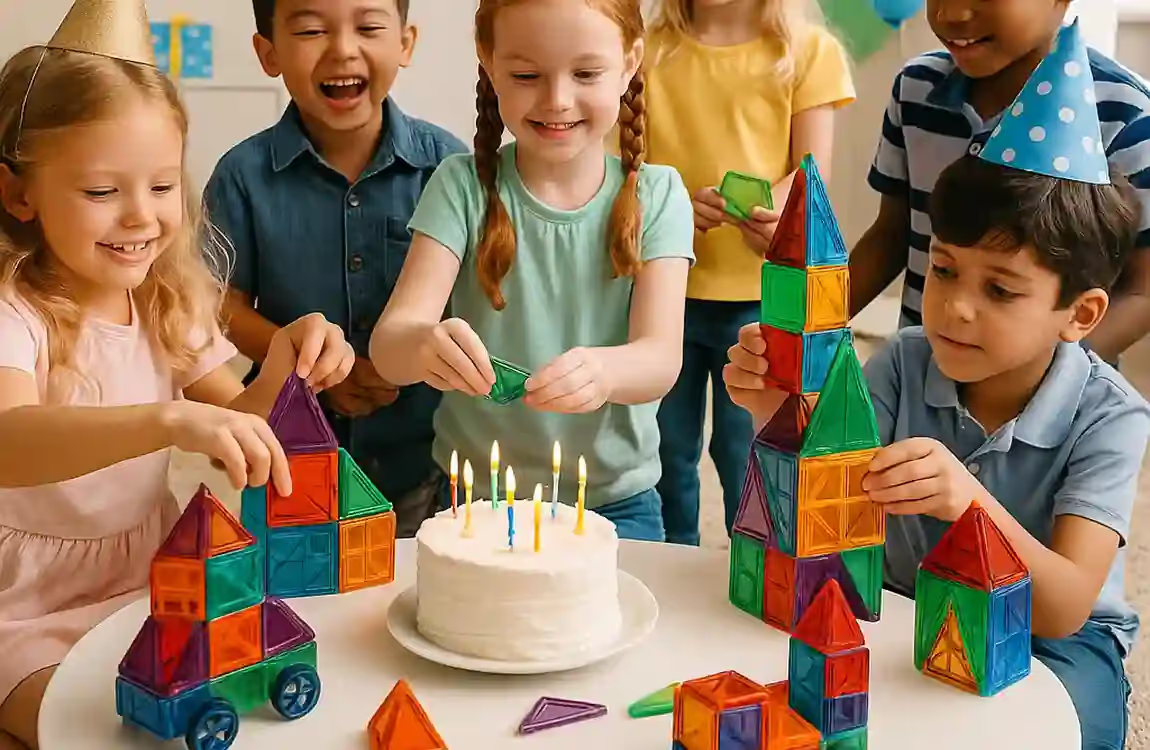
While magnetic tiles are generally safer than many party activity options, supervising multiple children simultaneously requires specific attention to potential hazards. The primary concern involves younger siblings or guests under age three who might attend with older children. Small magnetic pieces present choking hazards that require vigilant monitoring. Designate one adult specifically for safety observation during games, freeing other adults to manage activity logistics without dividing attention dangerously.
Establish a clear "building zone" boundary using tape or rope barriers that keep crawling babies and toddlers safely separated from tile areas. Many parties mix age ranges when younger siblings tag along, requiring this physical separation for safety. Supply alternative entertainment for non-participating young children—blocks, play-dough, or supervised coloring stations positioned where adults can monitor both areas simultaneously. This prevents younger children from wandering into tile zones while keeping them happily occupied.
The magnetic strength itself occasionally creates minor injuries when pieces pinch fingers during separation or when towers collapse unexpectedly. Teach kids the proper separation technique—slide pieces apart rather than pulling straight out—before games begin. This brief safety instruction prevents painful pinches while demonstrating proper handling. Establish a "falling tower" warning system where builders shout "TIMBER!" before unstable structures collapse, alerting nearby kids to step back and avoid being struck by tumbling tiles.
Birthday party sibling dynamics create unique challenges that magnetic tile games can either exacerbate or elegantly solve depending on implementation. The birthday child's siblings often feel simultaneously jealous of attention and resentful of required participation in celebrations centering someone else. Strategic role assignment transforms potential conflict into productive involvement. Designate siblings as "Game Captains" or "Building Judges," giving them authority and responsibility that validates their importance without competing with the birthday child's spotlight.
Older siblings sometimes struggle with activities designed for younger birthday children, feeling the games are babyish or beneath their capabilities. Create age-appropriate advanced challenges specifically for older participants—building with specific architectural requirements, using non-dominant hands, or creating structures while blindfolded. These modified rules allow participation without condescension, respecting their advanced abilities while maintaining game integrity for target-age guests.
Younger siblings present opposite challenges when birthday children are older. They desperately want to participate but lack skills for age-appropriate games. Implement the buddy system pairing each younger child with a patient older guest, framing this as a teaching opportunity that earns bonus points for successful mentorship. Many older children rise beautifully to this responsibility, discovering patience and nurturing instincts that surprise parents. The younger siblings receive coveted participation while older kids develop valuable social skills through guided cooperation.
Success with magnetic tile parties requires strategic preparation that prevents last-minute chaos. One week before the party, inventory your tile collection and borrow additional sets from friends if needed. Count pieces into team bags or containers, labeling each clearly. Create or print challenge cards, building reference sheets, and scorekeeping forms. This advance preparation transforms party setup from frantic scramble into calm execution.
Three days before the party, clear and prepare your building spaces. Move fragile items, create floor zones with tape boundaries, and test your timer and music systems. Run through game instructions yourself, identifying potential confusion points or missing supplies. This rehearsal reveals problems while you still have time to solve them, preventing party-day discoveries that no backup plans can fix.
The morning of the party, set up game stations completely, including all tiles, instruction cards, and supplies needed for each activity. Create a master game sequence list that any adult helper can follow, specifying which games run when and what supplies each requires. This documentation means anyone can run activities in your absence if emergencies arise, and provides structure that reduces your mental load during the chaos of active party management.
Quality magnetic tile sets can represent significant investments that party use will stress-test thoroughly. Budget-conscious parents can access party-sized tile collections without major expenditures through several strategies. Community toy libraries often loan large building sets including magnetic tiles, allowing multi-day borrowing for party purposes. Local parenting groups frequently organize toy swaps where families trade or borrow items for special events, creating community resource sharing that benefits everyone.
School fundraiser auctions sometimes include magnetic tile sets donated by families whose children outgrew the toys. These gently used sets cost significantly less than retail prices while providing perfectly functional pieces for party use. Similarly, online marketplaces, garage sales, and thrift stores occasionally offer tile sets at fraction of retail costs. Building your party collection gradually through budget sources creates adequate inventory without single large expenses that strain family budgets.
Consider organizing cooperative parties with friends where multiple families combine resources. Each family contributes their tile collection plus party hosting duties, then all families benefit from collective resources. This collaboration allows impressive tile quantities for games while distributing costs and labor across multiple households. The social benefit extends beyond parties as families build stronger community connections through cooperative celebration approaches.
Even with perfect preparation, party chaos sometimes overwhelms the best-laid plans. Tiles disappear, games flop unexpectedly, or group dynamics create unanticipated conflicts. Successful party hosts embrace flexibility rather than rigidly following predetermined schedules when circumstances demand adaptation. Keep two backup games ready beyond your planned activities, allowing pivots when primary activities finish surprisingly quickly or engage less than anticipated.
Some children resist participation regardless of activity quality, preferring to observe rather than build. Respect these preferences rather than forcing involvement that creates conflict and discomfort. Provide alternative roles that maintain inclusion without requiring active building—photographer, scorekeeper, or music manager positions keep children connected to party activities without forcing uncomfortable participation. This accommodation teaches important lessons about respecting different engagement preferences while maintaining group cohesion.
Occasionally specific children conflict with magnetic tile games due to sensory sensitivities or fine motor challenges that make handling pieces frustrating rather than fun. Recognize these struggles quickly and provide alternative participation methods. Perhaps that child becomes the architect who plans structures verbally while teammates execute the building. Maybe they excel at organizing tiles by color or managing the timer. Finding appropriate roles prevents exclusion while acknowledging that one-size-fits-all activities don't truly fit all children comfortably.
These magnetic tile games transform birthday parties from chaotic sugar festivals into engaged creative celebrations. No more desperate Pinterest scrolling at midnight before the party. No more craft activities that require an art degree to execute. These games work because they balance competition with collaboration, creativity with structure, and excitement with manageable chaos levels.
The magnetic tiles you already own become party entertainment gold. Every game scales to your group size, adapts to mixed ages, and requires minimal additional supplies. More importantly, they create genuine engagement—kids actually want to play rather than asking when cake arrives. Parents compliment your organized activities instead of secretly checking their watches.
Your next birthday party doesn't need expensive entertainment or complicated setups. Just grab those magnetic tiles, pick three games from this list, and watch party magic happen. The birthday child remembers the awesome activities, guests leave happy and tired, and you survive without requiring a vacation to recover. That's not just a successful party—that's parenting victory worth celebrating with perhaps a quiet evening of magnetic tile building for yourself after everyone finally goes home and you can appreciate the peaceful satisfaction of successfully managing group chaos into structured creative celebration that children will remember far longer than they'll remember what flavor cake was served.
NOVEMBER 21, 2025
NOVEMBER 20, 2025
NOVEMBER 20, 2025
NOVEMBER 20, 2025
NOVEMBER 20, 2025