

Magnetic Block Challenges for Rainy Days: 30-Minute Building Ideas
NOVEMBER 21, 2025
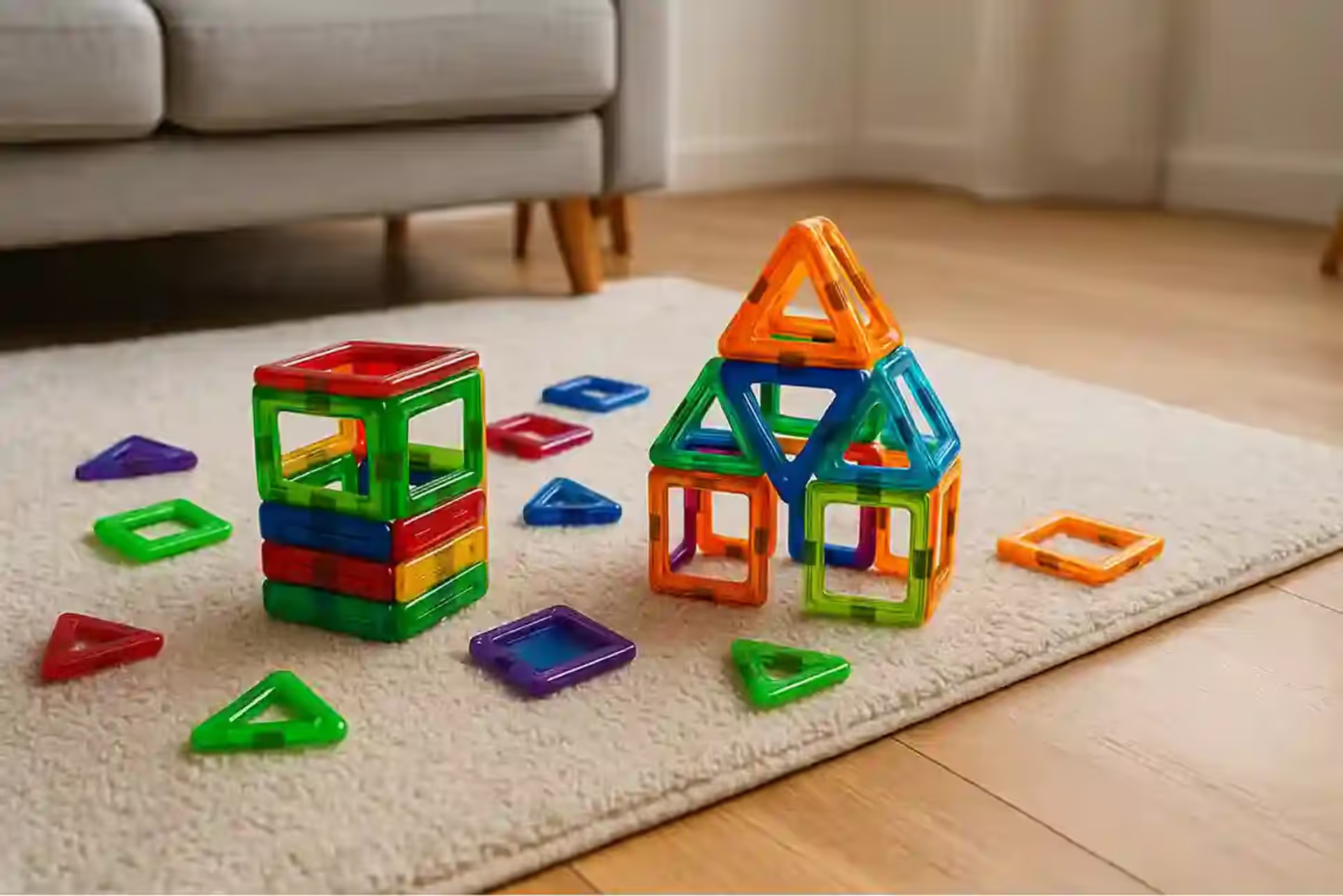
Your child just spent twenty minutes building an elaborate magnetic tile castle on the living room carpet. They add one final piece to the tower, and the entire structure slowly leans, wobbles, then collapses into the plush fibers. Meanwhile, their sibling's simple square on the kitchen's hardwood floor stands firm, surviving even the dog's tail-wagging investigation. The surface beneath those magnetic blocks matters more than most parents realize.
This isn't about declaring one surface superior—every flooring type brings unique challenges and surprising advantages to magnetic tile play. Understanding how surfaces affect building changes everything from structural stability to creative possibilities. Let's explore what really happens when magnetic blocks meet different floors, and more importantly, how to optimize building success on whatever surface you have.
Magnetic tiles rely on three forces for stability: magnetic attraction between pieces, friction with the building surface, and gravitational balance. Each surface type affects these forces differently. Hardwood provides a firm, level foundation where magnetic forces dominate. Carpet introduces compliance—the surface gives under weight, creating micro-angles that compound as structures grow taller.
The magnetic field strength remains constant, but surface friction varies dramatically. Smooth hardwood offers minimal resistance, allowing tiles to slide into optimal magnetic alignment but also slip under lateral force. Carpet fibers grip tile edges, preventing sliding but potentially holding pieces at suboptimal angles where magnetic connection weakens. This fundamental difference drives every building challenge and opportunity. Understanding basic physics principles helps explain why identical structures behave differently on various surfaces.
Temperature affects both surfaces differently too. Hardwood feels cold to touch, which can make extended floor play uncomfortable in winter but keeps tiles cool during summer building marathons. Carpet insulates, providing comfort but potentially affecting magnetic properties if tiles warm significantly during play. Understanding these interactions helps predict and prevent building frustrations.
Surface science reveals fascinating details about how materials interact. Magnetic force decreases with distance—even 1mm carpet compression affects connection strength between tiles. Level variance of just 2 degrees can destabilize structures over 12 inches tall, a threshold commonly exceeded in enthusiastic building projects. Surface texture affects acoustic properties significantly, making builds sound different on each floor type and influencing the sensory experience of play. Static electricity on carpet can attract dust to tiles, requiring more frequent cleaning than hardwood counterparts experience.
Professional builders use bubble levels to check floor flatness before major constructions. While excessive for play, understanding your floor's level helps explain persistent building challenges in specific room areas. Many homes have floors that appear level to the eye but actually slope slightly for drainage purposes or due to settling over time. These invisible slopes become obvious when attempting tall magnetic tile structures that lean mysteriously in consistent directions.
The challenges of carpet building frustrate many families. Carpet's softness creates an unstable foundation that defies the precision magnetic tiles theoretically enable. High-pile carpet compounds every structural weakness—a slightly off-center tower that might stand on hardwood topples immediately on plush carpet. The fibers grab tile edges at different heights, preventing pieces from sitting flush. This misalignment weakens magnetic connections and creates cumulative lean as structures grow vertically.
Carpet texture varies even within the same room, creating mysterious inconsistencies that confuse young builders. High-traffic areas compress over time, creating firmer building zones that support structures better than pristine carpet. Protected areas under furniture remain fluffy and unstable, offering poor building surfaces despite appearing identical to compressed zones. This inconsistency frustrates children who can't understand why identical structures succeed in one spot but fail three feet away. The carpet's pattern can also create optical illusions, making straight lines appear curved and undermining children's confidence in their building accuracy.
The hidden advantages of carpet deserve recognition despite these challenges. The soft surface muffles sound dramatically—crucial during early morning building sessions when parents want extra sleep or in apartments with noise-sensitive neighbors below. Dropped tiles don't clatter, reducing stress for parents and preventing baby wake-ups that derail family schedules. The surface cushions falls, both for tiles and kids, making floor play more comfortable for extended sessions without the knee and elbow discomfort common on hard surfaces.
Carpet's grip prevents sliding catastrophes that plague hardwood building. On hardwood, bumping a structure might send the entire base sliding across the floor, causing total collapse. Carpet anchors the foundation, often saving structures from accidental contact by pets or toddlers. The texture also slows marble runs naturally, eliminating the need for additional friction elements and creating more controllable, predictable ball paths. Some builders discover that carpet's forgiveness encourages risk-taking—failed structures don't scatter as dramatically as on hard surfaces, making cleanup faster and rebuild motivation higher after disappointing collapses.
Different carpet types perform distinctly for magnetic tile building. Low-pile carpet or Berber styles offer good building stability suitable for tall structures and bridges, though very wide bases still present challenges. Medium-pile carpet provides moderate stability appropriate for low structures and enclosures but proves inadequate for precise balance builds requiring exact alignment. High-pile or shag carpet delivers poor building stability useful only for flat patterns and mazes, with anything over six inches tall facing near-certain collapse. Area rugs create variable conditions useful for defined play zones but problematic for builds crossing rug edges where elevation changes destabilize structures.
Hardwood floors provide what seems like the ideal building platform for magnetic tiles. The firm, level surface allows pieces to achieve maximum magnetic contact, with nothing compressing or shifting beneath the structure. Structures can reach impressive heights when each piece aligns perfectly without substrate interference. The predictable surface eliminates variables, making engineering principles clearer for learning builders. What works once will work again, building confidence through repeatability that helps children develop spatial reasoning and architectural intuition.
Smooth hardwood enables sliding techniques impossible on carpet, opening creative possibilities that transform the building experience. Kids discover they can push entire structures across the floor without collapse, facilitating collaborative building where multiple creators work on separate sections then slide them together for final assembly. The surface allows for precise micro-adjustments—nudging pieces millimeters to achieve perfect balance impossible to replicate on forgiving surfaces. Clean-up becomes satisfying as tiles slide together magnetically across the floor, creating chains of connected pieces that make collection efficient and even enjoyable for children who normally resist cleanup tasks.
Yet hardwood introduces its own significant challenges that parents discover through frustrating experience. The very smoothness that enables precision also reduces forgiveness dramatically. A slight bump sends structures sliding catastrophically across the floor, often resulting in complete destruction of elaborate builds. The hard surface amplifies every dropped tile into a startling crash, potentially disturbing others and creating noise anxiety that inhibits creative risk-taking. Some children become overly cautious on hardwood, building only "safe" structures that don't challenge their skills or imagination.
Temperature fluctuations affect hardwood significantly more than carpet. Morning floors feel arctic in winter, making extended play uncomfortable without cushioned play mats or rugs. Children playing in pajamas find cold hardwood intolerable, limiting building sessions to afternoon hours when floors warm. Direct sunlight creates hot zones that become uncomfortable and may slightly affect magnetic properties, though this effect remains minimal compared to temperature's impact on comfort. The reflective surface can create glare issues near windows, making it difficult to see connection points and assess structural integrity. Hardwood also shows every scratch—heavy magnetic tile sets dropped repeatedly eventually leave marks, creating parental tension around enthusiastic building that dampens family enjoyment of the toys.
Professional builders create "building stations" using yoga mats or foam tiles on hardwood to capture advantages of both surfaces. These provide defined spaces, slight cushioning, and prevent sliding while maintaining sufficient firmness for tall structures. The textured surface offers just enough grip without carpet's instability, creating ideal building conditions. For carpet building, placing a large hardcover book or cutting mat under structures creates a firm sub-surface while maintaining carpet's sound-dampening benefits. Cookie sheets work brilliantly—the metal even adds magnetic attraction to the base, strengthening structures in unexpected ways.
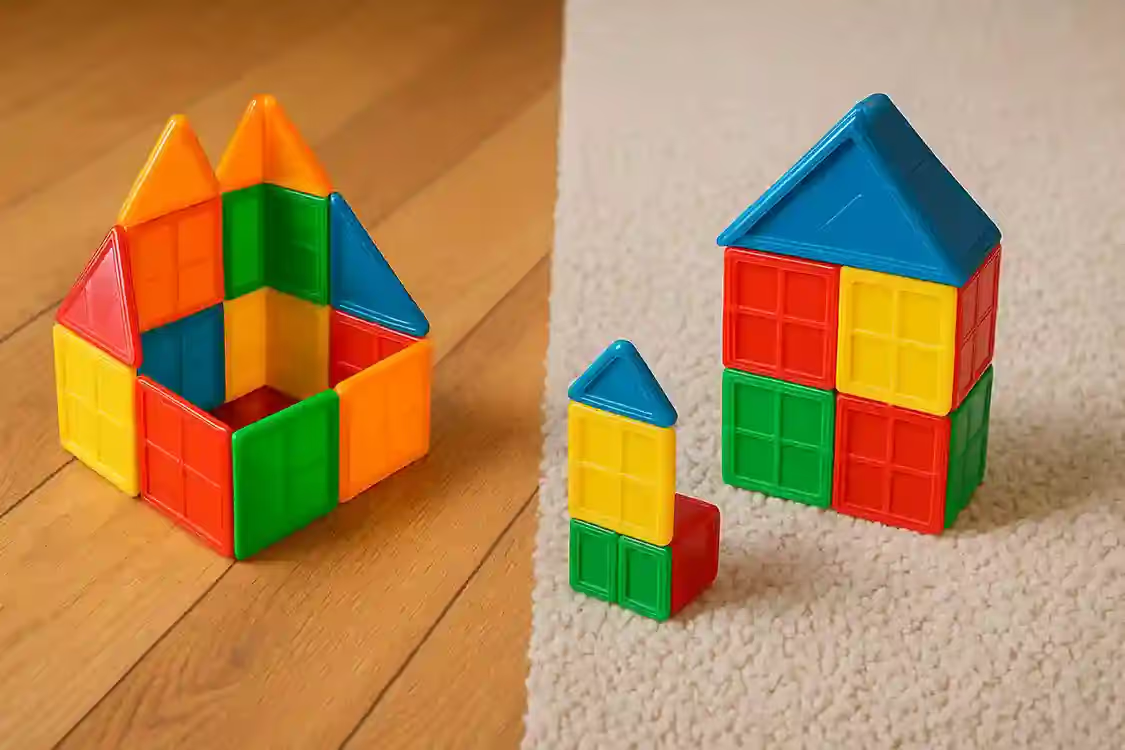
Foam play mats offer an excellent compromise between carpet and hardwood, combining the best qualities of both while minimizing disadvantages. Interlocking foam tiles provide cushioning without excessive compliance, maintaining levelness while adding grip that prevents catastrophic sliding. They define clear building zones that help children understand play boundaries, and the slight texture prevents sliding without interfering with magnetic alignment. Quality varies significantly among foam mat products—denser mats provide better building surfaces than cheap, squishy alternatives that compress like high-pile carpet. Parents should test mat firmness before purchasing, pressing hard with their palm to assess whether the material will provide adequate support or prove as problematic as soft carpet.
Tables and elevated surfaces eliminate floor-related variables entirely, creating controlled building environments that maximize success. The defined edges create natural boundaries, preventing sprawl and encouraging more vertical, concentrated building. Height makes adult supervision easier without constant bending that causes back strain during extended play sessions. Coffee tables work perfectly for younger builders who need surfaces at their standing height, while dining tables suit older kids tackling complex projects requiring more space and stability. The elevation also protects builds from pets and crawling siblings—critical for multi-day projects that children want to preserve overnight. However, elevated surfaces introduce fall risks, requiring careful supervision with young children who might climb on furniture to reach their creations.
Laminate and vinyl flooring split the difference between carpet and hardwood in ways that often prove ideal for families with magnetic tiles. These surfaces are firmer than carpet but less slippery than polished hardwood, providing stability without excessive sliding. The slight texture provides grip without instability, allowing pieces to sit firmly without sinking. They're also warmer than hardwood and easier to clean than carpet, addressing multiple practical concerns simultaneously. Many builders report laminate as their preferred surface, especially in playrooms where spills are common and easy cleanup matters. The synthetic materials also resist scratching better than hardwood, reducing parental anxiety about tile-induced floor damage. Understanding different flooring material properties helps families choose optimal surfaces when renovating spaces that will see heavy toy use.
Outdoor surfaces offer unique building experiences that expand children's understanding of structural engineering. Concrete patios and wooden decks provide texture that offers excellent grip, while the firmness rivals hardwood for stability. Outdoor building adds environmental challenges—wind tests structural integrity naturally, teaching children about factors beyond their direct control. However, direct sunlight can make tiles uncomfortably hot to touch, particularly dark-colored tiles that absorb heat. Morning dew creates slippery conditions that affect both building stability and child safety. Covered patios provide ideal compromise spaces that offer outdoor expansion without weather-related complications. Understanding outdoor play benefits helps parents appreciate the developmental value of moving building activities outside periodically.
Carpet optimization requires strategic adaptations that account for the unstable substrate. Start with wider bases on carpet—at least 25% wider than you'd use on hardwood for equivalent height structures. Create "foundation platforms" using flat rectangular arrangements before building upward. This distributes weight across more carpet area, reducing individual pressure points that cause sinking and tilting. Use the carpet's grip strategically by pressing base pieces firmly into fibers for anchor points that resist toppling even when upper structures shift slightly.
Build in pyramid formations rather than straight towers when working on carpet. The angular structure compensates for carpet's micro-movements better than vertical builds by creating multiple support points and distributing weight more evenly. When possible, build against walls or furniture for additional support—carpet's forgiveness means you can lean structures slightly without immediate collapse, using vertical surfaces as stabilizers. For marble runs on carpet, embrace the slower speed by creating more elaborate paths with additional features that would cause too much speed reduction on hardwood.
Hardwood mastery involves exploiting the surface's precision capabilities. Attempt architectural challenges impossible on carpet—cantilever bridges that extend dramatically from bases, balanced sculptures that defy apparent physics, and gravity-defying extensions that seem structurally impossible. Use the sliding capability for modular building where sections receive independent construction then slide together for final assembly. Create "brake zones" using rubber shelf liner or silicone mats at strategic points to prevent unwanted sliding while maintaining overall hardwood benefits for the majority of the building area. These advanced building techniques naturally introduce STEM education concepts through hands-on experimentation that makes abstract principles concrete and memorable.
Develop the "gentle touch" technique when building on hardwood—teaching kids to place rather than drop pieces, using magnetic attraction to guide final positioning without creating destabilizing impacts. The surface rewards patience and precision, qualities that transfer to other learning domains. For younger builders struggling with hardwood's unforgiving nature, create bumper zones using pool noodles or foam strips around building areas, preventing runway slides while maintaining the firm building surface. These safety barriers catch sliding structures before they travel far enough to fully disintegrate.
Quick fixes address common surface problems efficiently. When carpet proves too soft, place cookie sheets, cutting boards, or large hardcover books under building zones to create firm sub-surfaces. When hardwood becomes too slippery, use rubber shelf liner, yoga mats, or foam tiles strategically placed for grip zones. For uneven surfaces anywhere in the home, create level platforms using sturdy boxes or lap desks that provide controlled building environments. Temperature issues resolve through adding area rugs to cold hardwood for comfort or using fans to cool hot carpet areas during summer building sessions.
Hardwood presents slipping hazards particularly problematic for excited children. Sock-wearing builders who run to show parents their creations create perfect wipeout conditions on smooth floors. The combination of smooth floor, thin socks, and excitement generates falls that range from startling to genuinely dangerous. Scattered magnetic tiles on hardwood become stepping hazards—their smooth bottom surface offers zero grip, functioning like miniature skateboards when stepped on. Consider requiring gripper socks during building sessions or establishing "walking only" rules in building zones. Teaching children to clear play paths before running prevents many accidents while building cleanup habits.
Carpet hides different dangers that require parental vigilance. Tiles can disappear into high-pile carpet, creating hidden stepping hazards invisible until someone's foot finds them. Small pieces between carpet fibers become choking risks for crawling babies who might not be visible from adult standing height, particularly dangerous in homes with mixed-age children. The softer surface encourages rougher play, potentially leading to diving or jumping near structures in ways that wouldn't occur on hard floors. Establish clear "destruction zones" away from active building to channel physical energy safely without endangering careful constructions or causing injuries from collision with structures.
Edge transitions between surfaces create unique risks often overlooked until accidents occur. Where carpet meets hardwood, or where area rugs end, elevation changes can trip running children or cause structures built across boundaries to collapse unexpectedly. Mark these transitions with colored tape or establish "no building zones" spanning surface changes to prevent structural and safety problems. For toddlers, these edges present particular stumbling hazards when carrying tiles between surfaces, as depth perception skills remain developing and foot placement stays imprecise. Guidance on home safety for children emphasizes supervision during play, particularly on surfaces that create specific risks. Regular safety talks help children understand surface-specific dangers without dampening their enthusiasm for building. Frame safety rules positively—focus on what enables continued play rather than presenting restrictions as arbitrary limitations. Supporting creative play environments while maintaining safety requires balancing freedom with appropriate boundaries.
Surface type dramatically affects cleanup efficiency in ways that impact family dynamics around magnetic tile play. Hardwood allows magnetic "chain gathering"—dragging one tile collects others magnetically, creating satisfying cleanup that kids actually enjoy. The game-like quality of magnetic collection motivates participation from children who normally resist cleanup tasks. Sliding tiles together into piles works brilliantly, concentrating scattered pieces into manageable collections. However, tiles scatter further on hardwood when structures collapse, potentially sliding under furniture where retrieval requires adult flexibility and sometimes flashlight-assisted searches.
Carpet contains collapse zones naturally, limiting scatter but making gathering tiles laborious. Each piece requires individual picking from fibers, especially smaller triangular pieces that wedge deep into pile and resist extraction. High-pile carpet particularly complicates cleanup as tiles don't just sit on top but nestle between fibers. However, carpet's containment property helps during active play—accidental kicks don't send tiles flying across rooms, keeping play zones more contained. Create designated "tile corrals" on carpet using low-sided bins or defined areas marked with tape where children collect pieces before final storage.
Storage solutions should account for the primary play surface. For hardwood-dominant play, wheeled storage bins allow children to bring entire collections to building zones then wheel them back to storage areas, minimizing carrying and dropping. For carpet play, lighter storage solutions like fabric bins work better since rolling anything on carpet requires significant effort. Consider duplicate storage—small collections in multiple rooms reduce the transportation burden and make spontaneous building sessions more likely.
Implementing cleanup routines matters as much as storage solutions. Set timers for cleanup, making it a timed challenge rather than an open-ended chore. For younger children, establish "tile counts"—counting pieces together turns cleanup into math practice. Parents might alternate between "you pick up five, I'll pick up five" cooperation that models teamwork while distributing effort. Creating positive cleanup habits early prevents later battles over toy maintenance.
Most families have multiple floor types creating opportunities for strategic surface utilization. Designate primary building zones on optimal surfaces while maintaining flexibility for spontaneous play elsewhere. Hardwood living rooms might serve as "exhibition spaces" for showcase builds meant to last, while carpeted playrooms handle everyday construction likely to be demolished quickly. This zoning approach maximizes each surface's strengths while minimizing weaknesses.
Create portable building platforms that allow children to use ideal surfaces regardless of room. A large wooden cutting board, cookie sheet, or purpose-built platform travels with the child, providing consistent building conditions anywhere in the home. These platforms prove particularly valuable in multi-surface homes where children want to build near parents in different rooms throughout the day. The portability also enables outdoor building during pleasant weather without committing to ground-level construction.
Teach children to assess surfaces before beginning ambitious projects. Help them understand that the tall tower works better on hardwood while the sprawling marble run succeeds on carpet. This metacognitive awareness—thinking about thinking and planning—develops executive function skills transferable to academic settings. Children learn that environment affects outcomes and that strategic planning improves success rates, lessons extending far beyond magnetic tile play.
Consider seasonal surface rotation for homes with both carpet and hardwood. Winter building might concentrate on carpeted areas where comfort matters more during cold months, while summer shifts to hardwood where temperature becomes less problematic. This rotation keeps play fresh while addressing practical comfort considerations that affect sustained engagement.
Magnetic tiles affect different surfaces distinctly over years of use. Hardwood develops wear patterns in heavy play areas—subtle scratches from repeated tile placement and sliding accumulate into visible traffic patterns. While individual scratches remain minor, thousands of play sessions create noticeable wear. Using protective mats in primary building zones prevents this cumulative damage while maintaining most of hardwood's building advantages.
Carpet shows different long-term effects from magnetic tile play. Compression patterns develop where regular building occurs, creating firm zones that actually improve building quality over time but alter carpet appearance. High-pile carpet may develop flattened areas that never fully recover their original loft. The metal components in tiles can occasionally leave microscopic metal particles that create slight discoloration on light-colored carpet, though this effect remains minimal with quality tiles.
Both surfaces benefit from regular maintenance that accounts for magnetic tile play. Hardwood requires more frequent cleaning as dropped tiles, dust, and debris become visible on smooth surfaces. Quick daily sweeps prevent buildup that interferes with magnetic connections. Carpet needs regular vacuuming to remove the fine particles that accumulate between fibers where tiles press them during play. These maintenance practices preserve both surface quality and optimal building conditions.
Understanding proper floor care helps parents maintain surfaces despite heavy toy use. Protecting floors while enabling rich play experiences creates sustainable family environments where children's activities don't conflict with home maintenance.
Most families can't choose their flooring based on magnetic tile optimization—you build on what you have. This practical reality means developing adaptive strategies rather than seeking perfect conditions. Children who learn to build successfully on challenging surfaces actually develop stronger spatial reasoning and problem-solving skills than those working in ideal conditions. Constraints breed creativity, and surface limitations spark innovations that easier conditions wouldn't motivate.
Document your child's surface-specific successes and challenges. Photograph structures that work well on your primary surface, noting techniques that proved successful. When struggles occur, experiment with adaptations before concluding that ambitious builds remain impossible. Many "impossible" projects become achievable with small adjustments—wider bases, angled supports, or strategic prop usage. This experimental mindset models scientific thinking and growth mindset principles that serve children throughout life.
Connect with other magnetic tile families through online communities to share surface-specific tips. What works on one family's Berber carpet might transform another's building experience. These communities offer practical wisdom unavailable in product marketing, providing real-world solutions to common challenges. Parents in apartments with only carpet and those in homes with exclusively hardwood learn from each other's adapted techniques. Parenting communities and toy-specific forums provide valuable spaces for sharing surface-specific building strategies and troubleshooting common problems collaboratively.
Remember that magnetic tiles remain worthwhile on any surface despite optimization challenges. The developmental benefits—spatial reasoning, creativity, persistence, collaborative skills—occur regardless of flooring type. Surface affects play experience but doesn't determine whether tiles succeed as educational toys. Focus on maximizing available conditions rather than lamenting ideal situations you lack.
Families with children deeply engaged in magnetic tile building might consider creating dedicated building spaces with optimal surfaces. Converting small rooms, closets, or even large closets into building studios with ideal flooring proves less expensive than home-wide flooring changes. A four by six-foot area of laminate installed over existing carpet in a playroom corner creates a building platform costing under $100 in materials.
Raised platforms built specifically for magnetic tile construction combine multiple advantages. Building at table height eliminates floor variables while creating surfaces sized appropriately for projects. These platforms can incorporate storage underneath, maximizing space efficiency. Simple construction using plywood over basic framing creates sturdy platforms for a few hundred dollars, though handy parents often build them for less using reclaimed materials.
For ultimate control, some families create specialized building tables with features designed specifically for magnetic tiles. Magnetic paint underneath provides additional attraction that strengthens structures. Integrated lighting illuminates projects from below, particularly beautiful with translucent tiles. Built-in storage around table edges keeps tiles immediately accessible. While these custom solutions require significant investment, dedicated builders use them daily for years, justifying the expense through sustained engagement.
The surface where children build with magnetic tiles influences not just structural success but also the developmental skills they practice. Hardwood building emphasizes precision, spatial planning, and delayed gratification. Children learn that rushing leads to collapse, developing patience and careful motor control. The unforgiving surface provides immediate feedback about balance and weight distribution, teaching physics principles through direct experience. Studies on child development through play confirm that challenging conditions actually accelerate learning by requiring problem-solving engagement that easier conditions don't demand.
Carpet building develops different but equally valuable skills. Children learn to work within constraints, developing creative problem-solving as they adapt ambitious visions to unstable foundations. The unpredictability of carpet builds teaches resilience as structures fail for non-obvious reasons requiring investigation. Frustration tolerance increases as children persist through challenges, learning that success requires adaptation rather than giving up. The collaborative problem-solving that emerges when siblings or friends work together to overcome carpet limitations builds social skills impossible to develop during solitary hardwood building.
Multi-surface experience provides the richest developmental benefits, exposing children to varied challenges requiring different approaches. Moving between surfaces requires metacognitive skills—thinking about which strategies work where and why. This analytical thinking transfers to academic settings where approach flexibility determines success. Children who master building on multiple surfaces demonstrate stronger executive function and more flexible problem-solving than those working exclusively in optimal conditions.
The sensory experiences differ dramatically between surfaces, affecting neural development in subtle but significant ways. Hardwood's coolness, hardness, and sound profile create distinct sensory input patterns compared to carpet's warmth, softness, and sound dampening. This sensory variety enriches neural pathway development as brains integrate multimodal environmental information. The proprioceptive feedback from pressing tiles into carpet versus placing them on hardwood activates different motor planning pathways, strengthening overall motor skill development through varied practice conditions.
Mysterious leaning on apparently level surfaces frustrates many families until they understand the subtle factors at play. Even professionally installed floors vary from perfect level by small amounts invisible to casual observation but significant for tall magnetic tile structures. Test problematic areas with a bubble level app on smartphones, identifying slopes that explain persistent building failures. Once identified, builders can compensate by adding counter-weight on the downslope side or choosing different building locations for ambitious projects.
Carpet compression patterns create another mysterious problem where identical structures succeed or fail based on seemingly random location choices. Map your carpet's "hard zones" versus "soft zones" by pressing firmly with your palm across the room. High-traffic areas near doorways and hallways typically offer firmer building surfaces than pristine areas under furniture. Encourage children to build in compressed zones for important projects while accepting that remote areas work better for low, sprawling constructions that don't rely on height.
Seasonal changes affect both surface types in ways that mystify families until they recognize the patterns. Winter heating dries air, affecting hardwood's moisture content and potentially causing slight warping or gaps between boards. Summer humidity causes opposite effects, making hardwood slightly softer and more prone to showing scratches. Carpet's static electricity increases dramatically during dry winter months, attracting more dust to tiles and causing mild attraction between tiles and carpet that affects builds. Understanding these seasonal patterns helps families adjust expectations and techniques throughout the year.
Acoustic frustration occurs when families transition between surfaces unexpectedly. A child accustomed to quiet carpet building becomes startled by the dramatic crashes on hardwood, developing anxiety that inhibits creative risk-taking. Conversely, children used to hearing their structures' progress through hardwood sounds feel uncertain on silent carpet where audio feedback disappears. Prepare children for these acoustic differences when introducing new building surfaces, explaining how the change affects sound without changing building principles.

Understanding the inverse square law governing magnetic attraction explains many surface-related phenomena parents observe but don't understand. Magnetic force decreases with the square of distance—doubling the gap between magnets reduces attraction to one-quarter strength. The seemingly negligible 1-2mm carpet compression that feels trivial to adults dramatically affects magnetic tile connections. This explains why structures marginally stable on hardwood collapse immediately when attempted on even low-pile carpet.
The practical implication requires using more overlap on carpet than hardwood. Where hardwood building succeeds with edge-to-edge tile placement, carpet demands at least 25% overlap to maintain equivalent connection strength. This overlap compensates for the distance increase created by compression. Teaching children this principle helps them understand why their building strategies must adapt to surfaces rather than assuming identical approaches work everywhere.
Magnetic field strength varies slightly with temperature, though this effect remains minimal compared to surface compression impacts. Extreme cold slightly strengthens magnetic attraction while heat weakens it, but these changes rarely reach magnitudes noticeable during play. More significant is temperature's effect on plastic tile rigidity—cold makes plastic more brittle while heat allows more flex. These property changes affect how tiles connect and how structures respond to stress, adding another layer of environmental influence on building success.
The magnets inside tiles orient in specific patterns that affect connection strength based on approach angle. When tiles meet at wrong angles on uneven surfaces, magnets might repel rather than attract or connect weakly instead of snapping together firmly. Carpet's micro-angles multiply these orientation problems, explaining why pieces that should connect sometimes refuse to stick. Hardwood's level surface eliminates this problem, allowing tiles to approach each other at optimal angles for maximum magnetic engagement.
Group building sessions reveal how surface type affects social interactions among children. Hardwood's firm surface encourages parallel play where children work on separate projects in proximity without direct collaboration. The predictable building conditions mean less need for helping frustrated friends or collaborative problem-solving. Structures remain independently stable without requiring buddy support systems. This independence suits older children or those preferring solitary creative time.
Carpet's challenges promote collaborative play as children naturally assist each other with unstable builds. Holding structures while friends add pieces becomes necessary rather than optional, creating organic teamwork opportunities. The shared frustration of carpet limitations builds camaraderie as children commiserate about collapsed towers and celebrate hard-won successes. The additional communication required for carpet building develops language skills as children articulate problems and propose solutions.
Playdate dynamics shift dramatically based on surface availability. Visiting children accustomed to home surfaces different from the playdate location may struggle unexpectedly, affecting their confidence and playdate enjoyment. Hosts can ease these transitions by explaining surface differences proactively and demonstrating successful techniques for their particular floors. This social grace teaching moment helps children develop empathy and communication skills while ensuring all playdate participants enjoy magnetic tile building regardless of their home surface experience.
Sibling dynamics benefit from surface variety when competition becomes problematic. If one child consistently builds more successfully, changing surfaces can level the playing field by requiring all participants to adapt strategies. The child who mastered hardwood precision may struggle more on carpet than the sibling who learned on unstable surfaces first. This rotation prevents entrenched hierarchies where one child always succeeds while another always fails, maintaining motivation and interest across developmental stages.
The financial implications of surface choices extend beyond obvious tile purchases to include floor protection, adaptation materials, and potential tile damage from unsuitable surfaces. Hardwood protection using area rugs or foam mats costs $50-200 depending on size and quality, but prevents thousands in potential floor refinishing expenses. This investment pays for itself quickly in homes where magnetic tile play occurs daily. Parents hesitant to allow play on expensive hardwood should calculate protection costs versus restriction costs—limiting play locations reduces toy value significantly.
Carpet poses different economic questions. The tile damage risk from carpet play manifests through increased breakage rates as tiles flex more on unstable surfaces. While individual tile replacements seem minor at $3-5 each, cumulative damage over years of carpet-only building adds up. A family averaging five broken tiles annually spends $75-100 on replacements—money that could purchase optimization solutions like building platforms rendering the breakage unnecessary. Tracking actual damage costs helps families make informed decisions about adaptation investments.
The hidden economic factor involves toy satisfaction affecting toy retention. Families where magnetic tiles work poorly due to surface incompatibility often abandon the toys after brief use, effectively wasting the entire initial investment. Meanwhile, families implementing simple surface optimizations report years of sustained engagement justifying the toy purchase many times over. The $30 cutting board or $60 foam mat purchase that enables successful building protects the initial $200-400 tile investment, representing smart financial management of toy resources.
Resale value of magnetic tiles remains higher when families can honestly market them as "barely used" due to successful play experiences encouraging ongoing use. Tiles abandoned after frustrating surface conflicts show this in their condition—pristine because unused rather than worn from enthusiastic play. Optimization investments that increase use paradoxically increase resale value by proving the toys' worth to potential buyers. This economic reality suggests that surface optimization represents investment protection rather than additional expense.
The surface beneath magnetic tiles profoundly affects building success, but no surface proves universally superior. Hardwood offers precision and repeatability for technical builders pursuing architectural challenges. Carpet provides comfort and noise control for apartment dwellers and early morning players. Alternative surfaces combine various advantages for families willing to implement strategic solutions.
Understanding surface science transforms frustration into problem-solving opportunities. When builds fail, assess whether surface limitations contributed rather than attributing failure to lack of skill. Teach children to recognize surface effects on their structures, developing environmental awareness that extends beyond play. This learning process proves more valuable than any specific structure's success or failure.
Optimize what you have rather than wishing for different conditions. Simple adaptations—platform additions, strategic material placement, technique adjustments—enable successful building on any surface. The goal isn't perfect building conditions but rather rich play experiences that develop crucial cognitive and creative capacities. Magnetic tiles deliver these benefits regardless of whether they're sitting on plush carpet or polished hardwood, making them valuable investments for families in any home with any floor.
NOVEMBER 21, 2025
NOVEMBER 21, 2025
NOVEMBER 20, 2025
NOVEMBER 20, 2025
NOVEMBER 20, 2025