

Magnetic Blocks That Work With LEGO: Hybrid Building Systems Guide
NOVEMBER 21, 2025
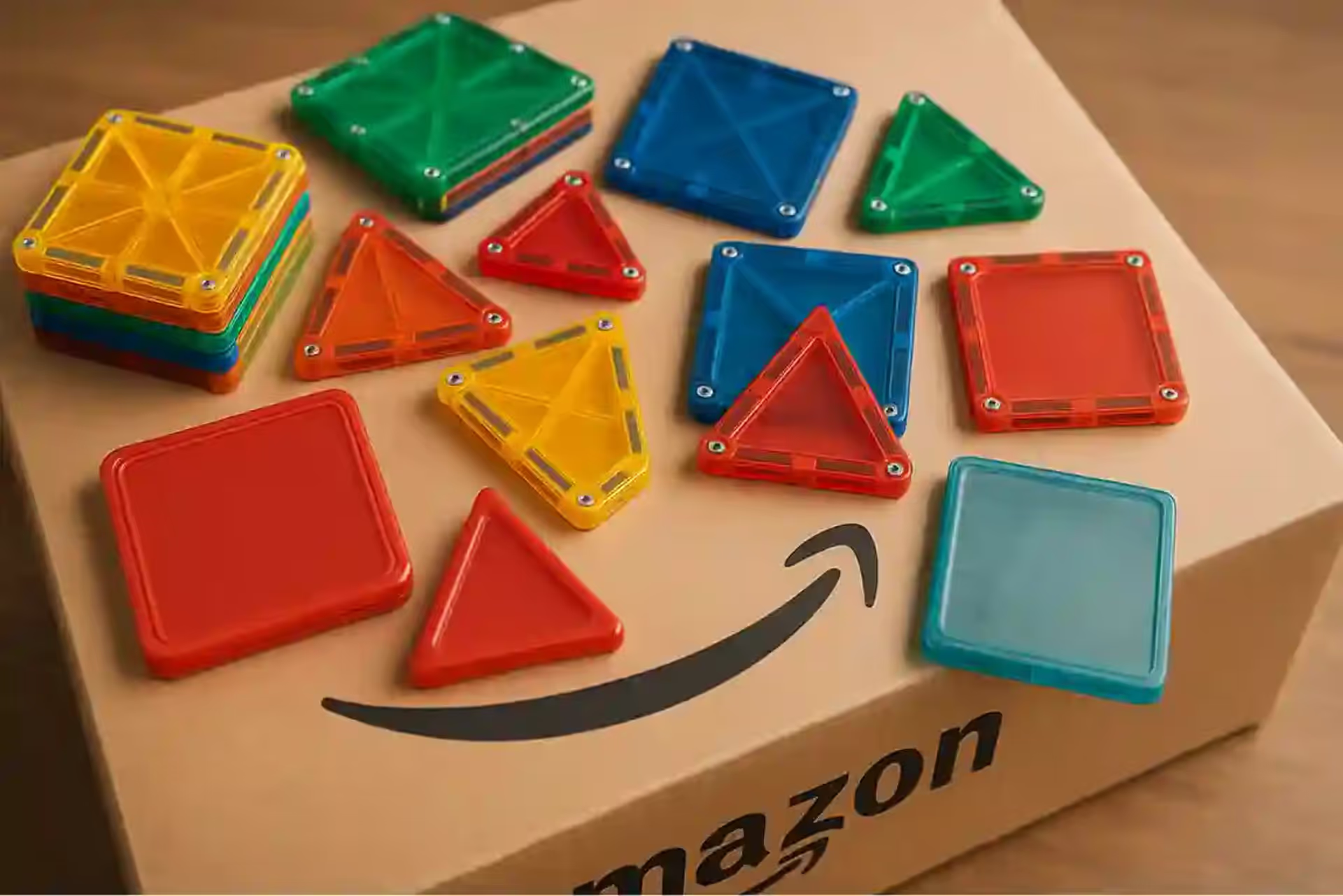
You search "magnetic tiles" on Amazon and get 10,000 results. The prices range from $15 to $150 for seemingly identical sets. Brand names you've never heard of dominate the listings: BMAG, JASONWELL, DREAMBUILDERZ, COSSY. The product photos look identical across dozens of listings, the descriptions use the same broken English, and five-star reviews mention products that don't match what's being sold. Welcome to the wild west of magnetic tile shopping, where distinguishing legitimate products from potentially dangerous counterfeits requires detective-level investigation skills.
The proliferation of questionable magnetic tiles on Amazon isn't just about trademark infringement or patent violations—it's about children's safety. Counterfeit magnetic toys have been linked to choking hazards from breaking pieces, toxic materials exceeding legal limits, and dangerously powerful magnets that can cause intestinal damage if swallowed. When a $20 set looks identical to a $100 branded version, the savings might seem attractive, but the hidden costs could include hospital visits, lead exposure, or toys that break within days of purchase.
Amazon's marketplace model creates perfect conditions for counterfeit proliferation. Third-party sellers can list products with minimal verification, using legitimate brands' product photos and descriptions. Amazon's commingled inventory system means products from multiple sellers get mixed in the same bins—you might order from the official Magna-Tiles store but receive inventory supplied by an unknown third party. This system makes it nearly impossible to guarantee authenticity even when buying from seemingly legitimate sources.
The algorithm-driven marketplace rewards low prices and high sales volume, pushing questionable products to the top of search results. A counterfeit set priced at 30% below legitimate brands will outsell authentic products, gaining momentum in Amazon's recommendation system. Once established, these listings become difficult to remove—sellers simply create new accounts when banned, re-listing identical products under different brand names. The same factory might supply dozens of "brands" that are essentially identical products with different packaging.
Amazon's review system compounds the problem. Sellers manipulate ratings through incentivized reviews, review farms, and merged listings. A listing might show 5,000 five-star reviews, but closer inspection reveals they're for completely different products—the seller hijacked a successful listing and changed the product while keeping the positive ratings. Reviews mentioning "great phone case" on a magnetic tile listing are dead giveaways of this manipulation. The Federal Trade Commission has been cracking down on fake reviews, but enforcement struggles to keep pace with the volume of violations on platforms like Amazon.
Most counterfeit magnetic tiles trace back to a handful of factories in Yiwu and Guangdong, China. These facilities produce generic tiles sold to hundreds of "brands" worldwide. The same production line might make tiles for BMAG on Monday, COSSY on Tuesday, and a dozen other brands throughout the week. Quality control varies wildly—even within the same brand, batches might differ in magnet strength, plastic quality, and safety compliance.
The business model relies on volume over quality. Sellers calculate that most buyers won't return a $20 toy, even if it's substandard. Those who do complain might receive refunds to prevent negative reviews, but the seller still profits from the majority who don't bother. With margins of 300-400% on counterfeit products, losing some sales to returns barely impacts profitability.
The sophistication of these operations has grown exponentially over the past decade. What started as simple knockoffs has evolved into complex networks involving multiple shell companies, offshore banking, and coordinated review manipulation campaigns. Some counterfeit operations generate tens of millions of dollars annually, yet remain virtually immune to prosecution due to jurisdictional challenges and the ease of creating new seller identities when one gets banned. The Organization for Economic Cooperation and Development estimates that counterfeit and pirated goods account for nearly 4% of global trade, with children's toys representing a particularly vulnerable category due to lower regulatory oversight compared to products like pharmaceuticals or automotive parts.
Legitimate magnetic tile brands invest in professional product photography showing their actual products in use. Counterfeit listings often use stolen images from authentic brands, sometimes forgetting to remove watermarks or logos. Look for consistency between the product photos and what's described—if the photos show clear tiles with beveled edges but the description mentions "reinforced borders," you're likely looking at stolen imagery.
Brand names provide immediate clues. Counterfeit sellers create names by combining generic terms: MAGBLOCKS, TILEZOO, MAGNASTIX, BUILDSMART. These names are designed to rank in searches while avoiding specific trademark violations. The brand story, if it exists, typically contains vague claims about "years of experience" without specifics. Real companies like Magna-Tiles (Valtech since 1997) or PicassoTiles have verifiable histories, actual company addresses, and consistent branding across platforms.
Descriptions riddled with errors indicate counterfeit products. Phrases like "child's wisdom development" or "cultivate baby's imagination power" suggest Google Translate rather than professional copywriting. Legitimate brands employ native speakers and professional marketers. Also watch for impossible claims—"100% safe non-toxic" (nothing is 100% anything), "recommended by all teachers" (obviously false), or "patent-pending technology" without patent numbers.
The language used in counterfeit listings often betrays their origins through characteristic translation patterns. Machine translation from Chinese to English produces distinctive phrases that native speakers would never use. Terms like "educational enlightenment toys" or "intellectual development blocks" sound plausible but feel unnatural. Legitimate companies undergo extensive market research to ensure their messaging resonates with target audiences, while counterfeiters rely on automated translation that prioritizes speed over accuracy.
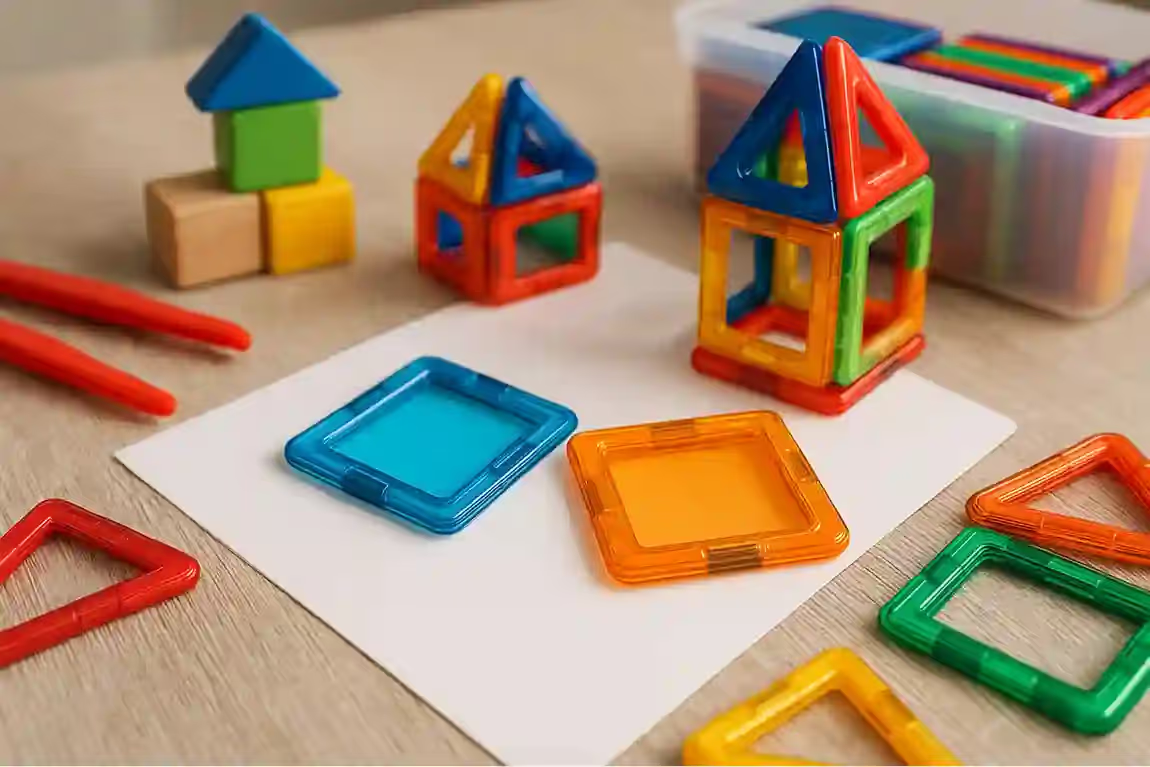
Authentic magnetic tiles cost $0.50-1.00 per piece at retail. A genuine 100-piece set typically runs $80-150. When you see 100-piece sets for $25-35, basic math reveals the impossibility. After Amazon's 15% fee, shipping costs, and packaging, the seller would have pennies per tile for manufacturing. Quality materials alone cost more than this—legitimate neodymium magnets, ABS plastic, and safety testing aren't achievable at these price points.
Flash sales and "lightning deals" often mask counterfeit products. A listing might show 70% off, claiming a regular price of $150 marked down to $45. Check the price history using tools like CamelCamelCamel—you'll often find the product has never sold at the claimed original price. This false discounting creates urgency while making buyers feel they're getting premium products at bargain prices.
Bundling tactics also hide quality issues. Sellers package magnetic tiles with "bonus" items—storage bags, car toys, or idea books—to justify slightly higher prices while still undercutting legitimate brands. These bonuses cost pennies to produce but create perceived value. The magnetic tiles themselves remain substandard, but buyers feel they're getting a better deal with the extras.
Understanding the true cost structure of quality magnetic tiles reveals why legitimate products cannot compete on price alone. Manufacturing quality neodymium magnets requires specialized equipment and quality control that adds significant cost. The injection molding process for producing consistent, safe plastic tiles requires expensive molds and precise temperature controls. Safety testing by accredited laboratories costs thousands of dollars per product line. When these necessary expenses are tallied, the minimum viable price for quality magnetic tiles becomes clear—and counterfeit pricing falls far below this threshold.
The most immediate danger from counterfeit magnetic tiles is breakage. Legitimate brands use ultrasonic welding to permanently seal plastic edges, creating virtually unbreakable seams. Counterfeits often use cheaper glue or heat sealing that fails under normal play stress. When tiles break, they expose sharp plastic edges and loose magnets—both serious hazards for young children. The small, powerful magnets can cause life-threatening intestinal damage if swallowed, requiring emergency surgery.
Chemical safety presents invisible but serious risks. Independent testing has found counterfeit magnetic tiles containing lead levels 10-100 times legal limits, phthalates banned in children's toys, and BPA despite "BPA-free" claims. These chemicals don't produce immediate symptoms but accumulate in children's bodies, potentially causing developmental delays, hormonal disruption, and behavioral problems. The colorful tiles that children handle for hours become vectors for toxic exposure.
Magnet strength inconsistency creates another hazard category. Counterfeit tiles might use magnets that are either too weak (structures collapse unexpectedly) or too strong (can pinch skin or interfere with medical devices). Some counterfeits use recycled magnets of varying strengths, making building unpredictable and frustrating. The magnetic fields might also be improperly shielded, potentially affecting nearby electronics or credit cards.
The Consumer Product Safety Commission maintains a database of recalled products, and magnetic toys appear with disturbing frequency. Between 2017 and 2024, dozens of magnetic toy recalls have been issued due to magnet ingestion hazards alone. The CPSC has documented cases where children required multiple surgeries to repair intestinal damage caused by swallowed magnets that pinched tissue together. Some of these injuries resulted in permanent damage or death. The agency's regulations require magnetic toys to either have magnets that are too large to swallow or too weak to cause internal damage, but counterfeit products routinely violate these safety standards.
If you already own suspicious magnetic tiles, inspect them immediately for cracks, loose edges, or separated seams. Run your finger along all edges—any roughness indicates potential failure points. Check if magnets are visible through the plastic or if tiles feel unusually heavy (indicating magnets moving freely inside). Any damaged tiles should be discarded immediately in a way that prevents them from entering the waste stream where children might encounter them.
Watch for symptoms in children who've played with questionable tiles: unusual fatigue, headaches, or behavioral changes might indicate toxic exposure. While these symptoms have many causes, they warrant investigation if they coincide with new toy introduction. Consider having children's blood lead levels tested if you've unknowingly purchased counterfeit toys. The Centers for Disease Control and Prevention provides guidance on lead testing and what to do if elevated levels are detected.
Authentic reviews contain specific details about actual use. Parents mention how long their children played, what they built, or how tiles compare to other brands they own. Fake reviews use generic phrases: "Great product!", "Kids love it!", "Perfect gift!" Real reviewers mention mundane realities—storage challenges, cleanup time, or specific piece counts. Fake reviews focus on emotional responses without practical details.
Review timing patterns reveal manipulation. If a product received 500 five-star reviews in its first week then barely any afterward, those initial reviews were likely purchased. Natural review accumulation happens gradually, with periodic spikes around holidays. Check reviewer profiles—legitimate reviewers have diverse purchase histories, while fake accounts review only products from specific sellers or review multiple competing products positively.
Photo reviews deserve special scrutiny. Authentic photos show tiles in real homes—messy backgrounds, actual children playing, various lighting conditions. Fake review photos often show pristine setups with professional lighting, or worse, the same photo appears across multiple reviews with different usernames. Reverse image search these photos using Google's Image Search—you might find them on wholesale websites or other product listings.
The sophistication of fake review operations has increased dramatically as platforms have implemented detection systems. Modern fake reviews often include lengthy narratives, specific details that sound authentic, and even critical comments to appear balanced. Some operations employ native English speakers to write convincing fake reviews that pass automated detection. The key to identifying these deceptive reviews lies not in the content alone but in patterns across multiple reviews and reviewer behavior over time.
Amazon's "Verified Purchase" badge was designed to combat fake reviews, but counterfeiters have found workarounds. Some operations purchase their own products in small quantities to generate verified reviews, then amplify these with unverified reviews from fake accounts. Others exploit Amazon's review merging system, where reviews from one product can be transferred to another if Amazon considers them variants of the same item. This allows sellers to hijack positive reviews from legitimate products and apply them to counterfeits.
Before purchasing, investigate the seller beyond their Amazon storefront. Legitimate companies have websites, social media presence, and customer service contacts. Search the brand name outside Amazon—if th e only results are Amazon listings and wholesale sites, it's likely a generic product with made-up branding. Real companies like Magna-Tiles have educational resources, building guides, and company information available on their official websites.
Check the seller's address if provided. Many counterfeit sellers list fake US addresses that lead to residential homes or vacant lots. Use Google Street View to verify business locations. Be especially suspicious of sellers claiming US-based operations but shipping from China—while international shipping isn't inherently problematic, misrepresenting location indicates deception. Look for consistency between claimed origin and shipping timeframes.
Amazon's seller information provides clues if you know where to look. Click on the seller name to see their full inventory. Legitimate toy companies typically specialize in children's products with consistent branding. Suspicious sellers often have random inventories—magnetic tiles alongside phone accessories, kitchen gadgets, and beauty products. This scatter-shot approach indicates a seller pushing whatever generic products have good margins rather than a company committed to children's toys.
Professional due diligence extends beyond Amazon's platform. Search the company name along with terms like "recall," "lawsuit," or "counterfeit" to see if others have reported problems. Check the Better Business Bureau for complaints and resolution patterns. Look for the company on LinkedIn—legitimate companies have employee profiles and company pages showing real people and organizational structure. Counterfeit operations typically have no presence on professional networking sites because they lack actual employees and physical operations.
Understanding what legitimate brands look like helps identify counterfeits by contrast. Magna-Tiles, the original magnetic tile brand, maintains consistent pricing across retailers, offers clear warranty information, and provides educational resources. Their tiles feature specific design elements—beveled edges, clear sonic welding lines, and consistent magnet placement. The company actively pursues counterfeiters and maintains authorized seller lists.
PicassoTiles, while more affordable than Magna-Tiles, maintains quality standards with verifiable safety certifications, consistent product lines, and responsive customer service. Their listings include actual certification numbers that can be verified with testing agencies. Playmags, another legitimate brand, provides detailed company information, maintains social media presence, and offers video content showing their actual products in use.
These legitimate brands share characteristics: consistent pricing within 20% across retailers, professional packaging with actual company information, instruction manuals in proper English, and customer service that responds to issues. They invest in product development, introducing new designs and improvements rather than selling the same generic tiles under different names. Their Amazon listings link to actual company websites with contact information, about pages, and educational resources.
Legitimate companies also maintain active social media presences with genuine engagement. Their Instagram and Facebook pages show real customers using products, respond to comments and questions, and post regularly with original content. Counterfeit operations might have social media pages, but they typically consist of stolen content, have few genuine followers, and show no real engagement with customers. Checking when social media accounts were created can also reveal suspicious patterns—a "brand" claiming decades of history but with social media accounts created within the past year raises obvious red flags.
The investment legitimate companies make in safety certifications represents a significant distinguishing factor. Products sold in the United States must comply with ASTM F963 safety standards for toys, which includes specific requirements for magnetic toys. Legitimate brands provide certification numbers that can be verified through testing laboratories. The process of obtaining these certifications costs tens of thousands of dollars and requires submitting products to destructive testing, ongoing quality monitoring, and regular recertification. Counterfeit operations skip these expensive steps entirely, gambling that most consumers won't verify certification claims.
If you've already purchased suspicious magnetic tiles, several tests can reveal quality issues. The seal test: try to insert a fingernail between the plastic edges. Quality tiles have seamless ultrasonic welding that prevents any separation. The shake test: a properly manufactured tile shouldn't rattle—internal magnets should be securely mounted. The float test: most quality magnetic tiles float due to air trapped in sealed construction. Tiles that sink might have compromised seals.
Visual inspection under bright light reveals manufacturing quality. Look for consistent plastic thickness, uniform color distribution, and smooth edges. Counterfeit tiles often show injection molding defects—rough patches, color variations, or visible seam lines where molds joined. Check magnet visibility—you shouldn't see magnet outlines through quality plastic, indicating proper thickness and opacity.
The stress test involves applying moderate pressure to tile corners and edges. Quality tiles should flex slightly but return to shape without cracking or showing stress marks. Counterfeit tiles often crack, develop white stress lines, or permanently deform under pressure that legitimate tiles easily withstand. This brittleness indicates poor plastic quality or improper manufacturing processes that compromise structural integrity.
Temperature testing can also reveal quality differences. Place tiles in various temperature conditions—refrigerator cold and warm (not hot) environments—and observe how they respond. Quality plastics maintain their properties across normal temperature ranges, while inferior plastics become brittle when cold or excessively soft when warm. Counterfeit tiles might also emit stronger chemical odors when warmed, indicating volatile compounds that shouldn't be present in children's toys.
If you've unknowingly purchased counterfeit magnetic tiles, document everything—take photos of packaging, defects, and any safety hazards. Amazon's A-to-Z Guarantee covers counterfeit products, but you need evidence. Report safety concerns to the Consumer Product Safety Commission through their online reporting system. Your report contributes to recall decisions and helps protect other families. Don't simply return dangerous products without reporting—they might be resold to other unsuspecting buyers.
Leave detailed reviews warning other buyers, including photos of defects or safety hazards. Be factual rather than emotional—describe specific problems rather than making broad accusations. Amazon might remove reviews mentioning "counterfeit" but typically allows reviews describing quality issues. Help other parents by being specific: "Tiles separated after two days, exposing magnets" provides actionable information.
Contact legitimate brands if counterfeiters are using their images or claiming compatibility. Companies like Magna-Tiles have legal teams pursuing counterfeiters and appreciate consumer reports. Your information might help them shut down operations selling dangerous products. Consider small claims court if you've suffered damages—documented medical bills from injuries or testing for toxic exposure create legitimate legal claims.
File complaints with additional consumer protection agencies to create a paper trail that might eventually lead to enforcement action. The Federal Trade Commission accepts complaints about deceptive business practices, including false advertising and counterfeit goods. Your state's attorney general office often has consumer protection divisions that investigate patterns of fraud. While individual complaints rarely result in immediate action, they contribute to databases that regulators use to identify systemic problems requiring intervention.
The regulatory landscape for children's toys in the United States centers on the Consumer Product Safety Improvement Act, which established strict requirements for products intended for children under 12 years old. Magnetic tiles must undergo third-party testing to verify compliance with safety standards before they can be legally sold. These tests examine lead content, phthalate levels, mechanical hazards, and magnet strength relative to size.
Legitimate manufacturers maintain documentation proving their products have been tested by accredited laboratories. These test reports are public records that can be requested by consumers. When a seller cannot or will not provide testing documentation, it's a clear indicator that products haven't undergone required safety verification. The Consumer Product Safety Commission provides a searchable database of certified testing laboratories where legitimate companies conduct their safety testing.
European safety standards, indicated by CE marking, theoretically provide equivalent protection but have been widely abused by counterfeit operations. Authentic CE certification requires testing and documentation, but counterfeit sellers simply print CE marks on packaging without undergoing actual certification. The European Commission has acknowledged this problem and increased enforcement, but verification remains challenging for consumers. When evaluating CE certifications, look for the four-digit number of the notified body that conducted testing—genuine CE marks include this identifier, while fake ones often omit it or use invalid numbers.
When evaluating magnetic tiles on Amazon or any online marketplace, use this comprehensive checklist to assess legitimacy:
Beyond immediate safety risks, counterfeit magnetic tiles carry hidden costs that make their low prices illusory. When tiles break after weeks instead of lasting years, you're not saving money—you're renting temporary toys. The educational value diminishes when children can't build stable structures due to weak or inconsistent magnets. Frustration replaces learning when pieces don't work as expected, potentially turning children away from STEM activities entirely.
Environmental costs compound the problem. Counterfeit tiles that break quickly create plastic waste, while legitimate tiles last through multiple children and maintain resale value. The carbon footprint of repeatedly shipping replacement sets exceeds that of buying quality once. Supporting counterfeiters also undermines legitimate companies that invest in safety testing, product development, and fair labor practices.
The market impact extends beyond individual purchases. When counterfeiters undercut legitimate brands, they force a race to the bottom that compromises quality industry-wide. Legitimate companies might cut corners to compete on price, reducing investment in safety testing or innovation. The proliferation of counterfeits also makes parents suspicious of all magnetic tiles, potentially depriving children of valuable educational tools due to safety concerns.
The economic impact on innovation deserves particular attention. Companies that invest millions in developing new magnetic toy technologies—improved magnet configurations, innovative shapes, enhanced educational features—see their innovations copied within months by counterfeit operations that incur none of the development costs. This intellectual property theft reduces incentives for legitimate companies to innovate, ultimately limiting the variety and quality of toys available to consumers. The toy industry estimates that counterfeiting costs legitimate manufacturers billions in lost sales annually, with much of this loss coming from children's educational toys like magnetic building sets.
The social costs extend to labor practices and working conditions. Legitimate toy manufacturers increasingly face pressure to ensure ethical labor practices throughout their supply chains, conducting audits and paying fair wages. Counterfeit operations typically ignore these concerns, often operating facilities with substandard working conditions, below-minimum wages, and no workplace safety protections. By purchasing counterfeits, consumers unknowingly support these exploitative practices while undermining companies trying to operate ethically.
Understanding why consumers purchase counterfeits despite known risks reveals complex psychological factors. Price anchoring plays a significant role—when consumers see a $150 price tag on legitimate magnetic tiles, the $30 counterfeit seems like a bargain even if it's actually overpriced for what it delivers. The perception of getting a deal activates reward centers in the brain, overriding rational analysis of whether the product can possibly be legitimate at that price point.
Optimism bias leads many consumers to believe they'll be the exception who gets a quality counterfeit product. They read warnings about fake products but convince themselves they can spot the good sellers or that their particular purchase will be fine. This cognitive bias becomes particularly strong when shopping for children's gifts—parents want to believe they're getting their children quality toys without overspending, leading them to rationalize warning signs they would normally heed.
The paradox of choice on platforms like Amazon can also drive counterfeit purchases. Faced with hundreds of seemingly identical products at vastly different prices, consumers struggle to differentiate legitimate from fake. Decision fatigue sets in, and many default to price as the primary differentiator, assuming all products are basically equivalent and choosing the cheapest option. This decision-making shortcut plays directly into counterfeit sellers' strategies.
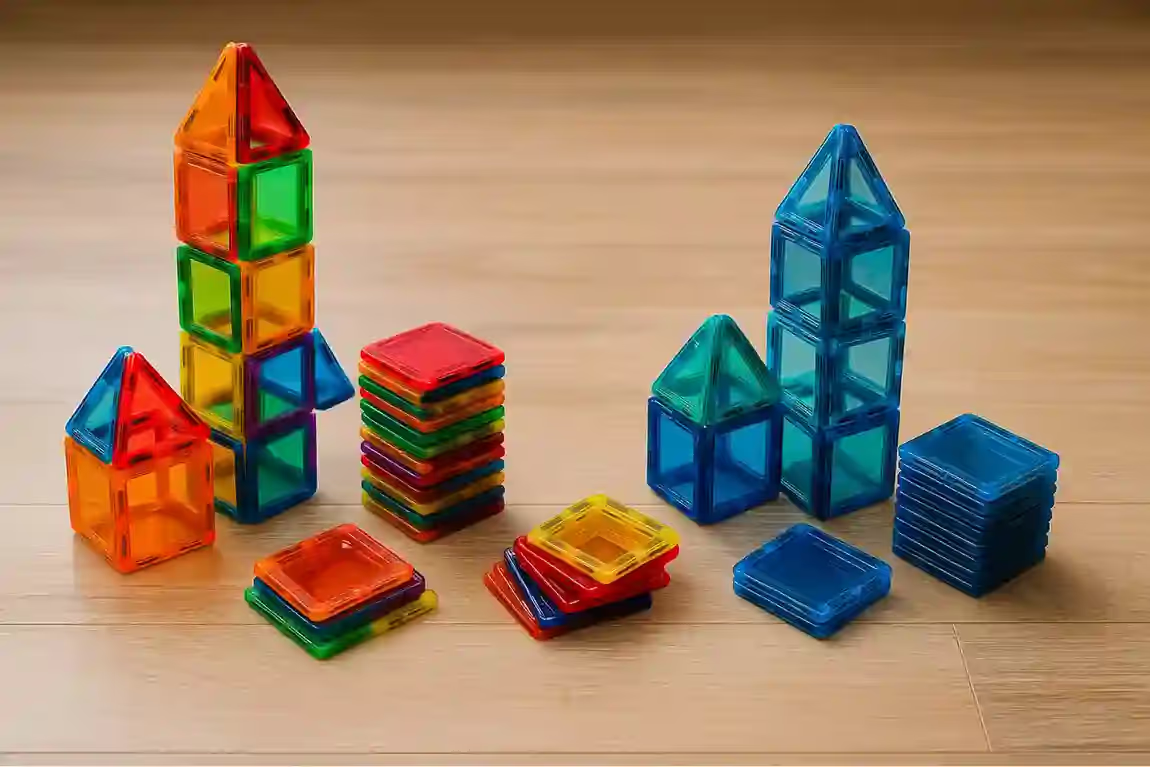
Consider buying directly from manufacturer websites when possible, even if prices are slightly higher. The peace of mind knowing you're getting authentic, safety-tested products justifies the premium. If you must use Amazon, stick to listings that say "Ships from and sold by Amazon.com" or verified brand stores. Third-party sellers with generic names pose the highest risk.
Join parent communities that share information about toy safety and counterfeit products. Facebook groups, Reddit communities like r/Parenting, and parenting forums often have threads warning about dangerous products before official recalls. Parents who've been burned by counterfeits share their experiences, helping others avoid the same mistakes. These grassroots networks often identify problems faster than regulatory agencies.
Teach older children to recognize quality differences themselves. Show them how to inspect toys for safety, check edges for rough spots, and identify when something seems "off" about a product. This education extends beyond magnetic tiles to general consumer awareness, preparing them to make safe choices as they grow older. Children who understand why quality matters become advocates for safety among their peers.
Establish relationships with local toy stores that specialize in educational products. While often more expensive than online marketplaces, these retailers typically curate their inventory carefully and stand behind the products they sell. The expertise of staff who understand child development and toy safety can guide you toward appropriate products while helping you avoid dangerous counterfeits. Supporting local businesses also strengthens your community and ensures these valuable resources remain available.
The challenge of combating counterfeit toys on online marketplaces reveals limitations in current regulatory frameworks. The Consumer Product Safety Commission has jurisdiction over product safety but limited resources for monitoring the millions of products sold online. The agency relies heavily on consumer complaints, recalls after injuries occur, and cooperation from platforms like Amazon. This reactive approach means dangerous products often reach consumers before being identified and removed.
Legislative efforts to strengthen online marketplace accountability have gained momentum as the counterfeit problem has grown. Proposals include requiring third-party sellers to verify their identities and business information, holding platforms liable for products sold through their systems, and mandating that all products sold online meet the same safety standards as those in physical stores. However, implementation challenges remain significant given the global nature of e-commerce and the ease with which sellers can operate across jurisdictions.
Amazon has implemented some protective measures, including Project Zero, which gives brands tools to remove counterfeit listings, and increased requirements for new sellers. However, critics argue these efforts remain insufficient given the scale of the problem. The company faces competing pressures—tightening controls might reduce counterfeits but also limit the marketplace's breadth and growth that drive profitability. Balancing these interests while protecting consumers remains an ongoing challenge.
The global nature of counterfeit magnetic tiles complicates enforcement and consumer protection. Most counterfeit tiles are manufactured in China and shipped directly to consumers or through intermediaries, making it difficult for US authorities to intervene before products reach buyers. Customs enforcement focuses primarily on large commercial shipments rather than individual packages, allowing counterfeit products to slip through in small quantities that collectively represent enormous volume.
International cooperation on intellectual property enforcement has improved but remains inconsistent. Some countries view counterfeit enforcement as a low priority compared to other trade issues, while others lack resources for effective action. The rise of direct-to-consumer shipping through services like ePacket has further complicated enforcement by increasing the volume of small packages crossing borders and making inspection of each package logistically impossible.
The proliferation of counterfeit magnetic tiles on Amazon isn't just a consumer protection issue—it's a child safety crisis hiding in plain sight. When products designed for children's developing minds and bodies are manufactured without safety oversight, sold through deceptive practices, and contain hazardous materials, every purchase becomes a potential health risk.
The solution doesn't require avoiding magnetic tiles entirely—these remain valuable educational tools when properly manufactured. Instead, we need informed consumers who recognize red flags, support legitimate brands, and report dangerous products. Every parent who identifies and avoids counterfeits, leaves warning reviews, and reports safety hazards helps protect all children.
Your child deserves toys that inspire learning without risking their health. The extra $30-50 spent on legitimate magnetic tiles buys more than better plastic and stronger magnets—it buys safety testing, quality control, and peace of mind. In a marketplace flooded with counterfeits, your vigilance becomes the last line of defense between dangerous products and your family's wellbeing.
The broader implications of counterfeit toys extend beyond individual purchasing decisions to fundamental questions about how we regulate commerce, protect children, and hold platforms accountable for the products sold through their systems. As consumers, we vote with our wallets about what kind of marketplace we want. Choosing legitimate products, even at higher prices, signals that safety and quality matter more than rock-bottom prices. This collective action creates market pressure that can drive change more effectively than regulation alone.
The future of toy safety in the era of global e-commerce will be determined by the choices we make today. By educating ourselves about counterfeits, sharing information with other parents, and refusing to accept dangerous products regardless of price, we can push platforms and regulators toward more effective consumer protections. Our children deserve to play with toys that are safe, educational, and built to last—settling for anything less perpetuates a system that puts profit ahead of child welfare.
NOVEMBER 21, 2025
NOVEMBER 21, 2025
NOVEMBER 21, 2025
NOVEMBER 20, 2025
NOVEMBER 20, 2025