

Magnetic Blocks That Work With LEGO: Hybrid Building Systems Guide
NOVEMBER 21, 2025
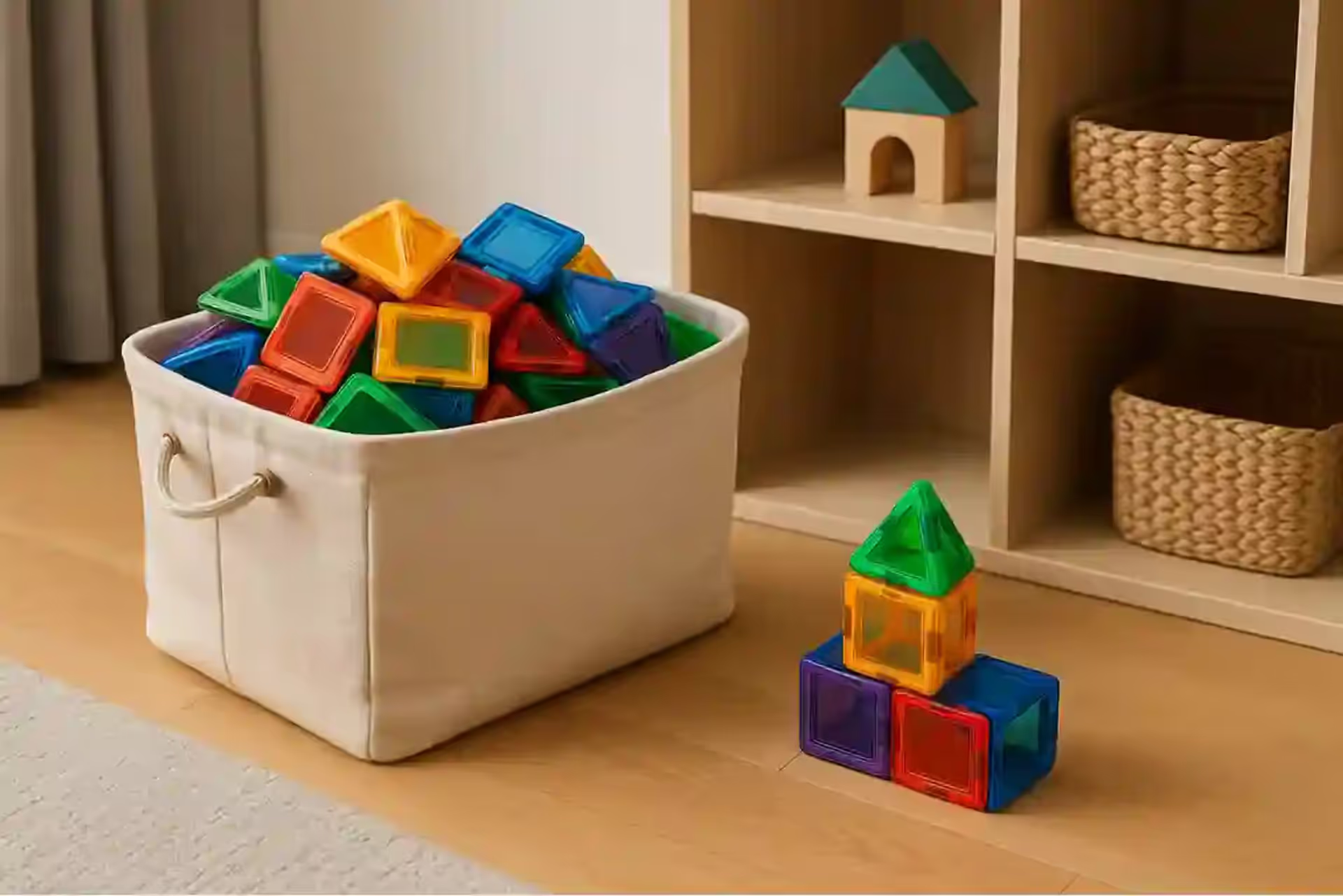
Your 900-square-foot apartment just became a magnetic block construction zone, again. The coffee table displays a half-built castle, tiles lurk under the couch, and that carefully curated minimalist aesthetic has surrendered to primary-colored chaos. You bought magnetic blocks for their educational value, but nobody mentioned they'd colonize every horizontal surface in your home. The challenge isn't just storage—it's maintaining a livable adult space while giving your children room to build and explore.
Small-space living with magnetic blocks requires rethinking both storage and play patterns. Unlike suburban homes with dedicated playrooms, apartment dwellers must make every square foot multitask. The magnetic blocks that scatter across your living room floor in the evening need to disappear completely when guests arrive, yet remain accessible enough that children can independently access them. This balancing act between accessibility and invisibility drives every storage decision in small-space parenting.
Magnetic blocks present unique storage challenges that standard toys don't. Their magnetic properties mean they can't be randomly tossed into bins—they'll clump together into an impossible-to-separate mass. The flat shape that makes them perfect for building also makes them terrible for conventional toy storage. A modest 100-piece set spreads across more surface area than 500 LEGO bricks, yet conventional toy organizers assume toys are roughly spherical or cubic.
Weight distribution becomes critical in small spaces where every storage solution must be wall-mounted or tucked into furniture. Magnetic tiles concentrate weight at their edges where magnets reside, making them heavier than they appear. A full container of magnetic blocks can weigh 15-20 pounds—too heavy for command strips or lightweight shelving. This weight, combined with children's tendency to grab entire containers, means storage solutions must be both robust and positioned where falling containers won't cause injury.
The magnetic fields themselves create unexpected storage problems. Metal shelving becomes magnetized over time, making tiles stick where they shouldn't. Credit cards and electronics stored nearby risk damage. Even non-magnetic materials can be affected—wooden shelves near strong magnets might have their screws gradually pulled loose. These invisible forces shape what storage solutions actually work versus what seems logical on paper. Understanding basic magnetism principles helps parents anticipate these challenges before purchasing storage systems that won't actually function with magnetic materials.
Most apartment dwellers juggle multiple constraints: no drilling into walls (security deposit), shared living/play spaces, noise concerns from downstairs neighbors, and the need to maintain some semblance of adult aesthetics. Storage solutions from parenting magazines assume you have a mudroom, playroom, or at least a closet to spare. Real apartment life means the magnetic blocks share closet space with winter coats and live under beds that barely clear the floor.
The sonic reality of apartment buildings adds another dimension—magnetic tiles clicking together at 7 AM travels through thin walls. Storage solutions must enable quiet retrieval and cleanup, preventing the cascading crash of tiles that announces playtime to every neighbor within three floors. Resources on apartment living considerations emphasize the importance of noise management in multi-unit dwellings, particularly with families and young children whose activities naturally create sound.
When floor space is measured in inches, walls become prime real estate. But hanging magnetic blocks requires more strategy than mounting a few shelves. The weight and magnetic properties demand solutions that won't gradually fail or damage walls. Over-the-door organizers designed for shoes work brilliantly for magnetic tiles—each pocket holds 5-10 tiles, keeping them separated and visible. The clear pockets let children see available pieces without dumping entire containers, and the weight distributes across the door frame rather than pulling from a single wall point.
Pegboard systems offer customizable vertical storage that adapts as collections grow. Unlike fixed shelving, pegboard allows you to reconfigure storage as needed. Small bins attached to pegboard hooks can sort tiles by color or size, while larger containers hold bulk pieces. The key is mounting pegboard to studs or using appropriate wall anchors—magnetic blocks are too heavy for drywall alone. Cover pegboard with fabric or contact paper to match your decor, transforming functional storage into acceptable wall art. Guidance on proper wall mounting techniques ensures storage systems remain secure under the weight of magnetic tile collections.
Magnetic strips or sheets mounted on walls create storage that exploits the tiles' own properties. A sheet of galvanized steel (available at hardware stores for under $30) mounted to the wall becomes an interactive storage surface. Children can build directly on the wall, and cleanup simply involves sliding tiles into place. This solution works particularly well in narrow hallways or behind doors—spaces that can't accommodate traditional furniture but have unused wall area.
Your coffee table, ottoman, and bench seating already occupy precious floor space—make them earn their keep through hidden storage. Ottoman storage cubes that adults use as footrests can hold complete magnetic block collections inside. Choose models with slow-close hinges to prevent finger-smashing and noise. The flat top provides a building surface, while the hidden storage maintains living room aesthetics. When shopping, test weight capacity—not all storage ottomans can handle 20 pounds of magnetic tiles plus a toddler jumping on top.
Coffee tables with lift-tops or built-in drawers become command centers for magnetic block play. The lifting mechanism reveals storage compartments perfectly sized for tile organization, while the raised surface creates an instant building platform at comfortable height for standing toddlers or seated adults. After play, everything disappears and your coffee table returns to its adult function. Look for tables with soft-close mechanisms and safety locks to prevent unsupervised access and accidental drops.
Window seats with storage transform dead space into functional square footage. That awkward bay window or radiator cover becomes a reading nook that secretly houses magnetic blocks. Custom-built solutions are ideal but expensive; IKEA's storage systems or similar modular furniture can create window seat storage for a fraction of custom pricing. Add cushions on top for seating, and you've created a cozy spot that stores toys, provides seating, and doesn't consume floor space.
Different storage solutions offer varying capacities and accessibility profiles. Over-door organizers hold 100-150 tiles with zero floor space footprint and remain child-accessible at appropriate door heights. Storage ottomans accommodate 200-300 tiles as dual-purpose furniture but require supervision to prevent children from accessing them unsafely. Under-bed rolling storage hides 300-500 tiles completely but proves less convenient for daily access. Wall-mounted bins store 150-200 tiles using only wall space with height adjustable to child needs. Magnetic wall sheets display and store 50-100 tiles flat against walls, combining display with functional storage.
Every apartment has dead space under beds, couches, and cabinets. This shadow realm becomes prime storage territory with the right equipment. Under-bed storage boxes designed for wrapping paper work perfectly for magnetic tiles—long, flat, and shallow. The key is choosing boxes with wheels and heights that actually clear your furniture. Measure twice, buy once. Nothing's worse than storage boxes that almost fit, leaving you with unusable containers and unsolved storage problems.
Create custom under-couch storage by attaching casters to shallow wooden trays. These roll out for play and disappear completely when pushed back. The tray edges prevent tiles from scattering, and the low profile means even small children can access their toys independently. Use piano hinges to create folding lids that prevent dust accumulation while maintaining the low profile necessary for under-furniture storage.
Don't overlook the space under kitchen cabinets, bathroom vanities, and entryway furniture. Magnetic strip tape applied to these hidden surfaces creates instant storage for small sets of frequently-used tiles. Children can stick favorite pieces under the kitchen table for mealtime building, or store special tiles under their desk for homework breaks. These micro-storage solutions prevent the accumulation problem where all tiles migrate to a single, overflowing container.
Creating a "charging station" for magnetic blocks using a metal cookie sheet in a cabinet helps maintain organization. Children learn to "park" tiles on the sheet after play, and the magnetic attraction keeps pieces from sliding when you open the cabinet door. Multiple cookie sheets can slide into cabinet slots like baking pans, maximizing vertical storage in minimal space. This system teaches organization skills while solving storage problems. Children can sort tiles by color onto different sheets, practice patterns, or create "ready sets" for favorite builds. The portability means play can move from room to room without losing pieces.
You don't need all 300 magnetic tiles accessible simultaneously. Rotation systems reduce visible toy volume while maintaining novelty and interest. Divide your collection into three sets, keeping only one accessible at a time. Store inactive sets in harder-to-reach places—top closet shelves, under parent beds, or in basement storage. Monthly rotation creates "new" toy excitement without purchases, and the reduced quantity makes cleanup manageable. Research on toy rotation benefits confirms that children engage more deeply with fewer available toys than with overwhelming variety.
Theme-based rotation aligns with educational goals while controlling chaos. Keep "math tiles" (squares and triangles for geometry) separate from "creative tiles" (varied shapes and colors). Architecture sets with specialized pieces rotate separately from basic building sets. This intentional curation means children engage more deeply with available pieces rather than being overwhelmed by choice. The constraint actually increases creativity—limitation breeds innovation.
Seasonal rotation makes practical sense in small spaces. Summer tiles might include bright colors and pieces for outdoor building, stored in a grab-and-go container for park visits. Winter sets focus on indoor projects with more complex pieces that require table space. Holiday-themed rotations—red and green for Christmas, pastels for spring—keep the collection fresh while reducing the total volume in circulation at any time.
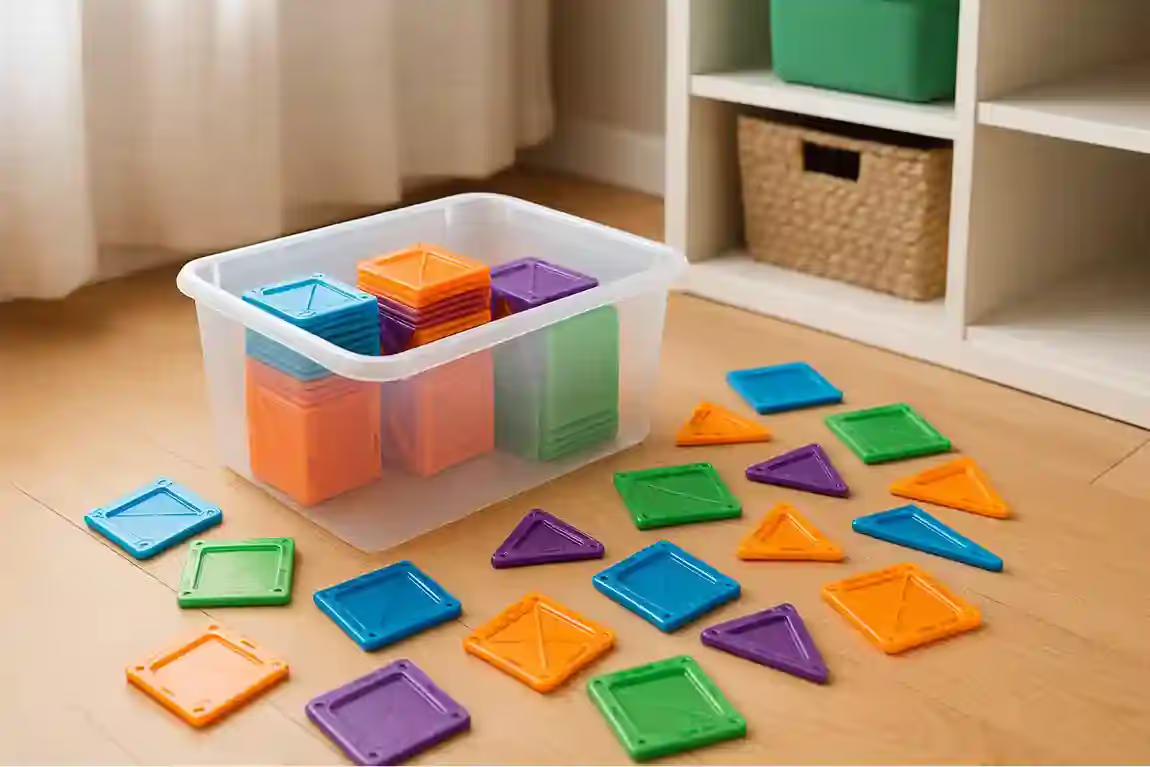
Small spaces benefit from portable play systems that can move between rooms or leave entirely. A lap desk becomes a mobile magnetic block platform that works on couches, beds, or floors. Choose models with raised edges to contain tiles and cushioned bottoms to protect furniture. When play ends, the entire setup—tiles and platform—stores vertically in a closet slot. This portability means magnetic block play isn't confined to one room, reducing the sensation that toys have conquered your entire apartment.
Rolling carts designed for craft supplies excel at magnetic block organization. The multi-tier design separates tiles by type while wheels enable movement between rooms. During play, the cart parks beside the action. After play, it rolls into a closet or behind a door. Choose carts with locking wheels to prevent runaway toys and lips on each shelf to contain spills. The vertical design maximizes storage in minimal floor space. Advice on organizing small spaces emphasizes mobility and multi-functionality as key principles for apartment living.
Backpack storage transforms magnetic blocks into portable entertainment. A structured backpack with internal dividers keeps tiles organized while enabling play at grandparents' houses, waiting rooms, or parks. This mobility reduces apartment pressure—when walls close in, the magnetic blocks can leave. Choose backpacks with rigid frames that prevent tile damage and waterproof materials for outdoor adventures. The backpack hanging on a hook takes zero floor space while keeping toys ready for immediate departure.
Magnetic tiles create specific sounds that penetrate thin apartment walls and floors—the sharp click of connection, the crash of falling structures, and the rattle of cleanup. Storage solutions must address noise alongside organization. Felt-lined storage containers muffle the sound of tiles dropping in during cleanup. Yoga mats or foam play mats under building areas absorb impact noise when structures collapse. These solutions protect both neighbor relationships and security deposits from angry landlord confrontations.
Time-based storage systems respect neighbor schedules. Morning tiles might be fabric-covered foam blocks that build silently, while magnetic tiles emerge after 10 AM when neighbors are awake. Evening cleanup happens in stages—quiet sorting into containers rather than the crashing cascade of dumping everything at once. Teaching children "apartment manners" around toy storage becomes part of urban living skills. Understanding noise ordinances and courtesy helps families navigate multi-unit living successfully.
Sound-dampening storage furniture serves double duty. A storage bench with acoustic foam inside absorbs sound while containing toys. Closet organizers with fabric drawers instead of plastic bins reduce noise during access. Even the placement matters—storage units against shared walls create sound barriers while those against exterior walls minimize noise transmission. These considerations shape purchasing decisions in ways suburban families never contemplate.
Studio apartment dwellers face the ultimate storage challenge—the bedroom is the living room is the playroom. Here, magnetic blocks must truly disappear when not in use. Consider a murphy bed with built-in shelving that closes to hide toys completely. Room dividers with storage compartments create play zones that can be reconfigured instantly. A secretary desk with a fold-down front becomes a building station that transforms into adult furniture in seconds.
The key is furniture that shape-shifts between adult and child functions without looking like either compromise. Your dinner guests shouldn't know magnetic blocks live in your coffee table, and your child shouldn't feel their toys are unwelcome intrusions in adult space. Solutions for studio apartment living emphasize multi-functional furniture and clever space division without physical barriers that make small spaces feel smaller.
Sometimes hiding magnetic blocks isn't possible—your apartment is just too small. When toys must remain visible, make them part of your decor rather than fighting their presence. Display exceptional magnetic block creations as art using floating shelves or shadow boxes. A well-built geometric structure in a frame becomes sculpture rather than toy clutter. This approach validates children's creativity while maintaining visual appeal.
Color coordination between magnetic blocks and room decor reduces visual chaos. If your living room features blue and gray, prioritize those tile colors in accessible storage while relegating bright reds and yellows to hidden containers. Clear containers look less cluttered than opaque bins, creating transparency that feels intentional rather than chaotic. When toys match the room's color scheme, they read as design choices rather than intrusions.
Strategic lighting transforms visible storage into design features. LED strips inside storage cubbies create museum-like displays of magnetic block collections. Backlighting on wall-mounted magnetic sheets turns building surfaces into illuminated art installations. This thoughtful presentation elevates toys from clutter to curated collections, making small spaces feel intentional rather than overwhelmed. Interior design principles for small space aesthetics demonstrate how strategic choices transform functional necessities into design features.
Storage systems fail when cleanup requires more effort than parents and children can sustain. The five-minute cleanup must be actually achievable in five minutes, not parental fantasy. This means storage locations within arm's reach of play areas, containers that don't require precise sorting, and systems simple enough for tired parents and overtired toddlers. The perfect organizational system that takes 30 minutes to maintain will deteriorate into chaos within a week.
One-motion storage reduces cleanup friction. Magnetic tiles should go from floor to storage in a single movement—sweep into a bin, stick onto a magnetic wall, or slide into a drawer. Multi-step processes (sort by color, then by size, then by shape) guarantee failure. Save complex organization for monthly deep cleans rather than daily maintenance. The daily system should prioritize speed and simplicity over perfection.
Make cleanup itself engaging through gamification and tools. A "magnetic tile vacuum" (a magnetic sweeper bar) makes gathering tiles entertaining. Racing cleanup against a timer adds excitement. A special cleanup song that lasts exactly as long as cleanup should take provides structure. These strategies work because they acknowledge the reality of tired families in small spaces rather than pretending everyone has unlimited energy for perfect organization. Research on teaching children organizational skills confirms that systems children can execute independently prove more sustainable than parent-dependent methods.
Essential items for magnetic block storage in small apartments include over-door shoe organizers ($15-25), under-bed storage boxes with wheels ($30-40), magnetic cookie sheets ($10 each), felt drawer liners ($20), and wall-mounted magnetic boards ($40-60). These basics address most storage needs without major investment or permanent installation.
Upgrade options for families ready to invest more include storage ottomans with safety hinges ($80-120), rolling craft carts ($40-70), wall-mounted pegboard systems ($50-100), and lift-top coffee tables ($200-400). These solutions offer greater capacity and functionality but require larger budgets and sometimes more permanent installation.
DIY possibilities allow creative parents to build custom solutions affordably. Under-couch rolling trays cost about $30 in materials, magnetic walls from sheet metal run approximately $40, PVC pipe wall organizers cost around $25, and repurposed spice racks for small tiles average $20. These projects require time and basic skills but offer customization impossible with commercial products.
Learning from families who've successfully navigated magnetic block storage in tight quarters provides practical insights beyond theoretical advice. The Martinez family in their 750-square-foot Brooklyn apartment installed a fold-down table on their living room wall that serves as dining surface, work desk, and building platform. When raised, the table reveals magnetic blocks stored in hanging fabric pockets on the wall behind it. This three-in-one solution eliminated their need for separate dining, work, and play furniture.
The Chen family solved their studio apartment challenge with a custom loft bed for their five-year-old. The space underneath became a dedicated building zone with magnetic walls on three sides and storage drawers below. The vertical solution gave their daughter her own "room" while leaving the main living area for adult use. The magnetic walls mean structures can stay up for days without consuming floor space, and the enclosed feeling creates focus during building sessions.
Single parent Jessica transformed her coat closet into a magnetic block station by removing the door and installing a tension rod with curtain. Pegboard on the back wall holds sorted tiles, while a fold-down shelf creates building surface. When closed, the curtain presents a neat appearance. When open, everything remains accessible at child height. This solution cost under $75 and required no permanent modifications to the rental apartment.
Living with magnetic blocks in limited space forces families to confront deeper questions about toy ownership and childhood experiences. The suburban playroom model assumes more is better—more toys, more space, more stuff. Small-space living demands intentionality that often produces paradoxically richer experiences. When children have fewer toys in smaller spaces, they engage more deeply with what's available, developing focus and creativity that endless options don't require.
The visibility of toys in small apartments also affects parenting decisions. In houses with dedicated playrooms, toys can be chaotic behind closed doors. In apartments where play spaces are living spaces, parents maintain higher standards for organization by necessity. This forced organization teaches children responsibility and care for belongings earlier than they might learn otherwise. The small-space constraints that feel limiting actually scaffold important life skills.
However, parents must guard against over-emphasizing order at the expense of play. The tension between maintaining adult space aesthetics and allowing messy creative play creates guilt and stress. Finding balance means accepting certain hours when the living room is a construction zone and implementing storage systems that restore order quickly afterward. The goal isn't maintaining showroom perfection but creating sustainable systems allowing both adult peace and childhood joy.
Magnetic block collections tend to grow over time through gifts, additions, and expansion sets. Small-space families must establish clear boundaries about collection size before overflow becomes crisis. One strategy involves the "one in, one out" rule—new magnetic blocks arrive only when old ones leave through donation or sale. This maintains constant collection size regardless of external pressure to acquire more.
Another approach sets specific volume limits—magnetic blocks cannot exceed two storage bins, one ottoman, or whatever capacity your chosen storage system provides. When that limit is reached, children participate in decisions about what stays and what goes. This teaches valuable lessons about curation, decision-making, and understanding that more isn't always better. The constraints become learning opportunities rather than deprivations.
Some families implement buy-back programs where children can trade magnetic blocks they've outgrown for new toys better matching current interests. The physical act of removing old tiles to make room for new interests reinforces that possessions are tools for current needs, not permanent fixtures requiring infinite accommodation. This flexibility prevents the accumulation that overwhelms small spaces while validating that interests and needs change over time.
Living with magnetic blocks in a small apartment requires accepting certain realities. Your space will never look like a minimalist Instagram post. Tiles will occasionally escape containment. Your coffee table will sometimes be a construction site. This isn't failure—it's the reality of raising creative, engaged children in urban environments. Understanding apartment parenting realities helps families set realistic expectations rather than striving for impossible standards.
The key is finding your family's balance between accessibility and order. Maybe that means accepting visible toys in exchange for independent play that lets you work from home. Perhaps it requires stricter boundaries but more intentional play sessions. Each family's solution looks different because each small space presents unique constraints and opportunities.
Remember that this phase is temporary. The magnetic blocks that overwhelm your 700-square-foot apartment today will eventually fit in a single box. The storage systems you develop now teach children organization skills they'll use throughout their lives. Your small space isn't limiting their play—it's teaching them creativity within constraints, a skill that serves them far better than unlimited space ever could.
Your apartment might be small, but your children's imagination isn't. The same 600 square feet that feel cramped to adults represent infinite possibility to young builders. Every storage solution that respects both realities—adult need for order and children's need for accessible play—moves your family toward sustainable small-space living.
The perfect storage system isn't the one with the most compartments or the cleverest hiding spots. It's the one your family actually uses. Whether that's a simple over-door organizer or an elaborate murphy bed system, success is measured in reduced stress, not Instagram likes. Your small space forces creative solutions that families with playrooms never discover.
Embrace the magnetic block chaos as temporary art installation in your life's gallery. These tiles scattered across your tiny living room represent childhood unfolding in real-time. The storage solutions you implement aren't just about containing toys—they're about creating space for growth, learning, and joy within whatever square footage you call home. Your children won't remember the size of the apartment, but they'll remember that there was always room to build.
The financial reality of apartment living often means families sacrifice space for location, choosing smaller homes in neighborhoods with better schools, shorter commutes, or richer cultural opportunities. These trade-offs benefit families in numerous ways that justify the spatial constraints. The storage challenges created by magnetic blocks in small apartments are simply one cost of these larger benefits. By implementing thoughtful storage solutions, families capture the developmental benefits of magnetic blocks without surrendering their living space to toy chaos.
Consider that children raised in small spaces often develop stronger organizational skills, greater creativity within constraints, and better awareness of shared space dynamics than peers with unlimited play areas. The magnetic block storage systems you implement teach these lessons daily through practical application rather than abstract instruction. Your child learns that belongings require care and proper storage, that shared spaces demand consideration of others' needs, and that creativity flourishes within boundaries rather than requiring unlimited resources. These lessons, acquired through the daily reality of small-space living with toys, provide foundational skills for successful adult life in ways that suburban playrooms cannot replicate.
Even well-designed storage systems require ongoing maintenance and occasional troubleshooting. Magnetic tiles accumulate dust and grime from handling, affecting both their appearance and magnetic properties. Monthly cleaning prevents buildup that makes pieces less appealing to use. Wipe tiles with slightly damp microfiber cloths, avoiding harsh chemicals that might damage plastic or weaken magnets. For stubborn dirt, mild dish soap solution works safely. Ensure complete drying before storage to prevent mildew in enclosed containers.
Storage containers themselves need regular attention. Check under-bed boxes for dust accumulation that transfers to tiles. Empty and vacuum storage ottomans quarterly to remove the inevitable debris that accumulates despite best efforts. Inspect wall-mounted systems for secure attachment, tightening any loose screws or anchors before weight causes failure. These maintenance tasks, scheduled alongside regular cleaning routines, prevent emergency repairs and extend storage system lifespan.
Magnetic properties sometimes create unexpected problems requiring creative solutions. If tiles begin sticking to metal surfaces you don't want them on, apply thin cork or felt sheets to create magnetic barriers. When magnets weaken over time, which rarely happens with quality tiles but occasionally occurs with budget brands, those pieces can become organizer pieces rather than building pieces—use them to hold papers, mark storage container contents, or create magnetic art that doesn't require strong attraction. This flexible thinking prevents throwing away tiles that still have utility despite reduced magnetic function.
Organization systems inevitably drift from their original design as families develop habits and children grow. The storage method perfect for a two-year-old becomes frustrating for a six-year-old with different capabilities and preferences. Schedule annual storage audits where family members discuss what works and what frustrates them about current systems. Be willing to adapt—the pegboard that seemed perfect might need rearrangement, or the over-door organizer might need different pocket allocation. Systems serve families, not vice versa, and should evolve with changing needs.
Apartment conditions change seasonally in ways that affect storage choices and tile behavior. Winter heating creates dry air that increases static electricity, making tiles stick unexpectedly and attracting dust more aggressively. Combat this by running humidifiers near storage areas or using anti-static spray on storage containers. The dry air also makes plastic more brittle, requiring gentler handling to prevent cracks. Children need reminders that cold-weather tiles break more easily than summer ones.
Summer heat affects storage differently, particularly in apartments without air conditioning. High temperatures can slightly weaken magnetic attraction and soften plastic, making tiles more prone to warping if stored improperly. Avoid storing magnetic blocks in direct sunlight or against exterior walls that heat during the day. Stackable storage becomes problematic in heat as weight on softened plastic can cause permanent deformation. Switch to flat storage during summer months to protect tile integrity.
Humidity variations affect both tiles and storage containers. High humidity encourages mildew in enclosed storage, particularly under beds or in closets with poor air circulation. Combat this with silica gel packets in storage containers or by ensuring regular air exchange. Open storage ottomans weekly during humid seasons to refresh air. Low humidity creates static and dryness problems mentioned above. These seasonal adjustments require attention but prevent problems that emerge from treating storage as unchanging across weather conditions.
Holiday seasons bring temporary storage challenges as decorations compete for already-limited space. Some families temporarily relocate magnetic block storage to less convenient locations during decoration periods, accepting reduced toy access for several weeks. Others integrate storage into holiday decor—a storage ottoman becomes Santa's throne, wall-mounted systems get festive fabric covers. These creative integrations maintain functionality while accommodating seasonal needs without permanently expanding storage footprint.
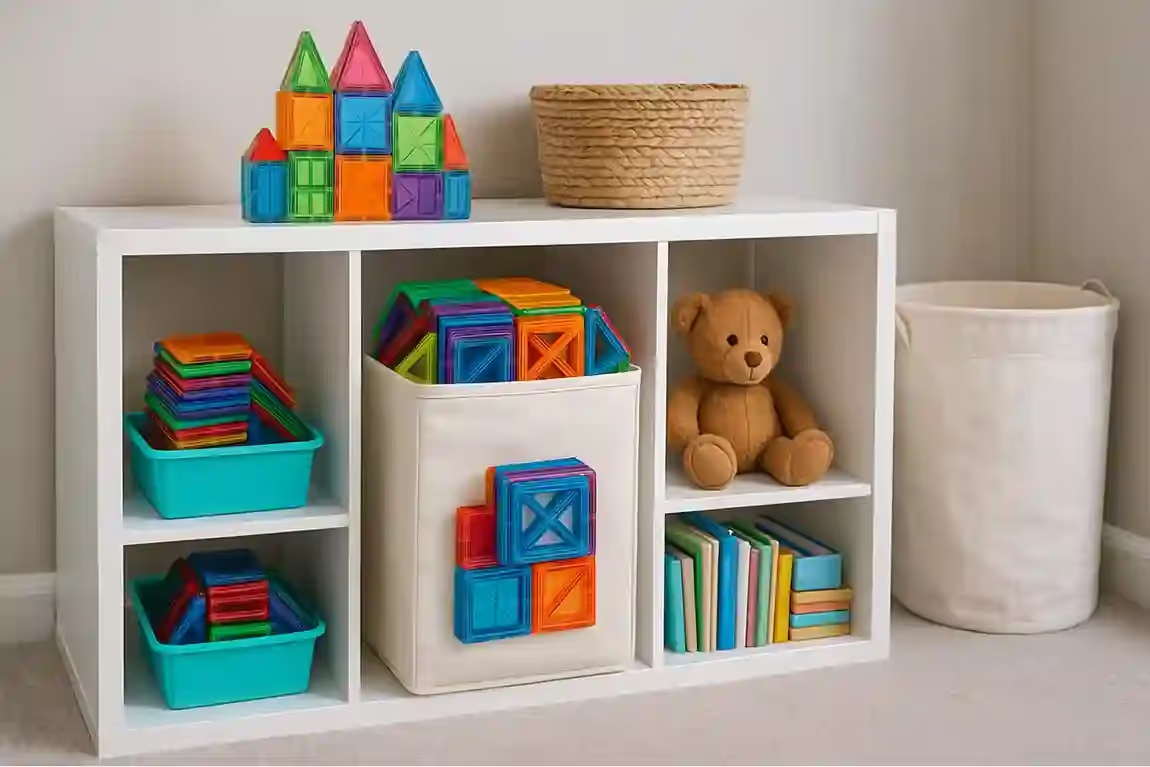
Families with multiple children face compounded storage challenges as each child's magnetic blocks require separation to prevent ownership battles. Color-coding systems help—one child's tiles store in blue containers, another's in red. This visual distinction reduces conflict while teaching property concepts. However, complete separation isn't always possible in tiny apartments where storage space is precious. In these cases, establish clear rules about shared collections and implement check-out systems where children request specific tiles when needed.
Age-appropriate storage heights accommodate different children's needs simultaneously. Lower shelves hold the preschooler's basic tiles while upper shelves store the grade-schooler's advanced sets. This vertical separation acknowledges developmental differences while maximizing wall space. Lazy Susan organizers in shared closets allow each child to rotate their section to the accessible position without displacing siblings' storage. These systems acknowledge individual needs within collective space constraints.
Sibling cooperation around magnetic block storage becomes crucial in small apartments where one child's mess affects everyone. Family meetings establish storage expectations and consequences for violations. Collaborative building projects requiring pooled tile collections teach negotiation and resource sharing. The forced cooperation of small-space living develops social skills through necessity rather than structured lessons. These real-world applications of sharing and compromise prove more effective than abstract teachings about getting along.
Rotation systems become more complex with multiple children but remain valuable for managing total toy volume. Each child's collection might rotate on different schedules aligned with their interests and ages. The five-year-old's monthly rotation differs from the eight-year-old's quarterly rotation, but both reduce simultaneous toy volume while maintaining individual access. Detailed calendars prevent confusion about whose tiles are currently accessible and when changes occur. This organizational overhead pays dividends in reduced clutter and maintained engagement.
Not every family can invest in custom storage systems or premium organizational furniture. Budget constraints don't prevent effective magnetic block storage—they simply require more creativity and effort. Cardboard boxes covered with contact paper or fabric create customized storage at minimal cost. Shoe boxes become individual tile holders sorted by color or shape. Priority mail boxes from the post office are free, sturdy, and come in sizes perfect for tile storage. These solutions lack aesthetic polish but function perfectly well.
Repurposing existing household items eliminates purchasing costs entirely. Old dresser drawers removed from broken furniture become under-bed storage with added casters. Gutters from home improvement stores, mounted horizontally on walls, create unique display and storage for tiles standing on edge. Magazine holders transformed with paint or coverings become desk-side tile organizers. This repurposing reduces waste while solving storage problems essentially free.
Thrift stores and garage sales offer storage furniture at fractions of retail costs. Coffee tables with lift tops that retail for hundreds appear at thrift stores for twenty dollars. Storage ottomans, rolling carts, and bookcases all surface regularly in secondhand markets. The minor wear on used furniture matters little for toy storage compared to the significant savings. Patient shoppers willing to visit multiple thrift stores over several weeks often find perfect solutions for their specific needs at incredible prices.
Community swaps and neighborhood sharing groups provide another budget-friendly resource. Families whose children outgrew magnetic blocks often willingly share or trade storage solutions that no longer serve their needs. Online community groups facilitate these exchanges, connecting families with complementary needs. One family's unwanted shelving becomes another's perfect magnetic block storage, and everyone benefits from the circular economy. These exchanges build community connections while solving storage problems without financial investment.
While magnetic blocks themselves are decidedly low-tech toys, technology can support storage management in helpful ways. Smartphone photos documenting successful storage configurations help families recreate systems after they've been disrupted by moves, renovations, or storage experiments gone wrong. Taking pictures before major changes provides backup plans when new approaches don't work as anticipated.
Apps designed for home organization can track magnetic block storage locations, quantities, and rotation schedules. Simple notes apps work fine for basic tracking, while specialized inventory apps offer barcode scanning and reminder features. Families managing multiple children's separate collections or complex rotation systems find these digital tools reduce mental load associated with organization. However, the technology should support rather than complicate—if app management becomes another burden, abandon it for simpler solutions.
Digital timers and smart home features enhance cleanup routines. Voice-controlled timers allow hands-free cleanup timing when parents are busy elsewhere. Smart lights that change colors signal transition times—white for play, yellow for five-minute warning, red for cleanup complete. These technical enhancements engage children who respond to novelty while automating parental oversight. The technology augments rather than replaces parental involvement, providing tools that make existing routines more effective.
Photography and video documentation serve purposes beyond storage records. Recording children's creations before destruction validates their efforts and creates cherished memories. Digital galleries of magnetic block constructions become family treasures that occupy zero physical space. Some families create annual compilation videos showing building skill progression, with storage systems visible in backgrounds documenting how organizational approaches evolved alongside developmental growth. These artifacts justify storage efforts by capturing why families bother with magnetic blocks despite spatial challenges.
Despite best efforts, sometimes magnetic block collections simply exceed what small spaces can reasonably accommodate. Honest assessment of whether storage struggles stem from inadequate systems or excessive quantity requires courage. If children regularly complain they can't find pieces, if cleanup consistently exceeds thirty minutes, or if magnetic blocks dominate multiple rooms despite elaborate storage, the collection probably needs reduction.
Downsizing doesn't mean eliminating magnetic blocks entirely. Strategic culling that removes duplicate shapes, broken pieces, and least-used colors might reduce volume sufficiently to make storage manageable. Keep favorite and most versatile pieces while donating or selling others. Many families discover that using half their collection brings more enjoyment than maintaining the full set that never gets fully utilized because setup and cleanup feel overwhelming.
Selling excess magnetic blocks through online marketplaces recovers some investment while helping another family. Quality magnetic tiles hold resale value well, particularly if sold as curated sets rather than random assortments. Take time to clean pieces, sort by type, and photograph attractively. Include storage containers in sales to provide buyers with complete solutions. The money recouped can fund more appropriate storage systems for the reduced collection or be redirected toward other family needs.
Alternatively, consider magnetic blocks as temporary toys rather than permanent fixtures. When children's interest wanes or storage becomes impossible, pack everything away for several months or a year. This extended rotation often reignites interest when tiles reappear while providing respite from storage challenges during the break. Some families discover their children have outgrown magnetic blocks during the break and can confidently donate without regret. This experimental approach prevents hasty decisions while gathering data about actual usage and value to the family.
NOVEMBER 21, 2025
NOVEMBER 21, 2025
NOVEMBER 21, 2025
NOVEMBER 20, 2025
NOVEMBER 20, 2025