

Magnetic Blocks That Work With LEGO: Hybrid Building Systems Guide
NOVEMBER 21, 2025
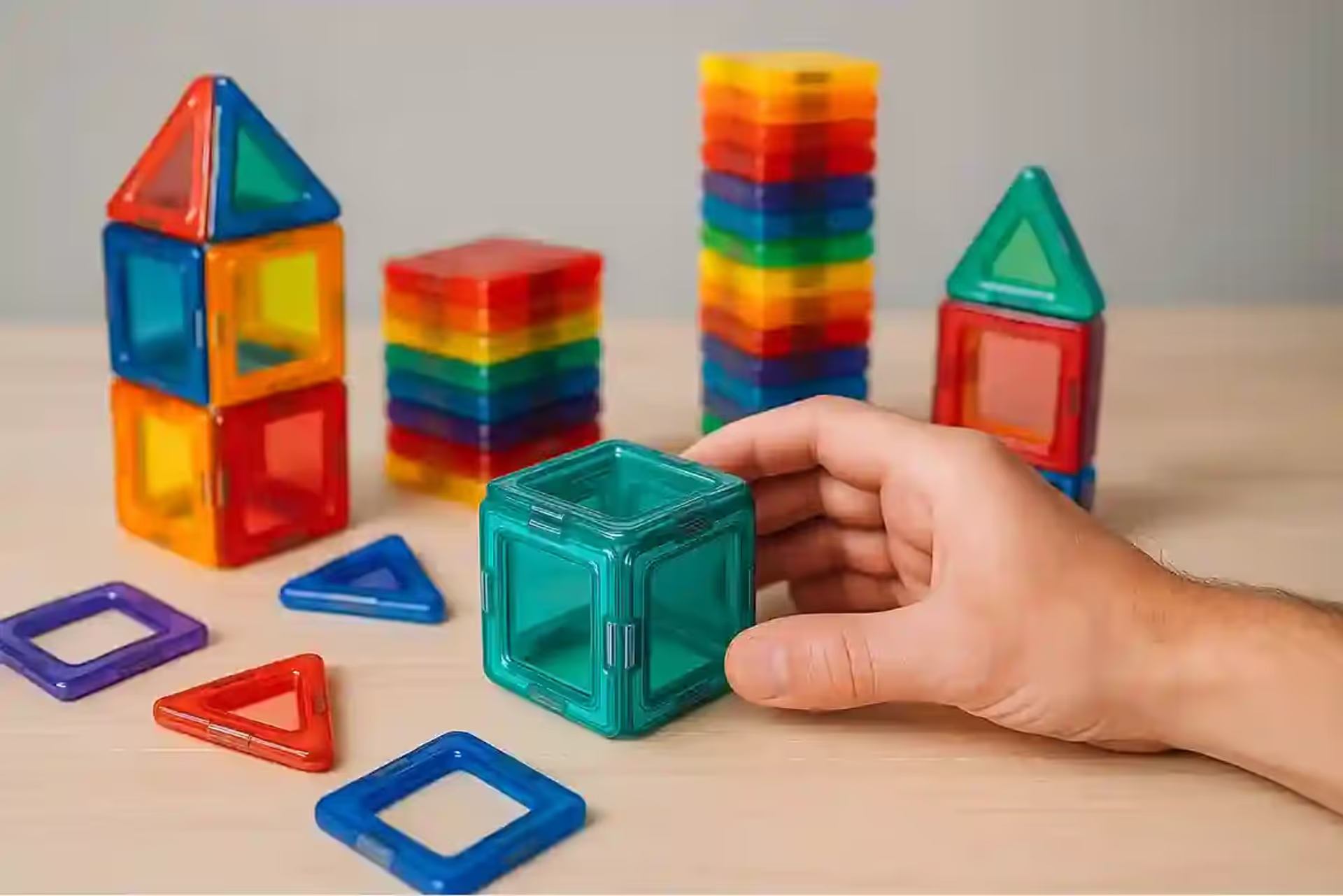
That satisfying "click" when magnetic tiles connect isn't accidental—it's engineered. Some magnetic blocks snap together with a crisp, definitive sound that tells you they're properly connected. Others meet silently, leaving you wondering if the connection is secure. This acoustic difference isn't about quality or price but rather deliberate engineering choices that affect everything from play satisfaction to noise levels in classrooms. The science behind these sounds reveals a fascinating intersection of physics, materials engineering, and human psychology.
The click you hear—or don't hear—when magnetic blocks connect results from complex interactions between magnetic forces, material properties, and structural design. Each manufacturer makes specific choices about cavity resonance, material density, and connection mechanisms that determine their product's acoustic signature. These decisions shape not just how toys sound but how children perceive quality, understand connections, and receive sensory feedback during play. Let's explore the hidden engineering that determines whether your magnetic blocks click, thud, or remain mysteriously silent.
When two magnetic blocks approach each other, invisible forces create very visible—and audible—results. As the magnets get close enough, the attractive force overcomes the inertia of the tiles, causing rapid acceleration over the final millimeters. This acceleration can reach 50-100 m/s², causing the tiles to collide with significant force despite their light weight. The collision creates pressure waves in the surrounding air—what we perceive as sound.
The frequency and amplitude of these pressure waves determine the sound's character. A sharp click indicates high-frequency components (2,000-5,000 Hz) with rapid onset and decay. This happens when rigid materials collide with minimal dampening, creating a brief but intense acoustic event. The human ear interprets these characteristics as "crispness" or "clarity," triggering satisfaction centers in the brain that evolved to appreciate precision in tool use—the same neural pathways that make bubble wrap popping so satisfying.
But the collision itself is only part of the story. The tile's structure acts as a resonator, amplifying certain frequencies while dampening others. Hollow tiles with air cavities create Helmholtz resonance—the same principle that makes blowing across a bottle opening produce a tone. The cavity's size, shape, and opening determine which frequencies get amplified. Manufacturers who want a distinctive click tune these cavities like acoustic engineers tune concert halls, creating spaces that enhance the frequencies that human ears find most satisfying.
The speed of sound through plastic also influences the acoustic signature. In ABS plastic, sound travels at approximately 2,200 meters per second—about six times faster than through air. This rapid transmission creates sharp, well-defined clicks because vibrations propagate through the tile structure almost instantaneously. The tile essentially becomes a miniature speaker, with its entire surface radiating sound waves simultaneously. The coordination of these waves determines whether they reinforce each other to create a loud click or interfere destructively to produce a muted sound.
Every magnetic block click contains multiple acoustic elements that combine to create its unique sound. The initial impact generates the attack—the sharp onset that grabs attention. The tile body's vibration creates the sustain—how long the sound continues. The cavity resonance adds tonal color—whether the click sounds bright, warm, or hollow. Finally, material damping determines the decay—how quickly the sound fades.
Engineers manipulate each component through design choices. Thicker walls increase mass, lowering the fundamental frequency. Strategic ribbing inside tiles can break up standing waves that create unwanted resonances. Even the placement of magnets affects sound—centered magnets create symmetrical vibrations, while offset magnets produce complex acoustic patterns.
The temporal structure of the click matters as much as its frequency content. The ideal click for maximum satisfaction features an attack time under 10 milliseconds—fast enough to feel instantaneous but not so abrupt as to sound harsh. The sustain should last 50-100 milliseconds, providing confirmation without lingering annoyingly. The decay needs careful tuning too; too rapid and the sound feels artificial, too slow and it becomes muddy. Manufacturers use computer modeling to predict these temporal characteristics before cutting expensive injection molds.
The type of plastic used in magnetic blocks profoundly affects their acoustic properties. ABS (Acrylonitrile Butadiene Styrene), the most common choice, has a density of 1.04 g/cm³ and a Young's modulus of 2.3 GPa. These properties create a relatively stiff material that transmits sound waves efficiently, producing clear, bright clicks. The molecular structure of ABS, with its styrene providing rigidity and butadiene adding toughness, creates an ideal balance for acoustic transmission without excessive brittleness.
Polycarbonate tiles sound different despite looking similar. With a higher density (1.2 g/cm³) and different molecular structure, polycarbonate produces a deeper, more muted click. The material's superior impact resistance comes from its ability to absorb and dissipate energy—the same property that makes it excellent for safety equipment also dampens acoustic vibrations. This is why premium brands using polycarbonate for durability often have less satisfying clicks than cheaper ABS alternatives.
Some manufacturers blend plastics or add modifiers that change acoustic properties. Glass fiber reinforcement increases stiffness, raising the pitch of clicks and making them sharper. Rubber modifiers added for impact resistance have the opposite effect, absorbing vibrations and muffling sounds. Even colorants affect acoustics—titanium dioxide (white pigment) increases density and damping, while organic dyes have minimal impact. This explains why identical tiles in different colors might sound slightly different.
The crystallinity of the plastic also plays a crucial role in sound production. Amorphous plastics like ABS have randomly arranged polymer chains that scatter sound waves in complex ways, creating rich harmonic content. Semi-crystalline plastics like polypropylene have ordered regions that conduct sound more uniformly, producing purer tones with fewer harmonics. This fundamental difference in molecular organization explains why tiles made from different plastic families can never sound exactly alike, regardless of other design parameters.
Surface finish further modifies acoustic properties in subtle but perceptible ways. High-gloss finishes reflect more sound, making clicks seem slightly louder and brighter. Matte finishes scatter sound waves, softening the acoustic impression. Textured surfaces create micro-scale resonances as air trapped in surface irregularities vibrates during impact. These surface effects operate at the threshold of perception but contribute to the overall sense of quality and satisfaction that users experience.
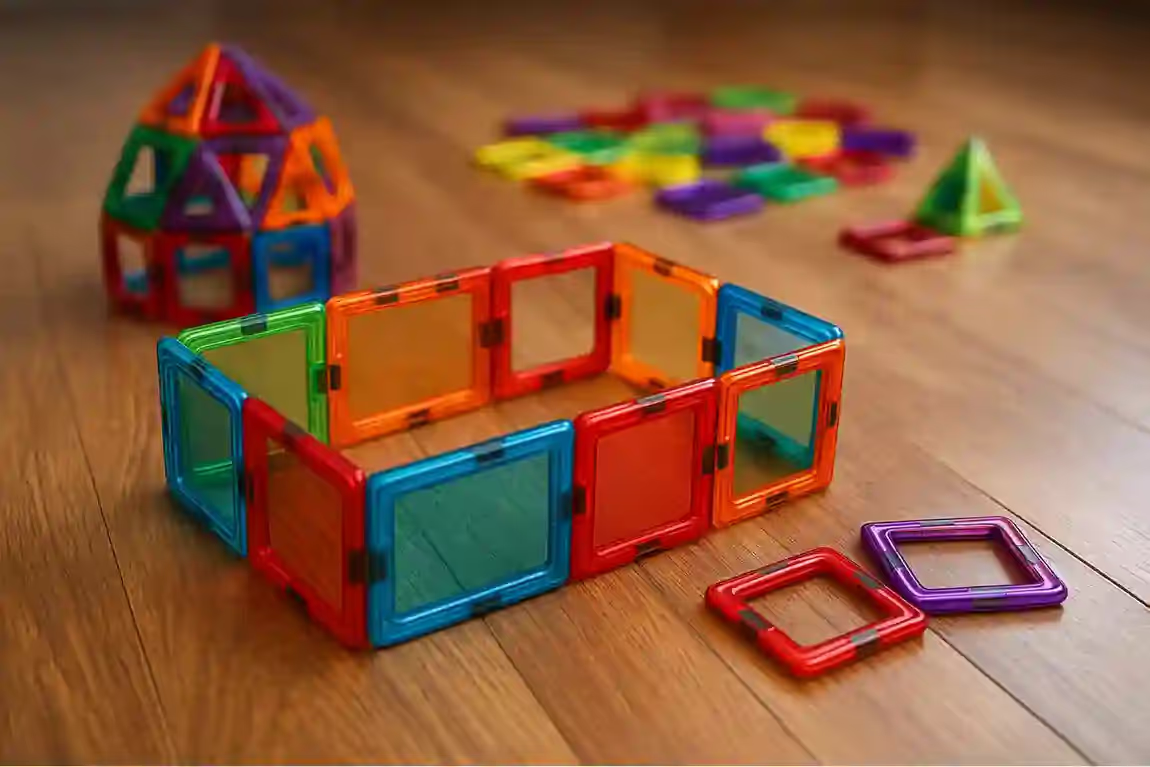
How magnets are secured inside tiles dramatically affects sound production. Rigidly mounted magnets—glued or ultrasonically welded in place—transfer all collision energy directly to the tile structure, creating louder, clearer clicks. The magnet and plastic essentially become one acoustic unit, vibrating together at specific frequencies determined by their combined mass and stiffness. This rigid mounting is why Magna-Tiles produce their characteristic bright click.
Loosely mounted magnets tell a different acoustic story. Some manufacturers allow magnets to float in slightly oversized cavities, held by friction or weak adhesive. When tiles connect, the magnets move independently from the plastic shell, creating complex multi-impact sounds. First, the magnets collide inside their cavities, then milliseconds later, the plastic edges meet. This double-impact creates a muddy, rattling sound that many perceive as lower quality, even though it might indicate a design that prevents magnet damage from drops.
The most sophisticated mounting systems use controlled compliance—magnets are held firmly enough to prevent rattling but with engineered flexibility that absorbs extreme impacts. Silicone mounting pads, for instance, allow slight magnet movement while dampening vibrations. This creates a muted click that some manufacturers prefer for classroom settings where noise reduction matters more than satisfying acoustics. The engineering challenge lies in achieving consistent sound across thousands of tiles when mounting tolerances are measured in fractions of millimeters.
The orientation of magnets within their cavities affects acoustic properties in ways that surprise even experienced engineers. Magnets mounted flush with the tile surface create direct impacts that maximize sound production. Recessed magnets create an air gap that acts as an acoustic buffer, softening the collision. Some manufacturers deliberately vary magnet depth across different tile types to create a range of acoustic signatures within a single product line, giving users variety while maintaining brand consistency.Mounting MethodSound CharacterFrequency RangeDurability ImpactRigid weldingSharp, clear click2-5 kHz peakHigh stress transferAdhesive mountingModerate click1-3 kHz peakTemperature sensitiveFloating mountRattling, muffled500-2 kHzImpact resistantSilicone dampenedSoft thudBelow 1 kHzExcellent longevitySpring mountedMusical ringMultiple peaksComplex assembly
The geometry of tile edges determines both the quality of magnetic connection and the resulting sound. Sharp, perpendicular edges create point contacts that concentrate impact forces, producing louder, higher-pitched clicks. The smaller contact area means all collision energy transfers through a tiny zone, creating intense local pressures that generate strong acoustic waves. However, these sharp edges also create stress concentrations that can lead to cracking over time.
Beveled or rounded edges distribute impact forces over larger areas, reducing peak pressures and creating softer sounds. The angle of beveling affects both the fundamental frequency and the harmonic content of the click. A 45-degree bevel creates a predictable contact pattern that produces consistent sounds, while variable radius curves create complex contact geometries that generate multiple frequencies. Some manufacturers use compound bevels—different angles on the inner and outer edges—to tune both the connection feel and sound.
Surface texture adds another acoustic dimension. Smooth surfaces create clean contacts with minimal friction, allowing tiles to accelerate fully before impact and producing louder clicks. Textured surfaces—whether from mold patterns or deliberate roughening—create micro-impacts as surface features collide sequentially. This transforms a single sharp click into a brief "zipping" sound as surfaces mesh together. The texture also affects how tiles slide against each other after connection, creating secondary sounds that contribute to the overall acoustic experience.
The precision of edge machining or molding directly correlates with acoustic consistency. Edges with dimensional tolerances of ±0.05mm produce reliable, repeatable sounds. Looser tolerances create variability where sometimes edges meet perfectly for a crisp click, while other times they misalign slightly for a duller thud. This randomness frustrates users who expect consistent feedback from their toys. Premium manufacturers invest heavily in precision tooling specifically to ensure acoustic reliability across millions of connection cycles.
Leading manufacturers employ sophisticated acoustic modeling during the design phase, using finite element analysis to predict sound production before physical prototypes exist. These simulations model the tile as a complex vibrating system with multiple resonant modes. Engineers can virtually test dozens of design variations—adjusting wall thickness, cavity shape, rib placement—to optimize the acoustic signature before committing to expensive production tooling.
Some companies use anechoic chambers to characterize their tiles' acoustic properties scientifically. These specially designed rooms eliminate all echoes and ambient sound, allowing precise measurement of the sound pressure level and frequency spectrum of each click. The data reveals subtle acoustic features imperceptible in normal testing but crucial for understanding how tiles will sound in various environments. This level of acoustic analysis, typically reserved for high-end audio equipment or automotive engineering, demonstrates the sophistication that modern toy design has achieved.
Biomimetic approaches inform some acoustic designs. Researchers studying how woodpeckers impact trees without brain damage have discovered principles applicable to magnetic tile design. The bird's skull contains specialized structures that absorb and redirect impact forces, preventing dangerous vibrations from reaching the brain. Similarly, engineered tiles can incorporate features that channel vibrations away from areas prone to failure while enhancing desirable acoustic resonances. Nature has spent millions of years optimizing impact acoustics—smart engineers learn from these evolutionary solutions.
The click of magnetic blocks serves important psychological functions beyond mere acoustic feedback. Clear clicks trigger dopamine release in the brain's reward system, reinforcing successful connections and encouraging continued play. This neurological response explains why some children prefer clicky tiles even when silent ones might be functionally superior. The sound becomes part of the play experience itself, not just a byproduct of physical interaction.
The absence of expected sounds can actually increase cognitive load. When tiles connect silently, children must visually verify connections, diverting attention from creative thinking to mechanical confirmation. This extra mental step might seem trivial, but it accumulates over hundreds of connections during a building session. The mental energy spent confirming connections reduces the energy available for creative problem-solving and imaginative play. Sound feedback frees the mind to focus on higher-level thinking by handling low-level confirmation automatically.
Acoustic feedback also supports motor skill development in young children. The consistent sound-action pairing helps develop proprioceptive awareness—understanding where their body is in space and how their movements produce specific results. When children hear the click without looking, they learn to trust their kinesthetic sense, building confidence in their physical abilities. This multi-sensory integration forms the foundation for more complex motor skills later in life.
The emotional association with specific sounds shapes brand loyalty in powerful ways. Adults who played with clicking magnetic tiles as children often seek the same acoustic experience for their own children, driven by nostalgia for that particular sound. This emotional connection to acoustic signatures makes sound design a crucial element of long-term brand strategy. Companies that maintain consistent acoustic profiles across product generations benefit from generational loyalty that silent competitors cannot match.
Even within the same product line, magnetic blocks can produce different sounds due to manufacturing variations. Injection molding tolerances of ±0.1mm might seem negligible, but they create measurable acoustic differences. A slightly thicker wall raises the tile's resonant frequency, creating a higher-pitched click. Variations in plastic mixing, cooling rates, or mold wear all affect final acoustic properties. Quality manufacturers maintain tight tolerances not just for fit but for consistent sound.
Magnet variation adds another layer of acoustic inconsistency. Neodymium magnets are graded by magnetic strength (N35, N42, N52), but even within grades, there's typically ±5% variation in field strength. Stronger magnets create higher collision velocities and louder clicks. When manufacturers source magnets from multiple suppliers or use different grades for cost optimization, the resulting tiles can sound noticeably different despite appearing identical.
Assembly processes affect sound more than most realize. Ultrasonic welding parameters—frequency, amplitude, and duration—must be precisely controlled to create consistent joints. Over-welding creates brittle connections that sound harsh and might crack. Under-welding leaves gaps that buzz or rattle. Even the ambient temperature during assembly affects plastic flow and joint quality. Factories that prioritize speed over precision often produce tiles with wildly varying acoustic properties, leading to sets where each piece sounds slightly different.
Statistical process control becomes essential for maintaining acoustic consistency in high-volume production. Manufacturers implementing Six Sigma methodologies sample tiles regularly, testing their acoustic properties alongside dimensional and strength specifications. When sound characteristics drift outside acceptable ranges, production stops for equipment adjustment or material verification. This quality discipline costs money and slows production but ensures customers receive acoustically consistent products that meet expectations every time.
The same magnetic tiles sound different in different environments, and temperature plays a surprising role. Cold plastic becomes stiffer, raising its resonant frequency and creating brighter, sharper clicks. At freezing temperatures, ABS plastic's modulus increases by about 20%, noticeably changing acoustic properties. Conversely, tiles left in hot cars become softer, producing duller, quieter connections. This temperature sensitivity means outdoor magnetic blocks in winter sound dramatically different from indoor summer play.
Humidity affects both magnetic strength and plastic properties, though less dramatically than temperature. High humidity can cause hygroscopic plastics to absorb moisture, increasing damping and muffling sounds. More significantly, humidity affects the air itself—sound travels differently through humid air, with high frequencies attenuating more quickly. This is why magnetic blocks might sound muted on humid days even though the tiles themselves haven't changed.
Age-related changes alter acoustic properties over time. UV exposure degrades polymer chains, making plastic more brittle and changing its acoustic properties. Repeated stress from connections can cause micro-fractures that affect vibration patterns. Dust and oils from hands accumulate in surface textures, dampening sounds. These gradual changes explain why old magnetic tiles often sound different from new ones, even when they appear visually identical.
Altitude affects sound production in ways most users never consider. At higher elevations, lower air pressure reduces acoustic impedance, slightly changing how sound radiates from vibrating tiles. The effect is subtle—unlikely to be consciously perceived—but sensitive measurements reveal measurable differences in sound pressure levels between sea level and mountain environments. For manufacturers serving global markets, this means their products produce slightly different acoustic experiences depending on where customers live.
Some manufacturers deliberately engineer silent or quiet magnetic blocks, and their reasoning extends beyond simple noise reduction. Classroom environments benefit from quieter tiles that don't disrupt concentration or overwhelm sensory-sensitive children. Silent tiles allow for parallel play without acoustic interference—multiple children can build simultaneously without their clicks creating cacophony. This design philosophy prioritizes collective experience over individual satisfaction.
Silent tiles often achieve their quietness through sophisticated dampening systems that actually cost more than simple rigid mounting. Internal rubber gaskets, foam inserts, or viscous dampening compounds all add manufacturing complexity. The engineering required to eliminate sound while maintaining connection strength and durability exceeds that needed for basic clicky tiles. This explains why some premium brands are quieter than budget options—silence is a feature, not a flaw.
Cultural preferences also influence acoustic design. Japanese manufacturers often prioritize quieter operation, reflecting cultural values around noise consideration. European brands might emphasize the satisfying click as a quality indicator. American markets seem split, with educational suppliers preferring quiet tiles while consumer brands amplify the click for satisfaction. These regional differences show that acoustic design isn't purely technical but also cultural.
The Montessori educational philosophy influences some acoustic design decisions. Montessori principles emphasize natural consequences and self-directed learning, where toys provide intrinsic feedback rather than artificial rewards. In this context, the natural sound of tiles connecting serves an educational purpose, teaching cause and effect without extraneous bells and whistles. Manufacturers serving Montessori schools often tune their acoustics to be informative without being overstimulating, walking a careful line between silence and celebration.
Emerging technologies might revolutionize magnetic block sounds. Piezoelectric elements could generate customizable clicks—imagine tiles that play musical notes when connected. Smart materials that change stiffness in response to magnetic fields could create tiles that adjust their acoustic properties based on connection strength. Programmable acoustic metamaterials might allow users to tune their tiles' sound through an app.
Research into haptic feedback suggests that sound might become just one component of multi-sensory connection confirmation. Future tiles might vibrate, change temperature, or emit light when properly connected, reducing reliance on acoustic feedback while enriching the sensory experience. These multi-modal interfaces could provide clearer feedback while remaining quieter, satisfying both the desire for confirmation and the need for peaceful play environments.
Artificial intelligence could personalize acoustic experiences based on user preferences and context. Smart tiles might detect whether children are playing alone or in groups, automatically adjusting their acoustic output accordingly. Machine learning algorithms could analyze successful building sessions and identify optimal acoustic feedback patterns that maintain engagement without causing fatigue. These adaptive systems would represent a dramatic evolution from today's fixed acoustic signatures.
Sustainability concerns will likely influence future acoustic design. As manufacturers shift toward recycled plastics and bio-based materials, acoustic properties will change in unpredictable ways. Engineers will need to develop new design strategies that produce desirable sounds from materials with inconsistent or unfamiliar properties. This challenge might drive innovation in acoustic engineering, leading to breakthrough designs that work with material variability rather than fighting against it.
You can analyze your magnetic blocks' acoustic properties with simple tests. The drop test reveals resonant frequencies—drop a tile from 6 inches onto a hard surface and listen to the pitch. Higher pitches indicate stiffer materials or thinner walls. The shake test exposes mounting quality—a well-mounted magnet should produce no sound when shaken, while rattling indicates loose mounting or manufacturing defects.
The connection speed test demonstrates magnetic damping. Connect tiles slowly and note when the magnetic attraction takes over. Tiles that accelerate suddenly over the last few millimeters will click louder than those with gradual acceleration. This acceleration profile depends on magnet strength, mounting compliance, and edge geometry. By varying connection speed, you can identify the acoustic "sweet spot" where your tiles produce their most satisfying sound.
Temperature testing reveals material properties. Place tiles in the refrigerator for an hour, then compare their click to room-temperature tiles. The change in pitch and volume indicates the plastic's temperature sensitivity. This test also reveals whether manufacturers used consistent materials—tiles that respond differently to temperature likely contain different plastic formulations or additives.
The comparison test helps evaluate acoustic consistency within a set. Connect the same two tile positions repeatedly, listening for variation in sound. Consistent clicks indicate good manufacturing quality and rigid magnet mounting. Variable sounds suggest loose magnets, inconsistent materials, or poor dimensional control. This simple test reveals more about manufacturing quality than any marketing claim.
For those with smartphone recording capabilities, acoustic analysis apps can provide quantitative measurements of click characteristics. Record several connections and examine the frequency spectrum. Professional-quality tiles show clean, consistent peaks in the 2-5 kHz range with minimal low-frequency noise. Poor-quality tiles display muddy spectra with energy distributed across many frequencies and inconsistent peak locations. These visualizations make acoustic differences objectively measurable rather than subjectively perceived.
When selecting magnetic blocks, consider how acoustic properties align with your needs and preferences. For maximum sensory feedback and satisfaction, choose tiles with rigid magnet mounting, ABS plastic construction, and sharp edge geometry. Brands like Magna-Tiles and PicassoTiles typically offer clear, satisfying clicks that reward successful connections and maintain engagement during extended play sessions.
For quiet environments like apartments, classrooms, or homes with multiple children, look for tiles with dampened mounting systems, rounded edges, and polycarbonate construction. Educational suppliers often carry acoustic-optimized options specifically designed for institutional settings where noise control matters. These tiles sacrifice some individual satisfaction for collective peace, making them ideal when multiple sets will be used simultaneously.
For sensory-sensitive children who may find loud, sharp sounds overwhelming or distressing, select tiles with consistent, predictable, moderate-volume sounds. Avoid brands with quality control issues that create varying acoustic signatures across pieces, as the unpredictability can be more disturbing than any particular sound level. Some specialty retailers serving the autism and sensory processing disorder communities curate tile selections specifically for acoustic compatibility with sensitive users.
Budget-conscious buyers should understand that acoustic quality doesn't always correlate with price. Some expensive brands emphasize durability or aesthetics over acoustic engineering, while certain mid-priced options prioritize satisfying clicks as a key differentiator. Reading detailed reviews that specifically mention sound characteristics helps identify products that deliver acoustic satisfaction at various price points.
The click of magnetic blocks represents more than functional feedback—it's part of the product's emotional design. Companies spend thousands of hours engineering the perfect car door thunk or keyboard click because sound shapes perception of quality. Magnetic block manufacturers face the same challenge: creating acoustic signatures that communicate value, precision, and satisfaction without causing fatigue or annoyance.
Parents choosing between clicking and silent tiles are actually choosing between different play philosophies. Clicking tiles provide immediate feedback that reinforces learning and creates satisfaction. Silent tiles enable focus and reduce sensory overload. Neither is objectively better—the choice depends on your child's needs, your environment, and your tolerance for repetitive sounds.
As magnetic blocks evolve, their acoustic design will likely become more sophisticated and intentional. Future tiles might offer adjustable acoustics, allowing families to tune their toys' sounds like they adjust screen brightness. Until then, understanding the engineering behind the click helps parents make informed choices about which magnetic blocks best suit their family's needs.
The economic implications of acoustic design extend beyond individual purchasing decisions. Manufacturers who master acoustic engineering can command premium prices because consumers perceive their products as higher quality, even when the functional differences are minimal. This "sound premium" reflects deep psychological associations between acoustic signatures and quality perceptions formed through lifetimes of interacting with well-engineered products. Magnetic block companies compete not just on structural performance but on creating acoustic experiences that trigger positive emotional responses.
Different brands have developed distinctive acoustic signatures that loyal customers recognize instantly. Magna-Tiles, the original magnetic tile brand, features a bright, crisp click resulting from their rigid magnet mounting and ABS plastic construction. The clear tiles amplify resonance through their transparent structure, creating sounds that many consider the "gold standard" of magnetic tile acoustics. This signature sound has become so associated with quality that competitors often try to replicate it.
PicassoTiles offers a similar but slightly deeper click, achieved through thicker tile walls that lower the resonant frequency. Their construction focuses on durability, which coincidentally produces a more robust-sounding connection. The slightly heavier feel of PicassoTiles contributes to a more substantial acoustic presence that some parents prefer, interpreting the deeper tone as indicating superior build quality.
Budget brands often produce inconsistent sounds due to less rigorous manufacturing controls. Within a single set, tiles might range from crisp clicks to dull thuds, revealing variations in magnet mounting, plastic quality, or mold precision. This acoustic inconsistency, more than any single sound characteristic, signals lower quality to discerning buyers. The randomness suggests manufacturing processes that prioritize speed over precision, potentially indicating other quality compromises beyond just sound.
Educational brands like those sold through school suppliers typically engineer for minimal acoustic output. These tiles use dampening systems, softer plastics, and rounded edges specifically to reduce classroom noise. While less satisfying for individual play, this acoustic profile serves its intended purpose in multi-child environments where cumulative noise becomes overwhelming. The engineering required to maintain connection strength while eliminating sound represents sophisticated design work that contradicts assumptions that silent tiles are simply cheap or poorly made.
Specialty brands targeting specific markets develop unique acoustic signatures aligned with their positioning. Luxury brands might emphasize a deep, rich click that suggests substantial construction and premium materials. Budget brands often produce louder, sharper clicks that immediately signal "value" through emphatic feedback. Understanding these acoustic branding strategies helps consumers decode the messages manufacturers embed in their products' sounds.
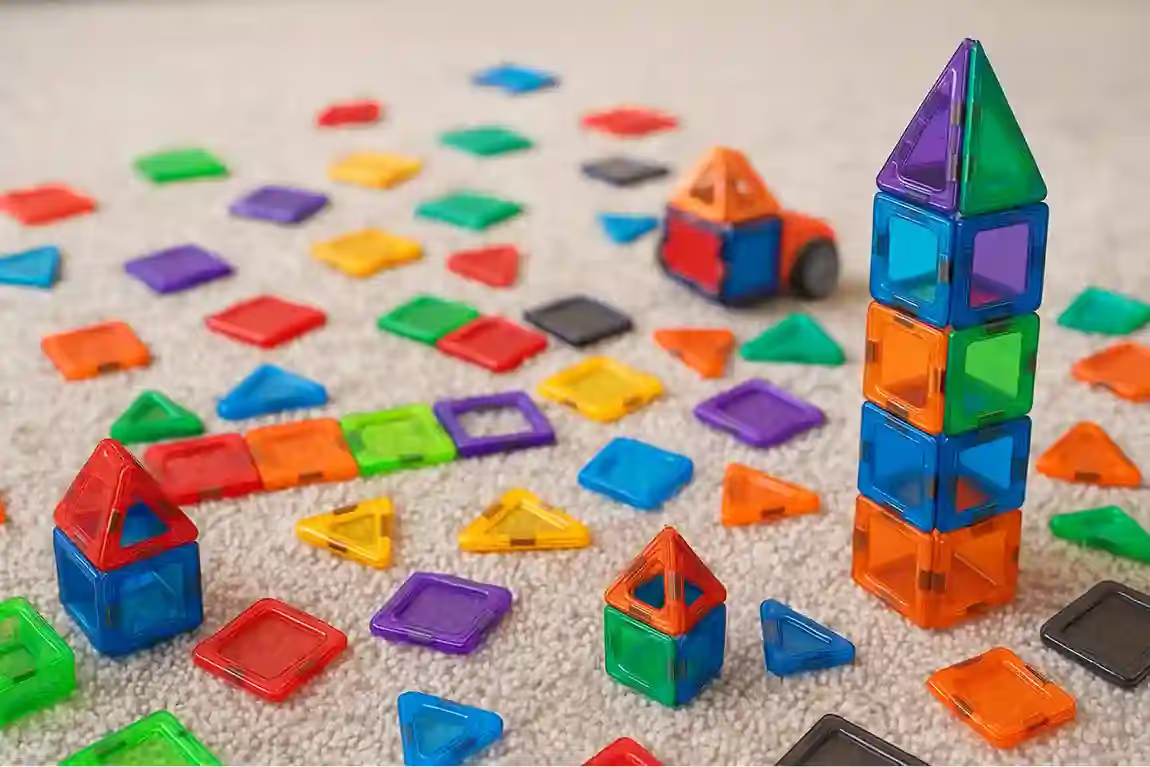
Sound plays a more crucial role in child development through play than most parents realize. The immediate acoustic feedback from magnetic tile connections helps children understand cause and effect relationships at a fundamental level. The click confirms that their action produced a result, reinforcing the connection between intention and outcome. This feedback loop supports cognitive development by making abstract concepts like magnetic attraction tangible through sensory experience.
For children with visual processing challenges, acoustic feedback becomes even more critical. The sound confirms successful connections when visual confirmation might be difficult or delayed. This multi-sensory approach to confirmation supports diverse learning styles and abilities, ensuring that all children can successfully engage with building activities regardless of their primary sensory strengths.
The rhythmic nature of repeated clicking during building sessions can also provide calming, regulatory effects for some children. The predictable pattern of sounds creates a sensory environment that helps organize thinking and supports sustained attention. This is why some children with attention challenges find magnetic tile play particularly engaging—the acoustic feedback helps maintain their focus in ways that silent toys cannot match.
Research in developmental psychology suggests that multi-sensory play experiences create stronger neural connections than single-sensory activities. When children hear, see, and feel connections simultaneously, their brains encode the experience more completely, leading to better retention and deeper understanding. The acoustic dimension of magnetic tile play contributes to this multi-sensory richness, making the activity more educationally valuable than superficially similar but silent alternatives.
Motor planning skills benefit from consistent acoustic feedback. Children learning to manipulate magnetic tiles use sound to gauge their success, adjusting their approach based on whether they hear the expected click. This audio-guided motor refinement happens unconsciously but significantly accelerates skill development. Over time, children internalize the connection between specific movements and acoustic results, developing precise motor control that transfers to other activities requiring fine manipulation.
Children with autism spectrum disorder often have unique relationships with sound that influence their magnetic tile preferences. Some children find crisp, clear clicks deeply satisfying and seek out toys that provide strong acoustic feedback. Others experience acoustic hypersensitivity where even moderate sounds become overwhelming. For these children, silent or very quiet tiles enable engagement with construction play that would otherwise be inaccessible due to acoustic discomfort.
Occupational therapists working with children with sensory processing disorders often recommend specific magnetic tile brands based on their acoustic properties. Therapists might prescribe louder tiles for children needing increased sensory input to maintain alertness and focus. Conversely, children who become easily overwhelmed by sensory stimulation might benefit from nearly silent tiles that provide visual and tactile feedback without acoustic components.
Children with auditory processing disorders face different challenges. These children might struggle to filter relevant sounds from background noise, making environments with multiple clicking tiles chaotic and confusing. For these users, either silent tiles or tiles with very distinctive clicks work better than moderate-volume tiles that blend into ambient sound. The clear acoustic contrast helps these children track their own actions amid the sensory complexity of group play.
Deaf and hard-of-hearing children demonstrate that acoustic feedback, while helpful, isn't essential for successful magnetic tile play. These children rely entirely on visual and tactile cues, proving that magnetic tiles work across sensory modalities. However, for children with some residual hearing, appropriately amplified clicks can provide valuable feedback that bridges their partial sensory experience, making play more inclusive and accessible.
Every click, thud, or silent connection tells a story of engineering decisions that balance physics, psychology, and practicality. The magnetic blocks that click in your living room represent thousands of hours of acoustic engineering, materials science, and manufacturing optimization. That satisfying snap isn't lucky accident but deliberate design.
Whether you prefer the sharp report of rigid-mounted magnets or the gentle whisper of dampened connections, you're experiencing the result of complex engineering trade-offs. Sound is data—it tells us about material properties, manufacturing quality, and design philosophy. By understanding what creates these sounds, we become more informed consumers and can better match products to our needs.
The next time magnetic blocks click in your home, listen closely. You're hearing the intersection of magnetic forces and molecular vibrations, of cavity resonance and material science. That brief sound carries information about engineering decisions made thousands of miles away, validated through countless connections, all to create the perfect acoustic moment when two pieces become one. In that click lies the beautiful complexity of modern toy engineering—sophisticated science devoted to childhood joy and learning through play.
Understanding the acoustic dimension of magnetic blocks enriches appreciation for these deceptively simple toys. What appears to be basic plastic and magnets actually represents cutting-edge materials science, precision manufacturing, and sophisticated acoustic engineering. The clicks, thuds, and silences encode choices about values, priorities, and intended experiences. Each sound signature reflects a different answer to fundamental questions about what play should be and how toys should support child development.
As consumers become more sophisticated and demanding, acoustic design will likely receive even more attention from manufacturers. The companies that thrive will be those that understand sound not as an afterthought but as a crucial element of product design deserving the same careful engineering as structural integrity or magnetic strength. In an increasingly crowded market, acoustic differentiation might become the key factor that separates successful products from forgettable ones.
The science of magnetic block acoustics demonstrates how even simple toys embody remarkable complexity when examined closely. Every design decision cascades through multiple systems—affecting not just sound but durability, cost, manufacturing feasibility, and user experience. The clicks we take for granted result from careful optimization across these competing constraints, representing real engineering achievement even if they last just milliseconds.
For parents, educators, and anyone who cares about children's play experiences, understanding these acoustic principles enables better choices. Not every child needs the loudest click or the quietest tile—but every child deserves toys whose acoustic properties match their needs. By appreciating the engineering behind the sounds, we can select magnetic blocks that truly serve the children using them, creating play experiences that are not just functional but optimal for each individual's sensory preferences and developmental needs.
NOVEMBER 21, 2025
NOVEMBER 21, 2025
NOVEMBER 21, 2025
NOVEMBER 20, 2025
NOVEMBER 20, 2025