

Why Gifted Programs Use Magnetic Building Sets: Cognitive Benefits Explained
NOVEMBER 21, 2025
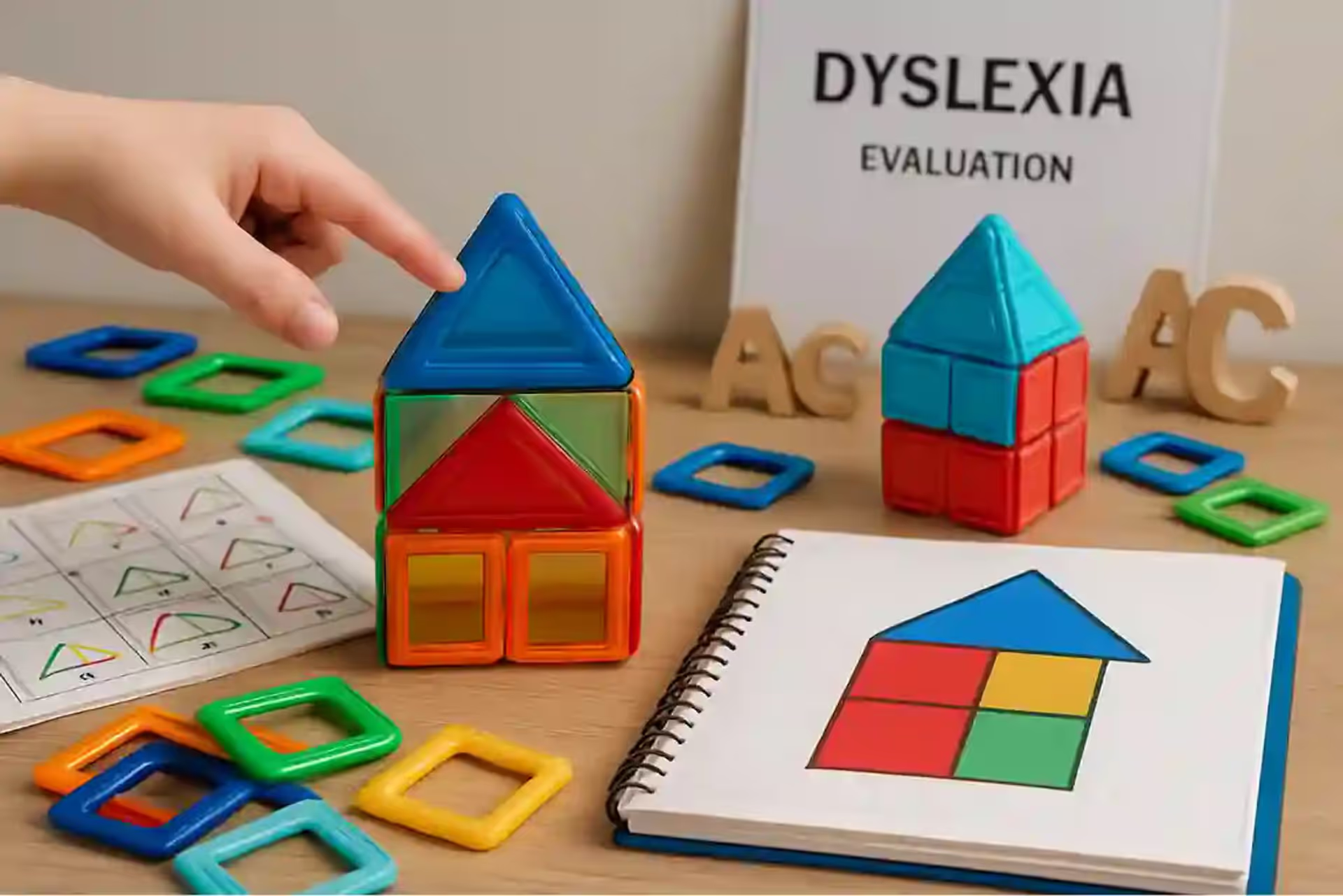
Your dyslexic child struggles with reading worksheets but builds elaborate magnetic tile structures that leave you amazed. This pattern appears in households worldwide, where children who battle traditional academics excel at spatial construction tasks. The connection isn't coincidental – dyslexic brains often process spatial information with exceptional skill, and magnetic blocks tap directly into these neurological strengths.
Recent neuroimaging studies reveal that dyslexic individuals frequently show enhanced activation in brain regions responsible for three-dimensional visualization and spatial reasoning. Magnetic blocks provide a learning medium that bypasses language-processing challenges while engaging these heightened spatial abilities. The result? Children who struggle in traditional classrooms suddenly demonstrate remarkable problem-solving capabilities, engineering intuition, and creative thinking that worksheets never revealed.
Dyslexia affects approximately 15-20% of the population, yet most discussions focus on deficits rather than advantages. Brain imaging studies from Yale University and MIT demonstrate that dyslexic individuals often exhibit stronger connectivity in the right hemisphere, particularly in regions governing spatial processing, pattern recognition, and holistic thinking. These differences aren't disabilities – they're alternative processing styles that excel in specific domains.
The posterior parietal cortex, crucial for spatial reasoning, shows increased gray matter density in many dyslexic individuals. This brain region handles mental rotation, spatial working memory, and three-dimensional visualization – exactly the skills magnetic block play develops. When dyslexic children manipulate magnetic tiles, they're operating in their neurological comfort zone, using brain pathways that function not just normally, but often superiorly to those of typical readers.
Research from the University of California, Davis found that dyslexic students scored significantly higher on tests of spatial reasoning compared to non-dyslexic peers. These advantages manifest in real-world success – dyslexic individuals are overrepresented in fields requiring strong spatial skills, including architecture, engineering, art, and entrepreneurship. NASA reports that over 50% of their employees identify as dyslexic, highlighting how these cognitive differences translate into professional strengths.
Understanding these neurological differences requires moving beyond the deficit model that has dominated dyslexia research for decades. While it's true that dyslexic individuals process phonological information differently, this represents just one aspect of a complex cognitive profile that includes significant strengths. The challenge for parents and educators lies in recognizing and cultivating these strengths while simultaneously providing appropriate reading intervention.
The dyslexic brain demonstrates several processing advantages directly relevant to magnetic block construction. Enhanced peripheral vision processing allows simultaneous awareness of multiple tile positions. Superior episodic memory helps recall successful building strategies. Increased right-brain connectivity facilitates pattern recognition across complex structures. These aren't compensations for reading difficulties – they're independent cognitive strengths.
Global processing preferences mean dyslexic children often grasp overall structural relationships before focusing on details. This top-down approach perfectly matches magnetic block construction, where understanding the whole structure matters more than individual piece placement. Traditional education rarely leverages these strengths, but magnetic play naturally does.
The interconnected nature of these advantages creates a cognitive profile particularly well-suited to spatial problem-solving. When a dyslexic child approaches a complex building challenge, their brain simultaneously processes multiple dimensions of the problem – structural stability, aesthetic balance, functional requirements, and resource constraints. This holistic processing style, which can be a liability in sequential reading tasks, becomes an asset in three-dimensional construction where simultaneous consideration of multiple factors leads to elegant solutions.
Traditional educational materials rely heavily on symbolic representation – letters, numbers, and abstract symbols that dyslexic brains struggle to process efficiently. Magnetic blocks operate in physical space with immediate tactile feedback, bypassing the symbol-to-meaning translation that creates bottlenecks in dyslexic learning. A child doesn't need to decode instructions to understand that triangles can form a pyramid or that squares create stable walls.
The magnetic connection provides instant feedback about spatial relationships without requiring verbal processing. When tiles snap together, children feel and hear success. When structures collapse, the failure is immediate and instructive, not filtered through language or grading. This direct cause-and-effect learning aligns with how dyslexic brains prefer to process information – through experience and pattern recognition rather than sequential symbolic instruction.
Color and transparency in magnetic tiles add another processing advantage. Dyslexic learners often exhibit heightened color perception and use color as an organizational tool more effectively than text-based systems. The vibrant, translucent nature of quality magnetic blocks creates visual patterns that dyslexic children can categorize and remember without verbal labels. A red square isn't just "red" and "square" – it's a specific visual-spatial entity with unique building properties learned through manipulation.
The multisensory nature of magnetic block play engages multiple neural pathways simultaneously, creating redundant encoding that strengthens memory formation. Research from the International Dyslexia Association demonstrates that dyslexic learners benefit from multisensory instruction that engages visual, auditory, kinesthetic, and tactile modalities. Magnetic blocks naturally provide this multisensory experience – children see the tiles, hear the click of magnetic connection, feel the snap of attraction, and move their bodies through space while building. This rich sensory input creates strong memory traces that support learning and recall.

Dyslexic children often experience years of academic struggle before anyone recognizes their learning difference. By age eight, many have internalized a belief that they're "stupid" or "lazy," despite working harder than their peers. Magnetic blocks offer a domain where these children can experience immediate, visible success without the mediation of language processing that typically trips them up.
When a dyslexic child creates a complex magnetic structure, the accomplishment is undeniable. Unlike a spelling test where errors dominate feedback, a standing tower represents pure success. Parents and teachers can point to these creations as evidence of intelligence and capability. This tangible proof of competence becomes particularly powerful when children can teach others their building techniques, reversing the typical dynamic where they're always the ones needing help.
The social dynamics around magnetic block play also differ from traditional academic activities. Children collaborate based on spatial problem-solving skills rather than reading ability. A dyslexic child who struggles to read aloud might lead the group in designing a magnetic bridge, earning peer respect through demonstrated expertise. These leadership opportunities in spatial tasks build confidence that transfers to other areas of learning and social interaction.
The psychological impact of repeated success experiences cannot be overstated. Carol Dweck's research on growth mindset demonstrates that children's beliefs about their intelligence significantly affect their academic achievement. Dyslexic children who have experienced primarily failure in school often develop fixed mindsets, believing their struggles reflect immutable limitations. Magnetic block success provides concrete evidence that challenges can be overcome through persistence and strategic thinking, fostering the growth mindset essential for tackling reading difficulties.
Strategic use of magnetic blocks can address specific challenges dyslexic children face while building on their strengths. Mirror building exercises, where children replicate structures from different angles, develop the spatial transformation skills that support letter recognition. Creating a structure on one side of a divider and having the child replicate it from memory engages visual-spatial working memory without requiring verbal encoding.
Symmetry challenges using magnetic tiles help develop the bilateral coordination often weak in dyslexic children. Building identical structures with both hands simultaneously strengthens corpus callosum connections between brain hemispheres. Start with simple symmetrical patterns and progress to complex designs where each hand must perform different but coordinated movements. This physical practice improves the neural integration needed for reading, where eyes must track smoothly across lines while the brain processes symbolic information.
Pattern prediction games leverage dyslexic strengths in pattern recognition while building sequential processing skills. Create a pattern with magnetic blocks (red square, blue triangle, red square, blue triangle) and have the child continue it. Gradually increase complexity by adding colors, shapes, or three-dimensional elements. This activity bridges the gap between spatial strength and sequential weakness, using the preferred modality to strengthen the challenging one.
Story building transforms narrative comprehension from abstract to concrete. Children use magnetic blocks to build scenes from stories, creating physical representations of plot elements. This technique particularly helps with reading comprehension, as dyslexic children can manipulate story elements spatially rather than holding them in verbal working memory. The physical act of building a story's beginning, middle, and end reinforces narrative structure in ways that verbal discussion alone cannot achieve.
Mathematical concepts become tangible through magnetic construction. Fractions transform from abstract symbols to physical portions of magnetic squares. Multiplication appears as repeated patterns in tile arrangements. Geometry emerges naturally from building challenges. These concrete representations stick in memory far better than symbolic notation, and research shows that such concrete experiences provide the foundation for later abstract mathematical thinking.
While magnetic blocks can't directly teach reading, they can address underlying processing issues that affect literacy. Directional confusion, common in dyslexia, improves through structured building activities. Creating arrows, letters, and numbers with magnetic tiles helps establish directional consistency. The physical act of building a letter 'b' versus 'd' with tiles creates muscle memory and spatial awareness that worksheets can't provide.
Sequencing difficulties affect both reading and mathematics for dyslexic learners. Magnetic blocks offer a way to practice sequencing without language interference. Building a structure that must be assembled in a specific order (foundation, walls, roof) develops procedural memory and sequential processing. Children learn that order matters through immediate physical consequences – put the roof on before the walls, and everything collapses.
Visual tracking, essential for reading, improves through following magnetic tile patterns. Creating and following paths with tiles, building mazes, or constructing rolling tracks for marbles develops the smooth eye movements needed for reading. These activities strengthen the same ocular motor skills required for tracking across lines of text, but without the stress of decoding symbols.
The transfer of skills from spatial activities to reading tasks occurs through multiple mechanisms. Improved working memory capacity developed through remembering complex building sequences supports the working memory demands of decoding and comprehension. Enhanced attentional control practiced during sustained building sessions transfers to the focus required for reading. Increased frustration tolerance developed through repeated building failures and successes creates the persistence needed for tackling challenging texts.
Magnetic blocks shouldn't replace evidence-based dyslexia interventions like Orton-Gillingham or Wilson Reading System. Instead, they complement these programs by providing brain breaks that remain educational. After intensive phonics work, building with magnetic tiles allows cognitive recovery while maintaining engagement with learning. The spatial success experienced during building creates positive momentum that carries back into challenging literacy work.
Occupational therapists increasingly incorporate magnetic blocks into dyslexia support programs. The bilateral coordination required for building strengthens the same neural pathways involved in reading and writing. Fine motor control developed through precise tile placement improves handwriting. Visual-motor integration practiced during construction transfers to copying from the board and other classroom tasks.
Speech-language pathologists use magnetic blocks to support narrative development and vocabulary expansion. Children describe their constructions, explain building processes, and tell stories about their creations. This verbal expression feels natural when discussing something they've successfully created, unlike the forced speech often required in traditional therapy settings. Technical vocabulary (perpendicular, parallel, symmetrical) becomes meaningful through physical manipulation.
The synergy between structured literacy programs and spatial construction activities creates a comprehensive intervention that addresses dyslexia from multiple angles. While systematic phonics instruction remediates the core phonological processing deficit, magnetic block activities develop compensatory strengths and build the confidence necessary for persistence through challenging literacy work. This dual approach recognizes that effective dyslexia intervention must address both weaknesses and strengths.
Traditional homework creates nightly battles in dyslexic households. Worksheets that take typical children 20 minutes might require two hours of tears and frustration for dyslexic learners. Magnetic blocks offer an alternative homework medium that maintains educational value while eliminating the reading barrier. Teachers report that dyslexic students who demonstrate concepts through building show deeper understanding than those who complete traditional assignments.
Math homework transforms when problems become building challenges. Instead of writing "3 × 4 = 12," children build three groups of four tiles, photographing their solution. Geometry homework involves constructing shapes rather than drawing them. This approach takes the same time as traditional homework but eliminates the handwriting and symbolic processing struggles that exhaust dyslexic learners before they can demonstrate knowledge.
Science concepts crystallize through magnetic construction. Building models of molecules, creating simple machines, or demonstrating physics principles through tile structures engages spatial intelligence while teaching curriculum content. A dyslexic child might struggle to write about levers but can build working examples showing effort and load relationships. This hands-on approach often reveals deeper conceptual understanding than written responses would suggest.
Implementing alternative homework formats requires collaboration with teachers who may initially resist departures from traditional assignments. Parents can advocate for these accommodations by providing evidence of their child's learning through documentation of building projects. Photographs, videos, and verbal explanations demonstrate mastery of content standards without the reading and writing barriers that prevent dyslexic children from showing what they know through conventional homework.
Preschool dyslexic indicators include delayed speech, difficulty with rhyming, and problems learning colors or shapes' names. Magnetic blocks at this age focus on free exploration and basic categorization. Sorting tiles by color or shape without requiring verbal labels builds pre-academic skills. Creating simple patterns develops the sequential processing that will support later reading. Most importantly, successful building experiences establish a positive relationship with learning materials before formal education begins.
Elementary school brings formal diagnosis and intervention for many dyslexic children. Magnetic blocks during these years should balance free play with structured activities targeting specific deficits. Building challenges can reinforce classroom lessons – constructing arrays for multiplication, creating story scenes for reading comprehension, or modeling scientific concepts. The key is maintaining the joy of building while incorporating educational objectives that support IEP goals.
Middle school dyslexic students face increased academic demands and social pressures. Magnetic blocks might seem childish, but complex engineering challenges maintain age-appropriate engagement. Building architectural models, creating geometric proofs through construction, or designing functional machines appeals to adolescent interests. These advanced applications demonstrate that spatial intelligence represents sophisticated thinking, not a consolation prize for poor reading.
The transition to adolescence brings particular challenges for dyslexic learners as academic demands increase and social comparison intensifies. Middle school students acutely aware of their reading struggles may resist activities that seem remedial or childish. Positioning magnetic blocks as professional prototyping tools or engineering equipment rather than toys maintains engagement while continuing to develop crucial spatial skills. Connecting building activities to potential careers in STEM fields helps dyslexic adolescents see their spatial strengths as valuable assets rather than mere consolations for reading difficulties.
Teenage dyslexic learners benefit from sophisticated magnetic block applications. Architecture students use them for rapid prototyping. Physics students model force vectors and structural engineering. Art students explore color theory and geometric design. These applications position magnetic blocks as professional tools rather than toys, maintaining engagement while developing career-relevant skills.
College and career preparation can incorporate magnetic block portfolios showcasing spatial intelligence. A dyslexic student applying to engineering programs might include photographs of complex magnetic structures alongside traditional application materials. These visual demonstrations of capability can outweigh weak standardized test scores in admissions decisions.
The long-term career implications of spatial strength development through magnetic blocks deserve particular attention. Research tracking dyslexic individuals into adulthood reveals that many ultimately find greater professional success than their non-dyslexic peers, particularly in fields requiring spatial reasoning, creative problem-solving, and entrepreneurial thinking. Famous dyslexic individuals including Richard Branson, Steven Spielberg, and several Fortune 500 CEOs attribute their success partly to the spatial thinking and creative problem-solving that dyslexia fostered. By developing these strengths early through activities like magnetic block construction, parents and educators help dyslexic children access the cognitive tools that will serve them throughout their lives.
Parents often feel helpless watching their dyslexic children struggle with traditional academics. Magnetic blocks provide a domain where parents can support learning without specialized training. Building together creates positive parent-child interactions around learning, replacing the tension that often characterizes homework help. Parents don't need to understand phonics rules to appreciate and encourage spatial problem-solving.
Documentation becomes crucial for advocating within educational systems. Photograph complex structures your child creates, maintaining a portfolio that demonstrates cognitive capability. These visual records prove invaluable during IEP meetings, showing teachers and administrators that your child possesses intelligence that standardized tests don't capture. Time-lapse videos of building processes reveal planning, persistence, and problem-solving skills that written assessments miss.
Creating building challenges that align with school curriculum helps children see connections between their spatial strengths and academic content. If the class is studying ancient civilizations, build pyramids or Roman arches. During a unit on weather, construct 3D models of weather fronts. This parallel curriculum allows dyslexic children to engage with grade-level content through their preferred learning modality.
Parents also serve as crucial emotional supports during the challenging journey of dyslexia identification and intervention. The stress of watching a child struggle academically while knowing they're intelligent and capable creates significant parental anxiety. Magnetic block play provides opportunities for parents to witness their child's cognitive strengths, reminding them that dyslexia represents a difference in processing rather than a limitation in intelligence. These positive experiences help parents maintain the optimism and patience necessary for supporting long-term intervention efforts.
Dyslexic children often develop elaborate coping mechanisms to hide their struggles, leading to anxiety and shame that compounds learning difficulties. Magnetic blocks provide a safe space where mistakes are temporary and fixable. A collapsed structure doesn't carry the permanent shame of a failed test. Children learn that errors provide information for improvement, developing the growth mindset essential for tackling reading challenges.
Peer tutoring opportunities emerge when dyslexic children excel at magnetic construction. The child who usually receives help becomes the expert teaching others. This role reversal builds self-esteem and social confidence. Classmates begin to recognize the dyslexic child's intelligence, reducing stigma and increasing social acceptance. Teachers report improved classroom behavior and participation when dyslexic students experience regular success through spatial activities.
Family dynamics shift when dyslexic children demonstrate competence through building. Siblings who excel academically might struggle with complex magnetic constructions their dyslexic sibling completes easily. These moments of reversal help families recognize diverse intelligences and reduce the academic hierarchy that often develops. Parents report decreased household stress when children have domains of success to balance academic struggles.
The broader social-emotional benefits of spatial success extend beyond immediate confidence building. Longitudinal studies of dyslexic individuals reveal that those who develop strong non-academic competencies during childhood show better mental health outcomes in adulthood. Having domains of genuine expertise protects against the depression and anxiety that often accompany persistent academic struggle. Magnetic blocks, by providing accessible opportunities for mastery and achievement, contribute to the resilience that enables dyslexic individuals to thrive despite their learning challenges.
Implementing magnetic block activities effectively requires strategic planning that balances structure with freedom. Here are evidence-based practices for maximizing the educational and emotional benefits:
The timing and context of magnetic block activities significantly affect their impact. Brief building sessions interspersed throughout the day maintain engagement with learning during moments when reading and writing feel overwhelming. Longer weekend building projects allow for deep exploration and complex construction that develops sustained attention and planning skills. The key is treating magnetic blocks not as rewards for completing academic work but as legitimate learning activities with their own educational value.
Educational psychologists increasingly recognize spatial activities as legitimate therapeutic interventions for dyslexic learners. Dr. Fernette Eide, co-author of "The Dyslexic Advantage," advocates for educational approaches that leverage spatial strengths rather than focusing exclusively on remediation. Magnetic blocks align with this strength-based approach, building confidence and competence that creates resilience for tackling challenging areas.
Neuropsychologists point to the cerebellar involvement in both dyslexia and spatial processing. The cerebellum, traditionally associated with motor control, plays crucial roles in cognitive functions including reading. Activities that engage cerebellar processing, like the balance and coordination required in magnetic building, may strengthen neural pathways that support literacy development. This neurological cross-training effect explains why spatial activities can indirectly improve reading skills.
Special education teachers report that students who engage in regular magnetic block activities show improved classroom behavior, increased persistence with difficult tasks, and better emotional regulation. The success experienced during building creates a reservoir of confidence that students draw upon when facing reading challenges. This emotional resilience proves as valuable as any specific skill development in determining long-term academic success.
The professional consensus emerging from multiple disciplines emphasizes that effective dyslexia intervention must address the whole child rather than focusing narrowly on phonological deficits. Reading specialists, occupational therapists, educational psychologists, and neuropsychologists increasingly collaborate to design comprehensive interventions that include spatial learning activities. Magnetic blocks fit naturally into these interdisciplinary approaches, providing a tool that multiple professionals can incorporate into their practice while maintaining consistency in the child's experience across settings.
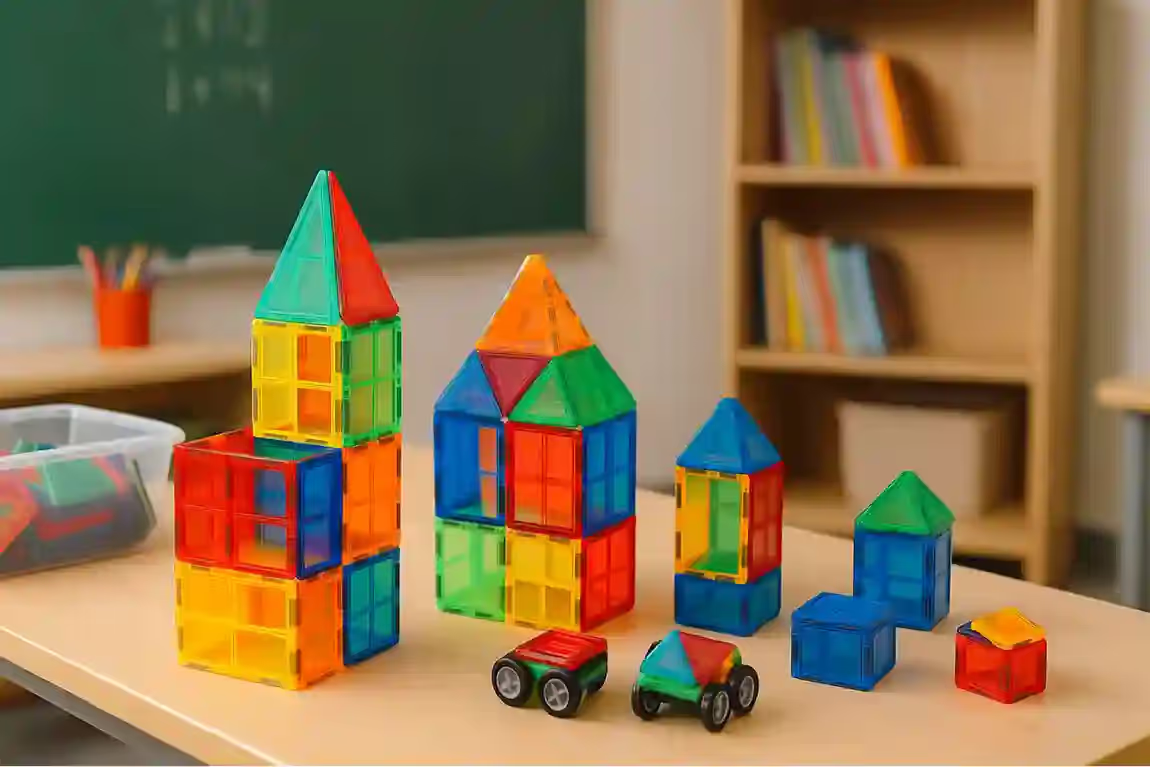
Digital tools amplify the educational value of magnetic block play for dyslexic learners. Stop-motion animation apps allow children to create movies of their building process, developing sequential thinking and narrative skills without writing. Time-lapse photography captures complex builds, creating visual reports that demonstrate learning without traditional written assignments. These digital artifacts provide alternative assessment evidence for teachers unfamiliar with spatial learning approaches.
3D modeling software bridges physical building and digital design. Children can recreate their magnetic structures in programs like Tinkercad or SketchUp, developing technical skills valuable for STEM careers. This transition from physical to digital spatial reasoning opens pathways to fields where dyslexic individuals often excel – engineering, architecture, game design, and computer graphics. The magnetic blocks serve as tangible prototypes for digital creation.
Augmented reality applications emerging for magnetic blocks add layers of information without text dependency. Apps that recognize magnetic structures and overlay mathematical or scientific information provide multimodal learning experiences. A pyramid built with tiles might trigger an AR display about ancient Egypt, delivering curriculum content through visual and auditory channels that bypass reading difficulties.
The integration of technology with physical magnetic block play creates new possibilities for assessment and documentation that honor dyslexic learners' strengths. Rather than struggling to write about their learning, children can create video explanations, annotated photographs, or digital portfolios showcasing their spatial reasoning capabilities. These alternative formats provide educators with rich evidence of learning that traditional written assessments would miss entirely.
These success stories share common elements that illuminate effective practice. Early intervention that includes spatial activities alongside phonological training produces better outcomes than either approach alone. Alternative assessment through magnetic block portfolios helps secure appropriate accommodations and services. Most importantly, experiencing success through spatial construction transforms children's self-concepts from failing students to capable learners with both strengths and challenges.
Effective support for dyslexic learners requires coordination between home, school, and therapy providers. Magnetic blocks can serve as a common tool across all settings, providing consistency in strength-based learning approaches. When teachers, parents, and therapists all understand how a child uses magnetic blocks to demonstrate knowledge, assessment becomes more accurate and interventions more targeted.
Schools implementing magnetic block programs for dyslexic students report improved outcomes beyond individual achievement. Classroom dynamics improve when multiple intelligences are valued and demonstrated. Typical learners benefit from spatial reasoning development, while dyslexic students finally have opportunities to lead and excel. This inclusive approach reduces the stigma associated with learning differences and creates more supportive peer relationships.
Community support groups for dyslexic families increasingly incorporate magnetic block activities into meetings. Children build together while parents discuss challenges and strategies. These groups provide opportunities for dyslexic children to see others like them succeeding through spatial intelligence. The shared experience of building success counters the isolation many dyslexic learners feel in traditional academic settings.
The support system extends beyond immediate educational contexts to include advocacy organizations and resource providers. Groups like the Learning Disabilities Association of America offer information about dyslexia and connect families with local resources. Online communities provide forums where parents share strategies and offer emotional support during challenging periods. Professional organizations like the International Dyslexia Association provide training for educators on implementing strength-based approaches that include spatial learning activities.
The ultimate goal of any educational intervention is preparing children for successful, fulfilling adult lives. For dyslexic learners, this preparation must include development of the spatial and creative thinking skills that will enable them to leverage their cognitive differences as professional assets. Research following dyslexic individuals into midlife reveals remarkable patterns of achievement in fields requiring visual-spatial thinking, entrepreneurial problem-solving, and creative innovation.
The spatial skills developed through years of magnetic block play provide foundations for careers in architecture, where many famous architects including Norman Foster report being dyslexic. Engineering fields from mechanical to aerospace welcome the three-dimensional thinking that comes naturally to individuals with dyslexic processing styles. The entertainment industry, particularly in areas like special effects, animation, and cinematography, employs numerous dyslexic professionals whose spatial visualization capabilities exceed those of typical individuals.
Entrepreneurship represents another domain where dyslexia confers advantages. The ability to see connections others miss, visualize complex systems holistically, and persist through challenges serves entrepreneurs well. Many successful business founders attribute their achievements partly to cognitive differences associated with dyslexia. By developing spatial reasoning through magnetic blocks and other hands-on activities, parents and educators help dyslexic children access the cognitive tools that will support eventual professional success.
Magnetic blocks represent more than just an educational tool for dyslexic children – they offer a pathway to recognizing and developing alternative intelligences that traditional education often overlooks. The spatial reasoning, pattern recognition, and three-dimensional thinking these children demonstrate through magnetic construction predict success in numerous professional fields, from engineering to entrepreneurship.
The journey from struggling reader to confident learner doesn't require abandoning literacy goals. Instead, it involves recognizing that the same brain differences causing reading challenges often confer advantages in spatial reasoning. Magnetic blocks provide a medium where these advantages become visible, valuable, and celebrated. Every tower built, pattern completed, and problem solved through magnetic construction reinforces that dyslexic children possess intelligence that transcends traditional academic measures.
Parents and educators who embrace magnetic blocks as legitimate learning tools help dyslexic children develop crucial confidence alongside practical skills. The spatial intelligence developed through years of magnetic block play often becomes the foundation for career success, with many dyslexic adults reporting that their spatial strengths ultimately proved more valuable than their remediated reading skills. By providing opportunities for success through magnetic construction, we prepare dyslexic children not just to cope with their challenges, but to leverage their unique cognitive gifts in a world that desperately needs diverse thinkers.
The transformation of dyslexic education through spatial learning represents a paradigm shift from deficit-focused remediation to strength-based development. This shift acknowledges that dyslexia, while creating real challenges in literacy acquisition, exists within a broader cognitive profile that includes significant advantages. Magnetic blocks provide an accessible, engaging medium for developing these advantages while simultaneously building the confidence and resilience necessary for tackling literacy challenges. As our understanding of diverse learning styles deepens, magnetic blocks will likely play an increasingly central role in comprehensive dyslexia intervention programs that honor both the struggles and the gifts that dyslexic learners bring to our schools and our world.
NOVEMBER 21, 2025
NOVEMBER 21, 2025
NOVEMBER 21, 2025
NOVEMBER 20, 2025
NOVEMBER 20, 2025