

Cleaning Magnetic Blocks After Stomach Flu: Disinfection Without Damage
NOVEMBER 20, 2025
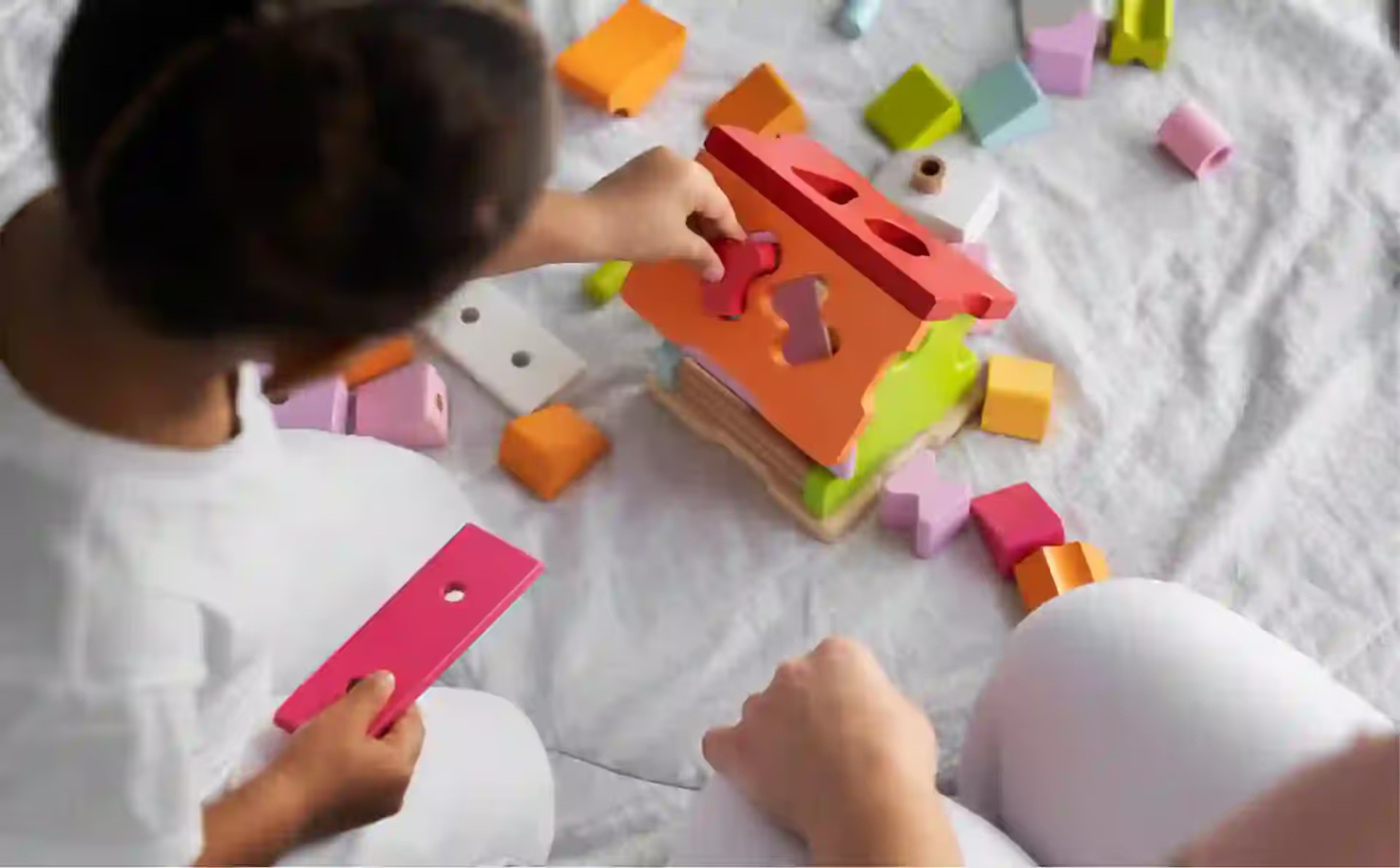
The magnetic building tiles scattered across your living room floor look innocent enough—colorful, educational, beloved by your three-year-old. But inside each translucent square hide small, powerful neodymium magnets that can become surgical emergencies if swallowed.
This isn't hypothetical fearmongering. According to the U.S. Consumer Product Safety Commission, an estimated 2,400 magnet-related emergency department visits occur annually in the United States, with children under age 6 accounting for the majority. Many cases require emergency surgery. Some result in permanent intestinal damage. A small number end tragically in death.
Yet most parents don't understand why magnets pose unique dangers far exceeding typical choking hazards. A swallowed button? Concerning, but it will likely pass. A swallowed penny? Worrisome if it lodges, but usually manageable. Multiple swallowed magnets? A true medical emergency where hours matter and delays can mean the difference between simple retrieval and catastrophic intestinal damage requiring bowel resection.
Pediatricians see magnet ingestion cases regularly enough that they've become a routine part of safety counseling during well-child visits. Emergency medicine physicians know the distinctive X-ray patterns indicating magnet clusters. Surgeons have developed specialized protocols for the intestinal repairs these tiny objects necessitate.
This article provides the comprehensive guidance pediatricians wish every parent, caregiver, teacher, and relative understood before buying magnetic toys or supervising children around them. You'll learn exactly why magnets are uniquely dangerous, how to recognize warning signs, what to do immediately if ingestion occurs, and most importantly, how to prevent these emergencies through simple but consistent safety practices.
The goal isn't creating paranoia or banning magnetic toys entirely. It's informed vigilance—understanding risks clearly enough to make smart choices about which toys to buy, how to store them, when to supervise, and how to respond if the worst happens.
To understand magnet safety, you need to grasp what makes them different from other small objects children might swallow.
When a child swallows a single non-magnetic object—a bead, coin, or small toy—it typically travels through the digestive tract without incident, passing naturally within days. Even if it lodges temporarily, the object sits in one location creating a local problem (obstruction or irritation) but not actively causing injury to surrounding tissue.
Magnets behave completely differently. When multiple magnets are swallowed—either simultaneously or hours or even days apart—they attract each other across loops of intestine. Picture your intestines as a coiled garden hose. If magnets sit in different sections of that coiled structure, their powerful attraction pulls those sections together, pinching intestinal tissue between the magnets.
This pinching creates pressure necrosis—tissue death from restricted blood flow. The compressed intestinal walls lose blood supply, and within hours, tissue begins dying. Dead tissue perforates—develops holes—allowing intestinal contents to leak into the abdominal cavity. This spillage causes peritonitis (severe abdominal infection) and can progress to sepsis (life-threatening systemic infection).
According to medical research documented in the National Institutes of Health database, the most dangerous scenario involves multiple small, strong magnets—particularly the neodymium rare-earth magnets used in most magnetic toys. These magnets are far more powerful than traditional refrigerator magnets. Even across substantial distances (multiple loops of intestine), their attraction force is strong enough to pull tissue together and hold it compressed.
The same catastrophic injury occurs when a child swallows one magnet plus any other magnetic metal object—another toy piece, a coin, a paperclip, a battery (some batteries are magnetic). The magnet attracts the metal object, and intestinal tissue gets trapped between them with identical consequences.
The timeline of injury explains why magnet ingestion is particularly insidious. Unlike choking, which produces immediate obvious distress, swallowed magnets may cause no symptoms initially. The child might seem completely fine for hours or even days while internal damage progresses. By the time symptoms appear—abdominal pain, vomiting, fever—significant tissue death may have already occurred.
Emergency physicians have documented cases where the delay between ingestion and medical evaluation was 3-5 days because early symptoms were mistaken for stomach flu or dismissed as minor discomfort. By the time severe symptoms prompted emergency room visits, children required extensive surgical repairs, bowel resections removing dead intestine, and prolonged hospitalizations with complications including infections, adhesions (scar tissue causing future obstructions), and nutritional problems from shortened intestines.
The difference between one magnet versus multiple is crucial but can't be relied upon for safety. A single magnet typically passes without incident, though it still warrants medical evaluation. However, parents often don't know whether a child swallowed one magnet or several. Children might not report the first ingestion, then swallow a second magnet days later. Or they might grab a handful of loose magnets, making quantity uncertain.
Additionally, older siblings might be playing with magnetic toys in the same home, creating the possibility that a toddler accessed and swallowed magnets from different sets or sources at different times, unknowingly creating the multiple-magnet scenario.
Anatomical vulnerability varies by age. Toddlers' intestines are smaller and more easily damaged than older children's or adults'. The same magnetic force across adult intestines might cause less severe injury than across a two-year-old's more delicate tissue. Additionally, younger children have longer intestinal transit times—objects move more slowly through their systems—meaning magnets spend more hours in proximity, increasing damage duration.
The American Academy of Pediatrics emphasizes that magnet-related injuries have increased dramatically since the early 2000s, corresponding with the popularity of magnetic building toys and small powerful magnetic balls marketed as desk toys but finding their way into children's hands.
Pediatricians providing anticipatory guidance during well-child visits increasingly include magnet safety in their routine counseling. Here's what they emphasize most urgently.
Recognizing magnet ingestion quickly dramatically improves outcomes, yet symptoms often mislead parents and even healthcare providers initially.
Early symptoms (hours to 2 days after ingestion) may be mild or completely absent. Some children show no signs initially, making the first indication of problems occur only after substantial internal damage has developed. When early symptoms appear, they're often vague and easily attributed to common childhood illnesses:
Mild abdominal discomfort or pain that comes and goes. The child might clutch their belly periodically or complain it hurts but seem otherwise normal. Decreased appetite or refusal of certain foods. The child picks at meals or says their stomach doesn't feel good. Nausea without vomiting, or occasional vomiting that doesn't seem severe. This might be attributed to a stomach bug or something they ate. Slight behavioral changes—crankiness, fussiness, or seeming "off" without obvious cause. Low-grade fever that parents might attribute to an emerging cold or virus.
The critical problem is that these symptoms mimic countless benign conditions. Most parents encountering these signs wouldn't immediately think "medical emergency requiring ER evaluation" but rather "maybe it's a virus, let's monitor them."
Progressive symptoms (2-5 days after ingestion) indicate advancing injury and should trigger immediate medical evaluation even if magnet ingestion isn't suspected:
Persistent or worsening abdominal pain that's no longer mild or intermittent. The child cries, doesn't want to move, or holds their abdomen protectively. Repeated vomiting, especially if it becomes bile-tinged (greenish-yellow) indicating bowel obstruction. Complete loss of appetite with the child refusing all food and possibly fluids. Abdominal distension—the belly appears swollen or bloated. Fever that's rising or not responding to fever reducers. Changes in bowel movements—diarrhea, bloody stool, or absence of bowel movements. Increasing lethargy—the child becomes unusually tired, difficult to rouse, or seems "out of it."
Late-stage symptoms (5+ days or acute complications) represent surgical emergencies with serious complications:
Severe, constant abdominal pain causing the child to scream, writhe, or assume fetal positions. High fever indicating serious infection. Shock symptoms—pale skin, rapid heartbeat, rapid breathing, confusion, or loss of consciousness. These indicate sepsis from perforated bowel leaking infection into the bloodstream.
The terrifying reality documented in medical literature is that parents often seek care during the early symptom phase, receive reassurance that it's likely a virus or minor illness, then return days later when symptoms worsen drastically—by which time perforations, peritonitis, and extensive tissue death have occurred.
This is why known or suspected magnet ingestion requires immediate medical evaluation regardless of symptoms. The absence of symptoms doesn't indicate safety—it might just mean damage hasn't progressed far enough to cause obvious pain yet.
Time is critical when magnet ingestion occurs or is suspected. Here's the exact protocol pediatricians and emergency medicine physicians want parents to follow.
According to Poison Control guidance, you can also call 1-800-222-1222 for immediate assistance and guidance. They can help you determine whether emergency department evaluation is necessary and what information to provide to medical staff. However, for known magnet ingestion, don't spend time calling—go directly to the ER.
What will happen at the hospital:
Medical staff will take a history asking exactly what was swallowed, when, and what symptoms have occurred. They'll perform a physical exam checking for abdominal tenderness, distension, or other concerning findings. X-rays will be ordered showing the number and location of any metal objects. Based on imaging results, physicians will determine next steps.
Possible outcomes based on imaging:
Prevention eliminates the need for emergency responses. These strategies, used consistently, make magnet ingestion dramatically less likely.
Store all magnetic toys completely out of reach of children under 5. "Out of reach" means high shelves or locked cabinets, not just "put away" in low bins or toy boxes toddlers can access. The storage location should require adult intervention to access—a determined three-year-old shouldn't be able to climb, drag chairs, or otherwise reach magnetic toys when unsupervised. If older children use magnetic toys, establish strict cleanup and storage protocols they understand and follow. The toys go immediately into designated high storage after use, never left on floors, tables, or accessible shelves. Make this non-negotiable, explaining the serious safety reasons.
Inspect magnetic toys regularly for damage. Before each use, examine tiles or pieces checking for cracks, loose seams, or exposed magnets. Run fingers along edges feeling for gaps or rough spots indicating damage. Look for missing pieces—if a tile seems lighter or sounds different when shaken, magnets might have fallen out. At first sign of damage—any crack, separation, or exposed magnet—immediately discard the piece or the entire set if damage is widespread. Don't attempt repairs. Don't assume it's "probably fine." Damaged magnetic toys are emergencies waiting to happen.
Teach older children magnet safety explicitly. Don't assume they understand why magnetic toys must be stored carefully or why toddlers can't access them. Explain in age-appropriate language that swallowed magnets can cause serious injuries requiring surgery. Make them partners in protection rather than just following arbitrary rules. Older children should understand: never leaving magnetic toys where younger siblings can reach them, always counting pieces after play to ensure none are missing, immediately telling adults if they find broken pieces or if they know their sibling put something in their mouth, and never putting magnetic toys near their own mouths regardless of age.
Avoid cheaply made or counterfeit magnetic toys entirely. Budget sets from unknown manufacturers may not meet safety standards and often have weak construction where magnets pop out easily. Counterfeit versions of name-brand toys exist online and through discount sellers—these aren't subject to the same quality control and safety testing as legitimate products. Purchase magnetic toys only from reputable retailers and known manufacturers. Check for safety certifications on packaging. Be suspicious of deals that seem too good—quality magnetic toys cost more because proper construction and testing are expensive.
Consider toddler-safe alternatives for young children. If you have children under 3 and want building toys, choose options without small internal magnets:
Large wooden blocks without magnetic components. Foam building blocks designed for toddlers. Oversized plastic interlocking blocks (like Duplo-sized pieces). Chunky bristle blocks that connect without magnets. Wooden magnetic blocks where magnets are extremely large, deeply embedded, and secured with screws—but verify these meet safety standards for young children.
Implement a "magnetic toy ban" in homes with toddlers. Some families with children spanning wide age ranges decide the safest approach is temporarily removing all small magnetic toys until the youngest child reaches age 4-5. Older children might be disappointed initially but can understand the safety reasons, and removing temptation entirely eliminates the risk.
The "counting ritual" for families keeping magnetic toys: Establish a routine where specific piece counts are verified before and after play. If a set should have 60 tiles, count 60 before storage. If counts don't match, search thoroughly for missing pieces and don't assume they're just lost elsewhere until you've eliminated the possibility a child swallowed them.
Review the CPSC magnet safety standards and recalls. The Consumer Product Safety Commission's Magnet Safety Center maintains updated information about recalled products, safety standards, and current recommendations. Check this resource when purchasing toys and periodically review it for any products you own that might be recalled.The CPSC recall database allows searching by product type to see if magnetic toys you own have been recalled. Even reputable brands sometimes issue recalls when problems are identified post-market.
Look for ASTM F963 compliance on toy packaging. This indicates the toy meets comprehensive U.S. toy safety standards including mechanical, flammability, and chemical requirements. For magnetic toys specifically, ASTM F963 includes requirements that magnets either have low magnetic force or be secured so they remain inaccessible through normal use and foreseeable abuse testing.
However, certification alone doesn't guarantee safety—use it as a baseline requirement, not sole assurance. Certified toys still require proper age-matching, inspection, and storage.
Understanding how actual injuries occur helps parents recognize and avoid similar scenarios in their own homes.
When magnetic toys are deemed appropriate for your household—typically for children 4+ years with no younger siblings—choosing quality products matters.
However, also remember that even highly-rated quality products require appropriate age matching and supervision. The best construction doesn't eliminate risk for children developmentally prone to oral exploration.
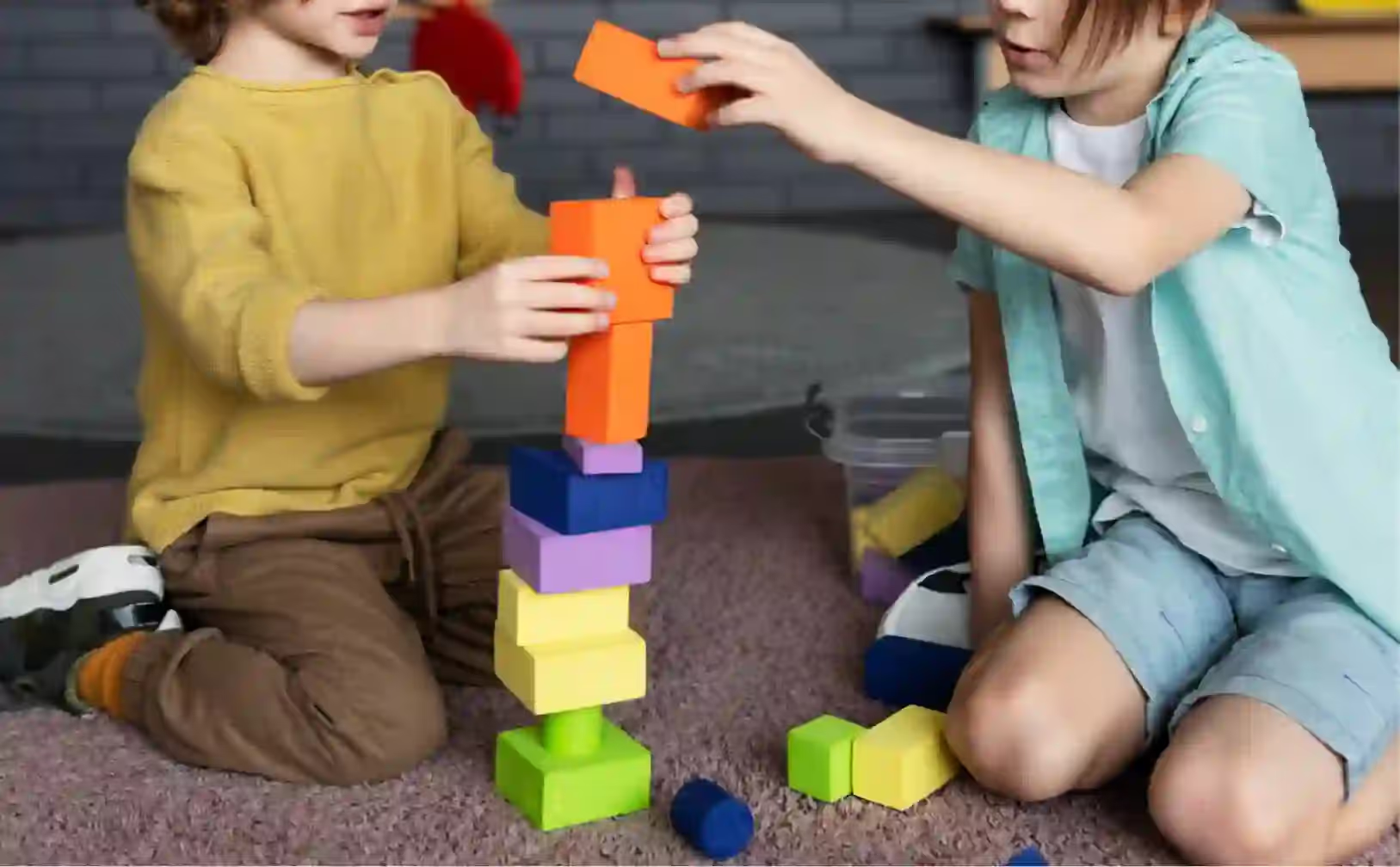
Educational and childcare settings face unique challenges with magnetic toy safety given the number of children, multiple adult caregivers with varying awareness levels, and difficulty controlling what toys enter facilities.
Policies should explicitly address magnetic toys. Many facilities have generic small-parts policies but haven't specifically considered magnets. Policies should include:
Age restrictions—magnetic building toys only in classrooms for children 3 and older, with careful consideration even then about whether all children meet developmental appropriateness. Supervision requirements—never allowing magnetic toys in settings where ratios make constant direct observation impossible. Inspection protocols—who checks toys daily for damage, how it's documented, and what happens when damage is discovered. Storage rules—where magnetic toys are kept when not in use, who can access storage, and ensuring younger children in multi-age settings can't access them. Parent notification—informing families that magnetic toys are used in the facility and explaining safety protocols.
Regular inventory checks should be formalized. Each magnetic toy set should have a documented piece count. Before and after each use, staff should verify complete piece accounting. Missing pieces trigger immediate search protocols and notification to administration. If pieces can't be located, parents of all children who accessed the toy should be notified about the missing magnets and potential ingestion risk.
Staff training must include specific education about magnet ingestion dangers, symptoms requiring emergency response, and prevention protocols. Don't assume all staff understand why magnets are different from other small parts—provide explicit education including real case examples and medical explanations.
Damaged toys should be removed immediately and discarded, not set aside for "repair" or "evaluation later." The moment staff notice cracks, loose seams, or exposed magnets, the toy exits the classroom into administration for disposal. No exceptions.
Consider whether magnetic toys are appropriate for your specific setting at all. Some facilities serving wide age ranges or those with higher ratios decide the safety and monitoring demands aren't worth the educational benefits these toys provide. Abundant alternative building toys exist without the same risks.
Communication with parents when incidents or close calls occur is essential. If a child is found with magnets in their mouth but successfully spits them out, parents need notification immediately so they can monitor for symptoms in case any were swallowed. If magnets go missing and can't be located, all parents should know.
Permission slips or acknowledgment forms for activities involving magnetic toys can document that parents have been informed about their presence and safety protocols, though this doesn't reduce facility liability—it's about ensuring parental awareness.
Emergency response plans should specifically include magnet ingestion protocols: immediate notification to parents, transportation to medical care if necessary, documentation of what type and how many magnets were potentially involved, and chain of communication ensuring all relevant staff and administration are informed.
How do I know if my child swallowed a magnet?
Often you won't know unless you witnessed it, found magnets missing from toys, or your child reports it. This is why prevention is so critical—by the time symptoms appear indicating ingestion, significant damage may have already occurred. If you have any suspicion based on missing magnets or opportunity for ingestion, seek immediate medical evaluation even without symptoms.
Is swallowing one magnet less dangerous than swallowing multiple?
Yes, significantly. A single magnet typically passes through the digestive system without causing injury, similar to other small smooth objects. However, you often can't know for certain that only one magnet was swallowed, and even single magnets warrant medical evaluation. The catastrophic injuries occur when multiple magnets attract each other across intestinal loops or when a magnet attracts another metal object.
Can magnetic toys ever be truly safe for toddlers?
Very few magnetic toys meet appropriate safety standards for children under 3. Some manufacturers produce extra-large magnetic blocks specifically designed for 18+ months with magnets deeply embedded in oversized pieces and extreme construction standards. However, even these require careful evaluation of quality and constant supervision. For most families, avoiding all magnetic toys until age 3-4 is the safest approach.
What if a magnet breaks inside a toy that's supposed to be sealed?
This represents a manufacturing defect or design flaw. The toy should be immediately discarded and reported to the CPSC through their website or hotline. If you have any reason to believe a child might have swallowed exposed magnets from the broken toy, seek immediate medical evaluation. Check if the product has been recalled and report your experience to help protect other children.
How fast do I need to act if I suspect ingestion?
Immediately. Don't wait to see if symptoms develop. Outcomes are dramatically better when magnets are removed within 12-24 hours versus after days of intestinal damage. The timeline from swallowing to serious complications can be as short as a few hours in some cases, though symptoms often don't appear for days. Any suspected magnet ingestion requires emergency department evaluation as soon as you become aware of the possibility.
What if my child tells me days later that they swallowed magnets?
Go to the emergency room immediately regardless of how long ago it happened or whether symptoms are present. Even if days have passed, medical evaluation is essential. X-rays can show whether magnets are still present, where they're located, and whether they've caused complications. Delayed reporting doesn't mean it's too late for intervention—it means urgent evaluation is even more critical.
Can emergency rooms always see swallowed magnets on X-rays?
Usually yes. Metal magnets are radio-opaque, meaning they show clearly on X-rays. However, in rare cases, magnets might be obscured by bowel gas, stool, or anatomical positioning. If clinical suspicion remains high despite normal X-rays, physicians may order additional imaging or serial X-rays. Never assume the absence of symptoms or even normal initial imaging means certain safety—follow medical advice about monitoring and return precautions.
Are magnetic craft supplies and office products equally dangerous?
Yes. Small neodymium magnets sold as desk toys, craft magnets, magnetic spheres marketed for adults, and even strong refrigerator magnets all pose the same ingestion risks if accessed by children. These products should be stored as carefully as magnetic toys—in locked drawers or high shelves completely inaccessible to children.
The goal of this comprehensive information isn't creating paranoid fear preventing you from allowing children any form of play. It's providing the knowledge necessary for informed decisions and appropriate vigilance when magnetic toys are present.
Thousands of children play safely with magnetic building toys daily because parents, educators, and caregivers understand the risks and implement consistent prevention strategies. The injuries happen when knowledge gaps exist—parents not realizing magnets could be so dangerous, toys not being inspected for damage, storage being inadequate, or age recommendations being ignored.
Key takeaways every parent and caregiver should internalize:
Swallowed magnets are true medical emergencies requiring immediate evaluation, not "wait and see" approaches. Multiple magnets or magnets with magnetic objects attract across intestinal walls causing tissue death and perforations. Symptoms are often delayed and easily mistaken for minor illness, making prevention the most reliable protection. Magnetic toys labeled 3+ aren't safe for younger children regardless of supervision or maturity level. Quality toys from reputable manufacturers are less likely to break and expose magnets but still require inspection and appropriate storage. Even a single missing magnet from a broken toy warrants concern about potential ingestion. Immediate ER evaluation gives the best outcomes when ingestion occurs or is suspected.
Your action steps for today:
Inspect every magnetic toy in your home for cracks, loose seams, or exposed magnets. Move all magnetic toys to truly inaccessible storage if you have children under 5. Count pieces in each set documenting the totals so you'll know if any go missing. Have explicit conversations with older children about why magnets are uniquely dangerous and the importance of careful storage. Check the CPSC recall database to ensure toys you own haven't been recalled. Consider whether magnetic toys are appropriate for your household given children's ages and your ability to maintain consistent storage and supervision.
The peace of mind from knowing you've minimized these risks is worth the effort. Magnet ingestion is a preventable emergency. With awareness, appropriate toy selection, careful storage, and quick action if problems occur, you can protect the children in your care from these serious injuries.
Tonight, before bed, take fifteen minutes to review the magnetic toys in your home. Move them to safer storage if needed. Count the pieces. Check for damage. This small investment of time could prevent a surgical emergency and give you confidence that you're providing a safer environment for the children you love.
NOVEMBER 20, 2025
NOVEMBER 20, 2025
NOVEMBER 20, 2025
NOVEMBER 20, 2025
NOVEMBER 20, 2025