

Cleaning Magnetic Blocks After Stomach Flu: Disinfection Without Damage
NOVEMBER 20, 2025
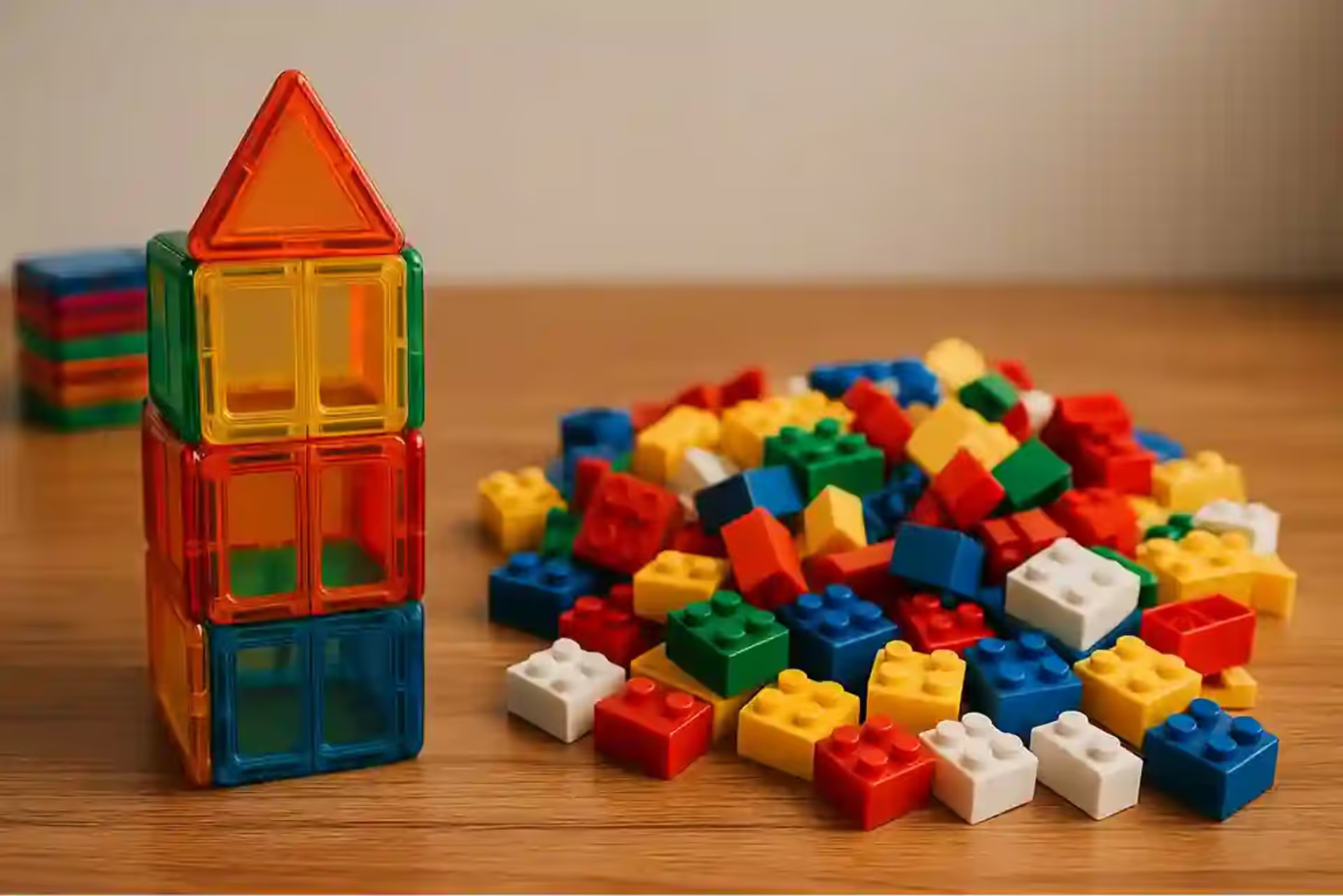
That $150 magnetic tile set looks expensive next to a $30 bag of wooden blocks. But the real story of what these toys cost your family goes far beyond the price tag. After analyzing hundreds of family experiences and breaking down the true economics of both options, the financial picture becomes surprisingly complex.
Parents often make this purchase decision based on sticker price alone, missing critical factors that dramatically affect the actual cost per hour of play, the resale value, and unexpected expenses that emerge months or years after the initial purchase. Let's expose what toy companies prefer you don't calculate before buying.
Walk into any toy store and the price difference seems obvious. Basic wooden block sets start around $20-40, while entry-level magnetic tiles rarely drop below $80. Premium magnetic brands like Magna-Tiles or PicassoTiles command $100-300 for decent-sized sets. This 3-10x price differential makes traditional blocks appear to be the clear budget winner.
But here's what happens next: That starter magnetic tile set with 32 pieces quickly proves insufficient. Children need at least 100 tiles to build satisfying structures, pushing the real entry cost to $200-400. Meanwhile, a basic block set actually provides enough pieces for meaningful play right out of the box.
The magnetic tile industry deliberately structures their sets this way. Starter sets showcase the concept but frustrate children with limitations. Parents then face the choice: disappoint their engaged child or invest in expansion sets. This psychological pricing strategy exploits the sunk cost fallacy – having already spent $100, another $150 seems reasonable to make the first purchase worthwhile. Understanding consumer psychology helps parents recognize these marketing tactics and resist pressure to overspend on toy collections.
The numbers tell a stark story. An initial magnetic tile purchase runs $80-150 compared to just $25-40 for traditional blocks, representing an immediate cost difference of $55-110. Building up to a minimum playable set escalates the magnetic tile investment to $200-400 while blocks remain at their original $25-40 price point, creating a gap of $175-360. For an ideal collection that provides sustained play value, magnetic tiles demand $400-800 versus $60-120 for blocks, a differential of $340-680. Even storage solutions cost more for magnetic tiles at $30-60 compared to the simple $10-20 containers sufficient for blocks.
Magnetic tiles break. This simple fact rarely appears in reviews or marketing materials, but cracked tiles are incredibly common. The transparent plastic casing shows every fracture, the magnets can work loose, and stepped-on tiles often split at the corners. At $3-5 per tile for name brands, replacing broken pieces adds up fast. The Consumer Product Safety Commission tracks product durability complaints, and magnetic building toys appear with concerning frequency in their databases.
Traditional wooden blocks, especially quality hardwood ones, survive decades of abuse. Parents pass down the same set through multiple children, even generations. Drop them, throw them, step on them – wooden blocks endure. When they do show wear, the patina and smooth edges often enhance their appeal rather than requiring replacement.
Consider this real scenario: A family buys a 100-piece magnetic tile set for $250. Over two years, 15 tiles crack or break (a conservative estimate). Replacement tiles from the manufacturer cost $75, but they only sell them in specific set sizes, so you actually spend $100 to get the pieces you need plus unwanted extras. Your $250 investment has become $350, and you're only two years in.
The replacement cycle continues throughout the product's life. Unlike wooden blocks that might need zero replacements over a decade, magnetic tiles require ongoing maintenance spending. By year five, families often discover they've spent nearly as much on replacements as on the original purchase. This hidden cost represents money that could have been invested elsewhere or used for experiences that create lasting family memories instead of simply maintaining a toy collection.
Not all magnetic tiles play nicely together. Magna-Tiles might not connect properly with PicassoTiles. Cheaper generic brands often have weaker magnets that won't support structures when mixed with premium tiles. This locks families into buying from the same expensive brand forever. The proprietary nature of these systems mirrors other industries where manufacturers deliberately create incompatibility to ensure continued revenue streams, a practice that consumer advocacy groups have long criticized.
Wooden blocks? A block is a block. Mix brands, vintages, and styles without issue. Grandma's 1960s blocks work perfectly with today's sets. This universal compatibility means you can build your collection cheaply through yard sales, thrift stores, and hand-me-downs – options largely unavailable for magnetic tiles.
The compatibility issue extends beyond just mixing brands. When manufacturers update their product lines, they often change magnet strength, adjust dimensions slightly, or modify colors. Your existing collection suddenly looks dated next to new pieces, and structures don't behave consistently when old and new tiles mix. This forces families to either accept a mismatched collection or replace everything with the newest version, effectively resetting the investment clock to zero.
Parents report frustration when well-meaning relatives purchase magnetic tile gifts from different brands. The excitement of receiving more tiles turns to disappointment when children discover the pieces don't work well together. Rather than expanding play possibilities, incompatible tiles create new problems and leave parents feeling obligated to buy matching pieces to make the gift useful.
Magnetic tiles demand careful storage. Stack them wrong and the magnets attract chaotically, potentially cracking tiles. Leave them in a regular toy box and they form an impossible-to-separate mass. Most families end up buying specialized storage bins with dividers, adding $30-60 to the total cost.
The magnetic attraction also creates unique problems. Tiles stick to heating vents, appliances, and electronics. Parents report damaged computer hard drives, scratched refrigerators, and HVAC issues from tiles blocking vents. These incidental damages rarely make it into cost calculations but can result in hundreds of dollars in repairs.
Traditional blocks need a bucket. Maybe a canvas bag. Their storage simplicity means kids can actually clean up independently, saving parents time and frustration. No special organization system required, no worry about magnetic damage to nearby electronics, no complicated sorting process. Following principles of organized home management, simple storage solutions reduce parental stress and teach children responsibility more effectively than complex systems requiring adult supervision.
The storage challenge extends beyond just containers. Magnetic tiles require specific organizational strategies to prevent damage and maintain usability. Parents spend time sorting by shape and size, checking for cracks before storage, and ensuring pieces don't attract forcefully enough to crack during storage. This ongoing maintenance adds hidden time costs that compound over the years of ownership. What seems like a simple toy becomes a management project requiring regular attention and effort.
Check Facebook Marketplace or eBay for used magnetic tiles. Premium brands hold about 50-70% of their value if in excellent condition with no missing pieces. Sounds good until you realize "excellent condition" rarely describes any toy after a year with kids. Cracked tiles, missing pieces, and worn edges drop resale value to 20-40% of retail.
Quality wooden blocks maintain or even appreciate in value. Vintage European blocks from the 1970s sell for more than their original price. Even well-used modern sets retain 60-80% of retail value because buyers know they're virtually indestructible. Some specialty hardwood blocks become family heirlooms, gaining sentimental value that transcends monetary worth.
The secondary market also reveals another hidden cost: magnetic tile obsolescence. Manufacturers regularly update their designs, making older versions less desirable. Color schemes change, magnet strength improves, new shapes launch. Your 2020 set looks dated by 2024, further depressing resale value.
The depreciation timeline for magnetic tiles accelerates more rapidly than parents anticipate. Within six months of purchase, used magnetic tiles typically sell for 60-70% of retail if in perfect condition. By the one-year mark, this drops to 40-50%. After two years of family use, expect to recover only 25-35% of your original investment. By contrast, wooden blocks often sell for 70-80% of retail even after several years of use, with minimal cleaning required to prepare them for resale.
A $400 magnetic tile collection becomes worth maybe $120 after three years of use. A $100 wooden block set might resell for $70 after the same period. Factor in replacements and storage, and the magnetic tiles have cost you $350 in depreciation versus $30 for blocks. This depreciation hit matters when your child outgrows the toy. You can't recoup the investment through resale, making magnetic tiles essentially a consumable purchase rather than a durable good.
Magnetic tile marketing emphasizes their appeal to older children, suggesting kids play with them longer than traditional blocks. The reality proves more nuanced. Yes, 8-year-olds might still build with magnetic tiles, but the play patterns change dramatically.
Young children (ages 3-5) often struggle with magnetic tiles. The magnets frustrate more than help, structures collapse unexpectedly, and the flat shapes limit imaginative play. These kids often prefer blocks, which offer immediate success and endless creative possibilities. By age 6-8, magnetic tiles hit their sweet spot, but interest typically wanes by age 9-10 as kids move toward more complex building systems or different activities entirely.
Traditional blocks follow a different trajectory. Toddlers stack them, preschoolers build with them, school-age kids incorporate them into elaborate imaginative play. Even teenagers and adults find blocks useful for art projects, physics experiments, or mindful building. The versatility extends their useful life far beyond the magnetic tile window. Research from child development experts confirms that open-ended toys with no prescribed use maintain children's interest across broader age ranges than toys with specific functions.
The age range analysis reveals significant differences in engagement levels across developmental stages. For children aged 18 months to 3 years, magnetic tiles offer limited appeal because the magnets confuse and frustrate, while traditional blocks provide high engagement perfect for this developmental stage. During the preschool years from 3-5, magnetic tiles generate moderate engagement marred by frequent frustration, whereas blocks support very high engagement during this prime building age. The 5-8 age bracket represents magnetic tiles' optimal period with very high engagement, while blocks maintain high engagement supporting complex creations. As children enter the 8-12 range, magnetic tile interest declines as they seek new challenges, but blocks continue offering moderate engagement as they're incorporated into various play scenarios. Beyond age 12, magnetic tiles see minimal use as children have outgrown them, while blocks maintain ongoing utility for artistic and practical applications.
Magnetic tile companies love promoting STEM benefits, suggesting their products offer superior educational value. They highlight geometry concepts, engineering principles, and spatial reasoning development. These claims aren't false, but they're not unique to magnetic tiles either.
Traditional blocks teach identical concepts plus additional skills magnetic tiles can't match. Balance, weight distribution, friction, and gravity become tangible experiences with blocks. Children learn that foundation matters, that center of gravity affects stability, that different arrangements create different strengths. These physics lessons happen naturally through play, without the magnetic "cheat" that makes everything stick together.
The constraint of magnetic connection points also limits problem-solving opportunities. Tiles connect in predetermined ways at specific angles. Blocks can stack, lean, bridge, and cantilever in infinite configurations. This freedom develops more creative engineering solutions and deeper spatial reasoning skills. Educational research published by organizations studying play-based learning consistently shows that materials requiring problem-solving through trial and error develop stronger cognitive skills than those that simplify construction through built-in connection mechanisms.
The educational comparison extends into mathematical domains as well. While magnetic tiles do teach shape recognition and basic geometry, traditional blocks provide opportunities for measurement, comparison, and numerical reasoning that tiles cannot match. Children naturally count blocks, compare heights, measure with non-standard units, and develop number sense through construction play. The three-dimensional nature of block building develops spatial intelligence more robustly than the primarily two-dimensional construction patterns typical of magnetic tile play.

Those powerful magnets pose risks manufacturers downplay. Swallowed magnets can cause serious intestinal damage, requiring emergency surgery. While magnetic tiles are too large to swallow whole, broken tiles expose small magnets that curious toddlers might ingest. The Consumer Product Safety Commission reports increasing injuries from magnetic toy components, leading to several product recalls and safety warnings over recent years.
Sharp plastic edges from cracked tiles cut fingers. The transparent plastic shows every scratch and crack, creating weak points that break unexpectedly during play. Parents report emergency room visits from deep cuts, especially when children fall onto broken tiles during active play.
Wooden blocks present their own hazards – thrown blocks hurt, towers falling on toes cause tears. But these injuries are predictable, visible, and rarely serious. Parents can assess wooden block safety at a glance. Magnetic tile damage often hides until catastrophic failure, making safety monitoring more challenging.
The potential medical expenses, while hopefully never realized, represent real financial risks that prudent parents should consider when evaluating toy purchases. An emergency room visit for magnet ingestion can cost $2,000-$5,000, while surgery for intestinal magnet damage might run $15,000-$50,000. Urgent care for deep cuts typically costs $200-$500, a tetanus shot update runs $50-$150, and X-rays to locate swallowed magnets add another $150-$400. Healthcare cost databases confirm that preventable toy-related injuries represent significant family financial burdens, particularly for families without comprehensive health insurance.
Beyond the dramatic emergency scenarios, parents report chronic low-level injuries from magnetic tiles that don't occur with blocks. Pinched fingers from magnets snapping together, minor cuts from sharp plastic edges, and foot injuries from stepping on flat tiles hidden in carpeting create ongoing minor medical needs. While individually insignificant, these accumulated injuries add to the hidden cost of magnetic tile ownership through bandages, antiseptic supplies, and occasional minor medical visits.
Magnetic tiles sprawl. Their flat nature means creations spread horizontally, consuming entire floor spaces. A modest magnetic tile city might cover 20 square feet. Parents in small homes find themselves constantly navigating tile constructions, unable to reclaim living spaces for days at a time.
Block towers build up, not out. The same creative expression fits in a corner, on a table, or in a designated play area. Vertical building means more impressive structures in less space. When cleanup time arrives, blocks actually go away. Magnetic tiles often migrate throughout the house, sticking to heating vents, hiding under appliances, and creating perpetual clutter.
Consider the time cost of managing magnetic tiles. Sorting them by size and shape for storage, hunting down missing pieces stuck to metal surfaces, carefully checking for cracks before each play session. These maintenance tasks add hours to parental responsibilities. Blocks require virtually no maintenance beyond occasional washing. Following principles of organized home management, simple storage solutions reduce parental stress and teach children responsibility more effectively than complex systems requiring adult supervision.
The lifestyle impact of magnetic tiles extends beyond physical space into mental space. Parents report constant awareness of where tiles are located, whether children are building near electronics, and whether structures are stable enough to leave unattended. This mental load adds stress to already busy family schedules. Blocks integrate seamlessly into family life with minimal monitoring required, freeing parents to focus on more important matters than toy management.
Watch children share magnetic tiles versus blocks and you'll notice distinct patterns. Magnetic tiles create resource competition – specific shapes become bottlenecks for building. Everyone needs the large squares for walls, causing conflicts. The child with the most tiles builds the biggest structure, encouraging hoarding rather than collaboration.
Blocks promote natural sharing. Different sizes serve different purposes, reducing direct competition. Children trade resources based on immediate needs rather than hoarding specific pieces. The weight and physics of blocks also encourage cooperative building – someone holds while another places, creating organic teamwork opportunities.
This social dynamic affects sibling relationships and playdate success. Parents report more conflicts over magnetic tiles, requiring more intervention and rule-setting. The hidden cost? Your time mediating disputes and the potential impact on children's relationships. Research on cooperative play and social development shows that toys facilitating natural collaboration develop stronger interpersonal skills than those creating resource scarcity and competition.
The competitive dynamics around magnetic tiles often surprise parents who expected these modern toys to promote cooperation. The limited number of specific shapes needed for popular building patterns creates bottlenecks that generate frustration. Children quickly learn which pieces are most valuable and compete to acquire them first, sometimes resorting to antisocial behaviors like hiding pieces or refusing to share. This stands in sharp contrast to block play, where the abundance of similar pieces and multiple building strategies reduce competition and encourage collaborative construction.
Magnetic tiles contain rare earth magnets, typically neodymium, mined primarily in China under questionable environmental and labor conditions. The extraction process creates radioactive waste, consumes enormous amounts of water, and devastates local ecosystems. Your purchase directly supports these practices. Environmental organizations document the severe ecological damage caused by rare earth mining, including groundwater contamination and habitat destruction.
The plastic components require petroleum products and complex manufacturing processes. When magnetic tiles break (and they will), they're essentially non-recyclable. The combination of magnets, metals, and plastics makes separation impractical for recycling facilities. They end up in landfills where the magnets can interfere with waste processing equipment.
Quality wooden blocks, especially from sustainably harvested forests, represent a renewable resource. They biodegrade naturally, can be composted when finally worn out, and often come from local craftspeople supporting regional economies. The environmental cost calculation rarely factors into purchase decisions but affects our children's future world.
The carbon footprint comparison between these toy options reveals striking differences. Magnetic tiles typically ship from overseas manufacturing facilities, traveling thousands of miles by container ship and truck before reaching your home. The manufacturing process itself generates significant carbon emissions through plastic production, magnet processing, and assembly operations. Wooden blocks, particularly those from domestic manufacturers, often travel far shorter distances and require dramatically less energy-intensive production processes.
Let's calculate realistically. A $400 magnetic tile collection, used actively for 3 years (ages 5-8), averaging 3 hours per week: roughly 470 total hours. Add $100 in replacements and storage: $500 total. Cost per play hour: $1.06.
A $60 wooden block set, used from age 2-10, averaging 2 hours per week: roughly 830 hours. Add nothing for replacements. Cost per play hour: $0.07. That's a 15x difference in value, not counting resale recovery or hand-me-down potential.
This cost-per-use calculation method, recommended by financial planning experts, helps families make rational purchase decisions based on actual value rather than emotional marketing appeals. When parents apply this analytical framework to toy purchases, traditional options almost always demonstrate superior cost-effectiveness.
The cost-per-hour analysis becomes even more favorable for blocks when considering multiple children. That same $60 block set serving three children over different age ranges might generate 2,000+ hours of play, dropping the cost per hour to $0.03. Magnetic tiles rarely see this multi-generational use due to breakage and declining interest as children age, limiting their total play hours regardless of family size.
Some premium magnetic tile brands offer warranties, which sounds reassuring until you read the fine print. Warranties typically cover manufacturing defects, not wear and tear. That cracked tile from normal play? Not covered. Missing pieces? Your problem. Magnets losing strength over time? Expected deterioration.
Even when damage qualifies for warranty coverage, the process proves frustrating. Ship the broken pieces back (at your expense), wait 4-6 weeks for processing, receive replacement pieces that might not match your set's color scheme or generation. Many parents give up and buy replacements rather than navigate the warranty maze.
Wooden blocks need no warranty. Quality manufacturers stand behind their products with genuine lifetime guarantees, but blocks rarely need them. The simplicity of solid wood means there's nothing to break that affects functionality. A chipped corner or worn edge doesn't compromise play value.
The warranty situation reveals broader differences in product philosophy. Magnetic tile manufacturers expect their products to wear out, planning obsolescence into their business models. Block manufacturers create products intended to last generations, with business models based on quality reputation rather than repeat purchases. This fundamental difference in approach affects not just warranty terms but overall product durability and long-term value.
Here's an uncomfortable truth: magnetic tiles often lose to screens. Their primary appeal – easy, satisfying building – can't compete with the instant gratification of tablets and games. Children accustomed to magnetic tiles' quick success often lack patience for more challenging construction play, making them more likely to choose screens when frustrated.
Traditional blocks develop frustration tolerance. Children learn that towers fall, that balance requires patience, that success comes through persistence. These lessons transfer to other challenging activities, building resilience that helps children choose engaging physical play over passive screen consumption. Guidelines from the American Academy of Pediatrics emphasize that toys requiring persistence and problem-solving help counteract the instant gratification mindset fostered by excessive screen exposure.
The cost implication? Expensive magnetic tiles gathering dust while kids default to screens represents dead investment. Blocks that teach persistence create children who engage longer with all physical toys, improving the value proposition of your entire toy collection. Parents report that children with primarily block-based play backgrounds show greater willingness to engage with challenging activities and less tendency toward screen dependence compared to peers whose primary construction experience involved magnetic tiles.
Understanding where toys come from adds another cost dimension. Most magnetic tiles are manufactured in China using complex supply chains vulnerable to disruptions. The COVID-19 pandemic demonstrated this vulnerability when magnetic tile shortages drove prices up 30-40% and extended delivery times to months. Parents who'd committed to magnetic tile systems found themselves unable to expand collections or replace broken pieces at reasonable costs.
Wooden blocks offer more diverse sourcing options. Quality blocks are manufactured across North America, Europe, and Asia, providing supply chain resilience. Many artisan block makers operate small businesses producing locally, allowing parents to support regional economies while obtaining superior products. The supply chain simplicity of wooden blocks – essentially raw timber, cutting equipment, and finishing materials – means consistent availability and stable pricing regardless of global disruptions.
The geopolitical implications of toy purchasing rarely enter parental decision-making, but supply chain vulnerability represents a real cost risk. Families who invest heavily in magnetic tile systems dependent on single-source manufacturing face potential obsolescence if suppliers discontinue product lines or go out of business. Block manufacturers' distributed production and simpler supply chains provide greater long-term security for your toy investment.
Beyond visual appeal and building capabilities, toys provide crucial sensory experiences that shape neural development. Magnetic tiles offer limited sensory input: smooth plastic surfaces, lightweight construction, and the single sensory note of magnetic connection. While the click of magnets provides some feedback, the experience remains relatively monotonous across repeated play sessions.
Traditional blocks engage multiple senses simultaneously. The weight varies by size, teaching children about mass and density. Different woods produce different sounds when knocked together, developing auditory discrimination. Surface textures range from smooth to rough, engaging tactile receptors. The scent of natural wood provides olfactory stimulation. This multisensory richness supports broader neural development, particularly in young children whose brains are rapidly forming sensory processing networks.
Temperature perception also differs dramatically. Wooden blocks feel warm and organic in small hands. Plastic tiles feel cold initially, warming slowly through contact. These thermal properties affect how children engage with materials, with research suggesting that natural materials promote longer, more focused play sessions compared to synthetic alternatives. The sensory richness of traditional blocks may explain why they maintain appeal across such broad age ranges – there's always something new to discover through touch, sound, and manipulation.
The developmental importance of multisensory play experiences cannot be overstated. Young children build understanding of their physical world through direct sensory engagement with materials. Toys that provide rich, varied sensory feedback support neural pathway development more effectively than those offering limited sensory experiences. This developmental advantage of blocks over magnetic tiles adds another dimension to the value calculation beyond simple cost considerations.
Understanding why parents choose magnetic tiles despite higher costs reveals important insights about consumer behavior and marketing effectiveness. Magnetic tiles photograph beautifully, creating social media moments that traditional blocks rarely match. The transparent, colorful structures catch light dramatically, making them highly shareable on Instagram and Pinterest. Parents unconsciously factor in this social currency when making purchase decisions, even if they wouldn't explicitly admit it influences their choices.
The novelty factor plays a significant role. Wooden blocks feel old-fashioned, reminding parents of their own childhoods. Magnetic tiles feel modern, innovative, cutting-edge. Parents want to provide their children with advantages they didn't have, sometimes equating newer with better without examining whether innovation actually improves outcomes. Marketing departments understand this psychological tendency and exploit it ruthlessly, positioning magnetic tiles as the next evolution in educational toys despite questionable evidence supporting superiority claims.
Gift-giving dynamics further complicate rational decision-making. Grandparents and relatives see magnetic tiles in stores, notice the premium pricing, and assume higher cost equals higher quality and educational value. A $200 magnetic tile set feels like a substantial, impressive gift. A $60 block set seems modest by comparison, even if the blocks provide superior long-term value. Recipients feel pressure to express appropriate gratitude proportional to perceived gift value, making it difficult to honestly assess whether expensive toys actually serve children's needs better than traditional alternatives.
The status signaling aspect of toy purchases operates subtly but powerfully. Premium magnetic tile brands convey messages about family values, parental investment in education, and socioeconomic status. These social messages matter in communities where parenting approaches are judged and compared. Parents may choose magnetic tiles partially to signal alignment with certain parenting philosophies or social groups, adding psychological and social value that pure play value calculations miss.
Speaking with early childhood educators, pediatric occupational therapists, and child development specialists reveals a surprising consensus. When asked privately what toys they recommend for home use, these professionals overwhelmingly favor traditional blocks over magnetic tiles. Their reasoning centers on several factors parents rarely consider when making purchases.
These professional insights suggest that the educational marketing surrounding magnetic tiles may actually overstate their developmental benefits while understating the robust learning that occurs through traditional block play. Parents relying on educator recommendations rather than marketing materials consistently choose blocks as the superior educational investment for home environments.
Examining the robust secondhand toy market provides revealing insights into actual versus perceived value. Quality wooden block sets from brands like Melissa & Doug, Haba, or Uncle Goose sell quickly on secondhand platforms at 70-80% of retail price. Buyers recognize that these toys lose nothing functionally through use and may even improve as edges soften and wood develops patina. Some vintage block sets command prices exceeding their original retail cost, becoming collectibles that appreciate rather than depreciate.
Magnetic tiles present a starkly different resale picture. Listings languish for weeks or months before sellers reduce prices by 50-60% to attract buyers. Even then, many sets don't sell, forcing sellers to donate them or accept pennies on the dollar at consignment shops. Buyers view used magnetic tiles with suspicion, worrying about hidden cracks, weakening magnets, and missing pieces that compromise the set's functionality. The transparency that makes new magnetic tiles attractive becomes a liability in the secondhand market, as every imperfection shows clearly.
This secondhand market behavior reveals what experienced parents know: wooden blocks are forever purchases while magnetic tiles are temporary ones. Smart consumers pay attention to resale values as indicators of true quality and lasting utility. When a toy maintains value in the secondary market, it signals that the item genuinely delivers on its promises. When resale value plummets, the market is communicating that the product disappoints relative to initial expectations and purchase price.
The secondhand market also reveals interesting patterns in what buyers prioritize. Wooden block listings emphasizing craftsmanship, wood species, and manufacturing origin command premium prices. Magnetic tile listings focusing on these factors generate minimal interest; buyers care primarily about piece count and price. This suggests that block purchasers value quality and longevity while magnetic tile buyers pursue quantity and economy, reflecting fundamentally different purchase philosophies and value perceptions.
While traditional blocks win the cost-benefit analysis for most families, certain situations warrant different recommendations. Children with significant visual processing differences sometimes find magnetic tiles' strong visual structure more accessible than blocks' open-ended possibilities. The defined connection points and limited angles reduce cognitive load, allowing these children to focus on creative expression rather than struggling with spatial planning. For these families, magnetic tiles may justify their higher cost by enabling play experiences that blocks make too challenging.
Families dealing with extreme space constraints, such as those living in RVs or tiny homes, might reasonably choose magnetic tiles for their flat storage profile. A complete block collection occupies significant three-dimensional space even when stored, while magnetic tiles stack nearly flat. For families where every cubic inch matters, the premium price of magnetic tiles buys valuable spatial efficiency that blocks cannot match.
Therapeutic contexts sometimes warrant magnetic tile investment. Occupational therapists use magnetic tiles to help children develop specific skills in controlled ways that blocks don't facilitate as easily. The predictable magnetic connection provides just-right challenge levels for children working on fine motor precision without the frustration of unstable block towers. In these clinical applications, the higher cost of magnetic tiles becomes a professional tool expense rather than a toy purchase, changing the value calculation entirely.
These special circumstances highlight that no single toy solution serves every family's needs. The key is making informed decisions based on your specific situation rather than following general recommendations blindly. Understanding both the typical cost-benefit analysis and the circumstances where it might not apply allows parents to make confident choices aligned with their family's unique needs and constraints.
Examining this debate through a wider cultural lens reveals interesting generational patterns. Baby Boomer grandparents often express confusion about why parents spend hundreds on magnetic tiles when blocks worked perfectly well for generations. They remember childhoods rich with simple toys that fostered deep, imaginative play without electronic components or innovative connection systems. This generational perspective, while sometimes dismissed as nostalgia, carries wisdom about what children actually need for healthy development.
Millennial and Gen X parents face different pressures than previous generations. Social media creates performance anxiety around parenting choices, including toy selection. Parents see peer children with elaborate magnetic tile creations and worry their children are missing out. This fear of deprivation drives purchases that financial situations don't necessarily support. The cultural shift toward treating childhood as a project requiring constant optimization and premium inputs affects toy buying in ways previous generations didn't experience.
Additionally, the decline in outdoor play and unstructured time means modern children spend more hours with toys than previous generations did. This increased usage potentially justifies premium toy investments since cost-per-hour decreases with more frequent use. However, it also means children need toys that sustain long-term interest across years, not months. Traditional blocks' multi-generational track record demonstrates sustained engagement better than magnetic tiles' relatively brief market history can prove.
The generational divide in toy preferences reflects broader cultural shifts in parenting philosophy, consumption patterns, and childhood experiences. Understanding these larger contextual factors helps parents evaluate whether their toy choices reflect genuine family needs or external social pressures that may not align with their actual values and priorities.
The environmental comparison between magnetic tiles and wooden blocks extends beyond manufacturing to encompass the entire product lifecycle. Magnetic tiles' petroleum-based plastics begin as fossil fuels extracted through environmentally destructive processes. Refining crude oil into plastic resins requires enormous energy inputs and produces significant greenhouse gas emissions. The manufacturing process involves heat, pressure, and chemical additives to achieve the transparency and durability that make magnetic tiles appealing.
The rare earth magnets in each tile represent an even more concerning environmental cost. Neodymium mining, concentrated in China's Inner Mongolia region, has created toxic waste lakes and widespread contamination. Local communities suffer health consequences while global consumers enjoy the strong magnets that make toys work. This geographical separation of benefit and harm allows consumers to remain disconnected from the true costs of their purchases.
Wooden blocks sourced from responsibly managed forests represent renewable resources that actually improve environmental conditions. Sustainable forestry practices enhance biodiversity, prevent soil erosion, and sequester carbon dioxide from the atmosphere. The trees used for quality blocks are typically fast-growing species specifically cultivated for wood production, not harvested from old-growth forests. The manufacturing process requires minimal processing beyond cutting and finishing, using a fraction of the energy needed for plastic production.
At end-of-life, the environmental differences become even starker. Wooden blocks biodegrade naturally, returning nutrients to soil. They can be composted, burned for heat, or simply discarded without creating persistent pollution. Magnetic tiles, however, persist in landfills indefinitely. The mixed materials make recycling impossible with current technology, while the magnets create problems for waste processing facilities. Every broken magnetic tile represents a permanent addition to humanity's waste stream, a legacy we leave for future generations to manage.
The carbon footprint comparison between these toy options reveals striking differences. Magnetic tiles typically ship from overseas manufacturing facilities, traveling thousands of miles by container ship and truck before reaching your home. The manufacturing process itself generates significant carbon emissions through plastic production, magnet processing, and assembly operations. Wooden blocks, particularly those from domestic manufacturers, often travel far shorter distances and require dramatically less energy-intensive production processes.
Rather than viewing this as an either-or decision, thoughtful parents can develop holistic toy strategies that incorporate both options appropriately. The key is understanding that different toys serve different purposes and that strategic, limited purchases deliver more value than accumulated collections bought on impulse or through social pressure.
A well-designed toy strategy begins with a foundational collection of open-ended materials that support diverse play patterns across ages. Quality wooden blocks fit this description perfectly, serving as the anchor of a toy collection. These foundational toys should represent the bulk of your toy investment since they'll see the most use over the longest period. Think of them as the toy equivalent of basic wardrobe pieces – the items you rely on constantly that never go out of style.
Supplementary toys can include smaller quantities of specialized items that offer different play experiences. A modest magnetic tile set (30-50 pieces) might fit here, providing novelty and variety without demanding the financial commitment of a comprehensive collection. These supplementary toys rotate in and out of access, maintaining interest through intermittent availability rather than constant presence. This approach reduces both initial cost and ongoing storage challenges while preventing the overwhelm that comes from too many simultaneous options.
Consumable play materials form the third category. Art supplies, play dough, craft materials, and building kits fall here. These items are used up or completed and then replaced, representing ongoing operational costs rather than capital investments. Understanding these different categories helps parents allocate toy budgets appropriately rather than spending premium prices on items that won't deliver lasting value.
The strategic approach to toy purchasing requires discipline and planning but ultimately saves money while providing children with higher-quality play experiences. Rather than accumulating toys reactively based on marketing messages or peer pressure, families make intentional decisions aligned with their values, budget, and children's actual developmental needs. This thoughtful approach models wise consumer behavior that children absorb and carry into their own adult decision-making.
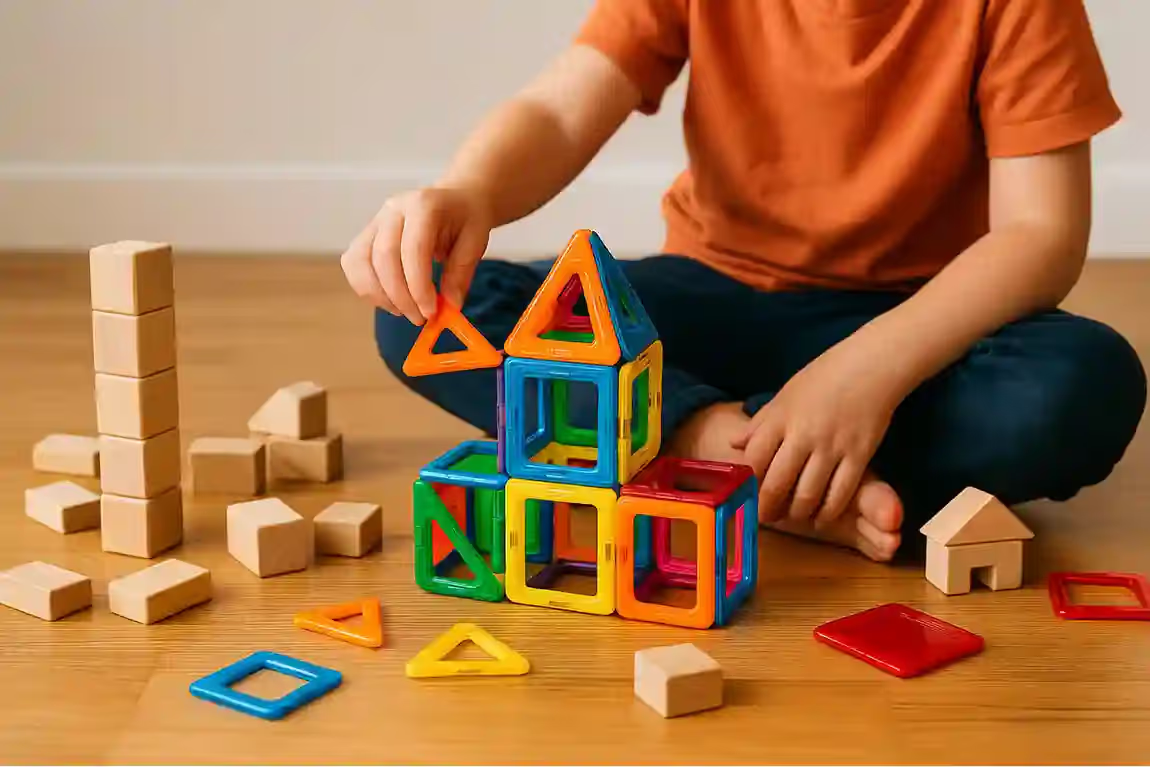
When Magnetic Tiles Make Sense: Buy magnetic tiles if you have one child aged 5-8, substantial disposable income, adequate storage space, and value the specific aesthetic of magnetic tile creations. Accept them as a consumable toy with a 3-4 year lifespan, minimal resale value, and ongoing replacement costs. Families living in apartments with metal surfaces everywhere might appreciate the magnetic attachment options. Those prioritizing modern design aesthetics may prefer how magnetic tile creations photograph for social media sharing.
When Traditional Blocks Win: Choose blocks for multiple children, tight budgets, small living spaces, or long-term value. They're ideal for families valuing sustainability, those with children under 5 or over 9, and anyone wanting toys that appreciate rather than depreciate. Blocks work for grandparent houses, daycares, and anywhere durability matters. Families committed to Montessori or Waldorf educational philosophies will find blocks align better with these approaches' emphasis on natural materials and open-ended play.
The Hybrid Approach: Consider buying a high-quality wooden block set as your foundation toy, then adding a small magnetic tile set (30-50 pieces) for variety. This limits your magnetic tile investment while providing exposure to both play patterns. The blocks handle heavy use while tiles offer occasional novelty. This strategy works particularly well for families with children in the magnetic tile sweet spot age (5-8) who want to experience the material without full financial commitment.
The Johnson family bought a 150-piece magnetic tile set for $380. Within 18 months, they'd spent an additional $150 on replacements and $200 on expansion sets. Their 7-year-old played intensively for one year, then interest waned. Total cost: $730 for roughly 150 hours of engaged play, calculating to $4.87 per hour. They sold the collection for $200, making their net cost $530. Reflecting on the experience, the parents noted they felt pressured by social media posts showing elaborate magnetic tile creations, leading them to overinvest in a toy that ultimately provided limited value.
The Martinez family invested $85 in quality wooden blocks. Three children used them over 8 years. No replacements needed, no storage issues, countless hours of play. They kept the blocks for future grandchildren. Cost per hour: impossible to calculate because the blocks remain in active use after nearly a decade. The eldest child, now in high school, still occasionally builds with them while studying architectural concepts in class, demonstrating the extended utility quality blocks provide.
The Chen family tried both. They bought $60 worth of blocks and a $120 magnetic tile starter set. The tiles broke within a year, frustrating their 4-year-old. The blocks became the favorite, used daily for everything from castles to math manipulatives. They sold the magnetic tiles for $40 and expanded their block collection with the proceeds. Mrs. Chen noted that the magnetic tiles created more cleanup stress and maintenance burden than the pleasure they provided justified, while blocks seamlessly integrated into family life.
The Anderson family represents another common pattern. They received a magnetic tile set as a gift and initially appreciated not having made the financial investment themselves. However, as pieces broke and the set proved insufficient for satisfying play, they faced the decision to invest in expansion pieces for a toy they hadn't chosen. They ultimately decided to store the magnetic tiles and purchase blocks instead, but felt guilty about the expensive gift sitting unused. This scenario highlights how gifts can create unexpected financial and emotional pressures around toy collections.
Understanding the full scope of hidden costs helps parents make truly informed decisions. Replacement frequency for magnetic tiles runs 15-20% annually, meaning you'll replace roughly one-fifth of your collection each year. Traditional blocks experience near-zero replacement needs over their lifetime. Storage requirements differ dramatically: magnetic tiles demand specialized solutions costing $30-60, while basic storage for blocks runs just $5-15.
Expansion pressure represents another hidden cost category. Magnetic tile collections create strong pressure to expand, as children need 100+ pieces for satisfying play. Blocks create low expansion pressure since 50 pieces provide sufficient creative possibilities. The depreciation rate starkly contrasts between options: magnetic tiles lose 60-80% of value over 3 years, while blocks retain 70-80% of value even after 10 years.
Compatibility issues create brand lock-in for magnetic tiles, forcing families to purchase from the same manufacturer indefinitely. Blocks offer universal compatibility, allowing mixing of brands, vintages, and styles without concern. Safety monitoring requirements differ as well: magnetic tiles demand constant vigilance regarding broken pieces and magnet exposure, while blocks require minimal safety oversight beyond supervising appropriate use.
Magnetic tiles cost 5-15 times more than traditional blocks when you factor in all hidden expenses. The initial price tag tells maybe 30% of the financial story. Between replacements, storage, expansion sets, potential medical costs, and minimal resale value, a magnetic tile collection represents a luxury purchase disguised as an educational investment.
This doesn't make magnetic tiles bad – they offer unique play experiences some children adore. But parents deserve honest information about the true financial commitment. That $100 starter set is really a $400-500 investment over time. Those wooden blocks that seem expensive at $60? They're the bargain that keeps delivering value year after year.
Make your choice with eyes wide open. Calculate the real costs, consider your family's specific situation, and remember that the best toy is the one that actually gets played with. Sometimes the old-fashioned option remains unbeatable not because of nostalgia, but because of simple economics and practical reality. The toy industry spends billions on marketing designed to convince parents that newer, more complex toys provide superior value. Independent analysis consistently reveals that simpler, traditional toys deliver better developmental outcomes at lower total cost. Trust the evidence, not the advertising, when making these important decisions for your family.
The fundamental lesson extends beyond toy purchases to broader consumer choices. Premium pricing doesn't guarantee superior value. Marketing sophistication doesn't indicate product excellence. Sometimes the traditional option endures precisely because it provides genuine, lasting value that innovations struggle to match. By applying critical analysis to toy purchases, parents develop decision-making frameworks applicable to countless family financial choices, ultimately building wealth and stability through consistently wise consumer behavior.
NOVEMBER 20, 2025
NOVEMBER 20, 2025
NOVEMBER 20, 2025
NOVEMBER 20, 2025
NOVEMBER 20, 2025