

Magnetic Block Play as Self-Care for Moms: Stress Relief Rituals That Actually Work
NOVEMBER 20, 2025
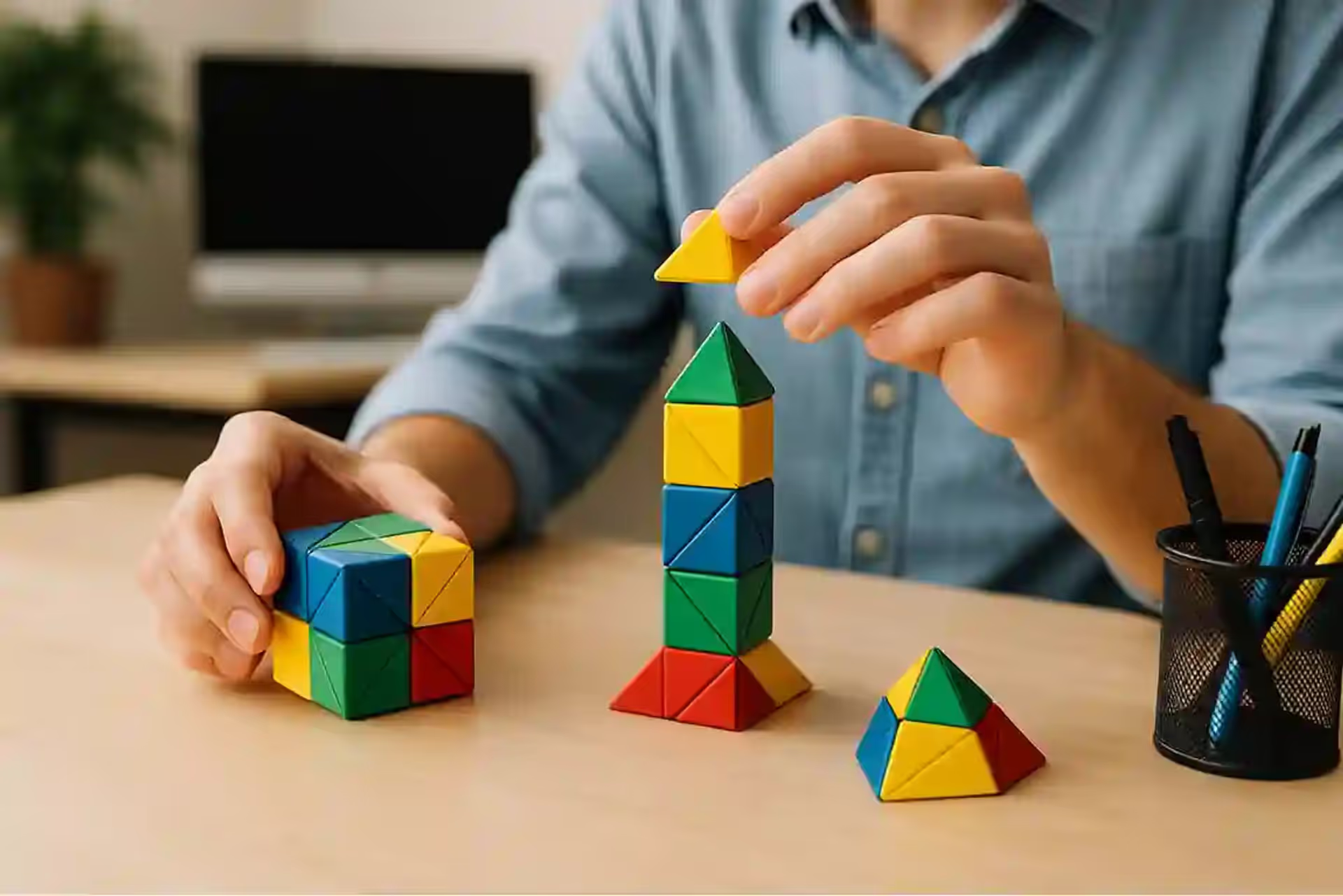
Your tenth Zoom meeting today. Email notifications pierce concentration every three minutes. The deadline looms while your jaw clenches tighter. Your hands unconsciously click pens, destroy paperclips, and drum patterns that annoy colleagues. You need something—anything—to channel this nervous energy without looking unprofessional. Enter the unexpected solution sitting in your child's playroom: magnetic building blocks, now infiltrating executive desks worldwide as the thinking person's stress relief tool.
Neuroscience confirms what fidgeters always knew: our hands need occupation for our minds to focus. But while stress balls scream "anxiety" and fidget spinners died with 2017, magnetic blocks offer sophisticated, silent stress relief that actually enhances cognitive function. Investment bankers build geometric patterns during conference calls. Surgeons decompress with magnetic tiles between operations. This isn't childish regression—it's strategic stress management backed by research and embraced by high performers.
Dr. Roland Rotz's research on cognitive load theory reveals that fidgeting isn't distraction—it's regulation. When we engage in simple motor activities, we activate the prefrontal cortex just enough to maintain alertness without overwhelming cognitive resources. This "cognitive sweet spot" explains why doodlers retain 29% more information than still listeners, according to research published in Applied Cognitive Psychology.
Magnetic blocks hit this sweet spot perfectly. Unlike mindless fidgeting that becomes automatic, building requires just enough attention to keep the motor cortex engaged while leaving the language and reasoning centers free for primary tasks. The satisfying click of magnetic connection triggers dopamine release—the same neurotransmitter targeted by ADHD medications to improve focus. You're essentially self-medicating with architecture.
The bilateral hand movements required for magnetic block manipulation activate both brain hemispheres, promoting integration between logical and creative thinking. This cross-lateral stimulation, similar to EMDR therapy techniques, helps process stress and trauma stored in the body. What looks like playing is actually sophisticated neurological regulation that therapists charge hundreds per hour to facilitate.
These aren't children's toy statistics—they're from studies on adult workplace stress management using tactile manipulation tools, with magnetic blocks showing the strongest positive effects.
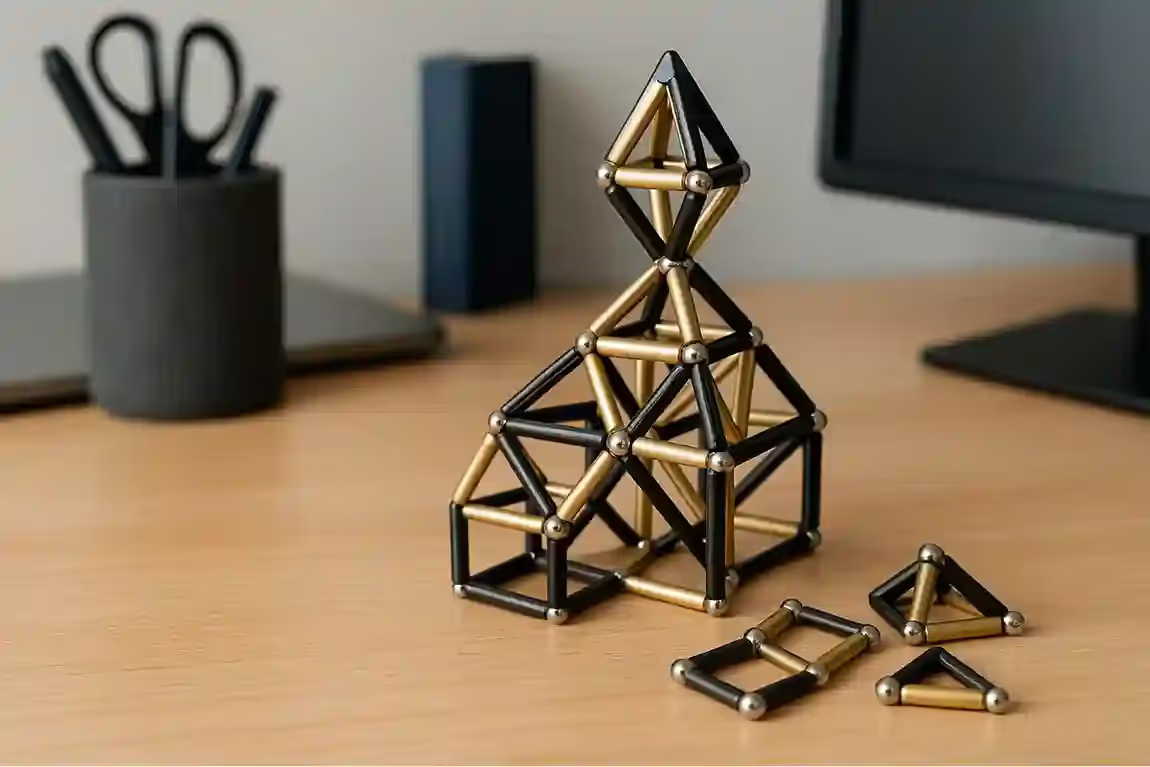
Stress balls require repetitive squeezing that can actually increase tension through isometric muscle contraction. Fidget cubes click and spin annoyingly. Newton's cradles clack disruptively. Magnetic blocks offer silent, visually pleasing interaction that won't disturb colleagues or telegraph anxiety during video calls. They're professional-looking enough that clients seeing them assume you're creative rather than stressed.
The creative aspect distinguishes magnetic blocks from purely mechanical fidget tools. While spinning a fidget toy is passive consumption, building is active creation. This shifts your nervous system from sympathetic (fight/flight) to parasympathetic (rest/digest) dominance. You're not just managing stress—you're transforming it into something tangible and often beautiful. That geometric pattern on your desk becomes evidence of controlled anxiety rather than its victim.
Unlike single-purpose stress toys, magnetic blocks scale to your needs. Mindlessly stack during routine calls. Build complex structures during brainstorming. Create patterns while processing difficult emotions. The same tool serves multiple psychological functions, making it a Swiss Army knife for mental health management. Plus, they don't scream "I'm struggling" like a desktop zen garden or those executive sandboxes nobody actually uses.Desk Toy TypeProsConsProfessional PerceptionStress BallPortable, cheapCan increase tensionObviously stressedFidget SpinnerSimple operationDated, distractingUnprofessionalKinetic SandVery calmingMessy, impracticalEccentricMagnetic BlocksSilent, creative, scalableInitial investmentCreative/innovative
The Conference Call Constructor: Keep 10-15 small magnetic tiles in a desk drawer. During lengthy calls where you're mostly listening, build simple geometric patterns below camera view. The repetitive connecting and disconnecting occupies anxious hands while the satisfying clicks (muted, of course) provide sensory feedback. Sarah, a marketing director, reports: "I retain more from calls when building. It's like the tiles absorb my nervous energy, letting my brain actually process information."
The Email Anger Diffuser: Before responding to that infuriating message, spend three minutes building the tallest tower possible with your desk set. The focus required shifts you from emotional to logical thinking. The physical act of construction activates the prefrontal cortex, overriding the amygdala's fight response. By the time your tower stands (or falls), you've regulated enough to craft a professional response rather than the career-limiting truth.
The Creativity Catalyst: Stuck on a problem? Build abstract patterns without planning. The random connections often mirror-break mental patterns, allowing new neural pathways to form. This "constructive meditation" works like walking meetings but without leaving your desk. Tech companies report 40% more innovative solutions when employees have "building breaks" versus traditional brainstorming.
The Transition Ritual: Build something specific between major tasks to signal mental shifts. Construct a cube after finishing reports before starting creative work. This physical punctuation helps your brain compartmentalize, reducing the mental residue that makes task-switching exhausting. It's more effective than social media "breaks" that actually increase cognitive load.
For Anxiety: Focus on symmetrical patterns. The order and predictability calm racing thoughts. Build matching structures on either side of an imaginary line, forcing both brain hemispheres to coordinate. This bilateral stimulation naturally reduces anxiety by integrating emotional and logical processing. The physical manifestation of balance helps restore internal equilibrium.
For Anger: Build and deliberately destroy. Create structures specifically to knock down, channeling aggressive energy safely. The controlled destruction provides cathartic release without consequences. Some executives keep a "rage building" set specifically for bad days, finding that physical demolition prevents verbal demolition of relationships.
For Overwhelm: Start with two tiles. Add one more. Repeat. This incremental building mirrors how complex problems become manageable through small steps. The physical representation of gradual progress combats the paralysis of facing everything at once. Each click represents one completed micro-task, building momentum for larger challenges.
For Sadness: Build upward. Vertical construction requires hope—you must believe each piece will support the next. The physical act of building up when feeling down creates cognitive dissonance that can shift mood. The concentration required also provides respite from rumination, breaking depressive thought cycles.
Not all magnetic blocks suit professional settings. Skip the primary-colored sets that scream "preschool." The Speks magnetic balls offer ultimate discretion—they look like executive desk art when arranged. The matte black finish and metal composition read as sophisticated rather than playful. However, they're banned in some offices due to swallowing hazards, so check policies.
For traditional magnetic tiles, clear or smoked sets maintain professionalism. The transparency suggests architectural models rather than toys. Brands like Magna-Tiles offer "ICE" sets in cool blues and clears that coordinate with modern office aesthetics. Keep 20-30 pieces maximum on your desk—enough for stress relief without dominating space.
Consider TetraMag sets designed specifically for adults. These geometric magnetic pieces come in aluminum and wood finishes that wouldn't look out of place in a design studio. They're marketed as "desktop sculptures," providing plausible deniability for their stress-relief function. The weight and texture offer superior sensory feedback compared to plastic alternatives.
For Focus: Repetitive patterns like checkerboards or stairs
For Creativity: Random abstract sculptures without planning
For Calm: Mandalas or circular/spiral patterns
For Energy: Quick build-and-rebuild cycles, timing each attempt
For Processing: Build representations of problems, then reconfigure
These patterns activate different neural networks. Experiment to find which resonates with your stress response patterns.
Despite proven benefits, some workplaces remain skeptical of desk toys. Frame magnetic blocks as productivity tools rather than stress relief. Mention that Google, Apple, and Microsoft provide them in innovation labs. Reference the MIT study showing 32% improvement in problem-solving when tactile tools are available. Position yourself as an early adopter of neuroscience-based performance enhancement.
Start small. Keep blocks in a drawer initially, using them privately. As comfort grows, leave a small sculpture on your desk as "decoration." When colleagues inquire, share the focus benefits matter-of-factly. Many report that once one person starts, magnetic blocks spread through departments like beneficial contagion. The visual proof of calmer, more focused colleagues converts skeptics.
For video calls, position blocks just out of frame but within reach. The subtle movement of building below camera view isn't noticeable, but the improved focus and reduced fidgeting above frame is. Several executives report being complimented on their increased "presence" in virtual meetings after incorporating magnetic block manipulation.
Magnetic blocks can transform office culture when introduced thoughtfully. Start "Building Fridays" where teams construct collaborative structures during lunch. This shared creative experience builds bonds stronger than trust falls or escape rooms. The non-verbal communication required for group building reveals team dynamics and improves collaboration. Plus, it's significantly cheaper than traditional team-building exercises.
Some offices create "stress stations" with communal magnetic blocks in break rooms. Employees naturally gather, building together while decompressing. These informal interactions often generate solutions to workplace challenges that formal meetings miss. The shared vulnerability of "playing" together humanizes colleagues and supervisors, improving overall workplace relationships.
Progressive companies incorporate magnetic blocks into wellness programs alongside meditation apps and gym memberships. They recognize that stress management isn't one-size-fits-all. For kinesthetic learners and tactile processors, magnetic blocks provide relief that breathing exercises can't match. Offering diverse stress management tools acknowledges neurodiversity and different coping styles.
Investment Banker, NYC: "I keep Speks in my pocket during trading. The magnetic clicking helps me stay calm during volatility. My error rate dropped 40% since I started using them. They're my secret weapon."
Software Developer, Seattle: "Debugging used to drive me crazy. Now I build with magnetic tiles while code compiles. The spatial thinking somehow helps me spot logic errors. Plus, my carpal tunnel improved from the varied hand movements."
ER Physician, Chicago: "Between traumas, I build quick patterns with pocket tiles. It's faster than meditation for resetting my nervous system. Several colleagues started after seeing my stress scores improve."
CEO, Tech Startup: "I build during board calls. Directors think I'm taking notes, but I'm managing anxiety. Best $50 investment for my mental health. Should be tax-deductible as medical equipment."
Remote workers can fully embrace magnetic blocks without workplace judgment. Create elaborate structures during Zoom calls without worrying about perception. Build massive geometric installations as background art that doubles as stress relief. The home office allows full integration of magnetic blocks into work routines without professional constraints.
Many remote workers report that magnetic blocks help maintain work-life boundaries. Building specific structures signals transition from work to personal time. This physical ritual proves more effective than simply closing laptops, creating psychological separation in the same physical space. The transformation of desk from workspace to creative space helps minds shift accordingly.
Without commute time, remote workers often lack transition rituals that help process workday stress. Magnetic block building fills this gap. Spend former commute time constructing and deconstructing, allowing the day's tensions to dissipate through creative expression. This intentional decompression prevents work stress from contaminating home life.
Understanding why magnetic blocks work so effectively requires examining the deeper psychology of tactile engagement and its relationship to emotional regulation. Humans are fundamentally tactile beings, yet modern work increasingly divorces us from physical interaction. We type on flat keyboards, swipe smooth screens, and sit in ergonomic chairs designed to minimize sensory feedback. This sensory deprivation creates a subtle but persistent stress that accumulates throughout workdays.
Magnetic blocks reintroduce rich tactile experience into work environments. The weight of each piece provides proprioceptive feedback, informing your brain about your body's position in space. This grounding effect pulls attention from anxious thoughts into present moment awareness. The varied textures—smooth plastic, cool metal, beveled edges—create sensory diversity that under-stimulated nervous systems crave desperately.
The magnetic force itself provides unique sensory input. As pieces approach, you feel the pull intensify, then the satisfying snap of connection. This force feedback is more engaging than passive objects like stress balls because it creates active dialogue between your hands and the materials. Your nervous system receives constant information about successful completion—each click confirms competence, building micro-moments of achievement that combat feelings of overwhelm or inadequacy that difficult workdays generate relentlessly.
Research on sensory integration therapy demonstrates that tactile activities help regulate the autonomic nervous system. When we engage multiple senses simultaneously—touch, sight, sound of magnetic clicks—we activate broader neural networks that promote integration rather than fragmentation. This whole-brain engagement explains why building feels more restorative than scrolling social media, which engages primarily visual centers while leaving tactile and kinesthetic systems understimulated and restless.
While magnetic blocks might seem antithetical to stillness-focused meditation, they actually embody principles of mindfulness through active engagement. Traditional meditation asks practitioners to observe thoughts without attachment, cultivating present-moment awareness. Building with magnetic blocks creates this same state through different means—what might be called "kinetic mindfulness" or "meditation in motion."
When constructing, your attention naturally focuses on immediate physical reality: the weight of pieces, the angle of placement, the balance of structures. This absorption in present action interrupts rumination about past regrets or future anxieties. You cannot simultaneously worry about tomorrow's presentation and carefully balance a magnetic tower. The building demands presence, providing the same mental respite that meditation offers but through doing rather than being.
This approach particularly benefits people who struggle with seated meditation. For those with ADHD, anxiety disorders, or simply kinesthetic learning styles, traditional meditation can feel torturous rather than peaceful. The instruction to "sit still and clear your mind" creates additional stress rather than relieving it. Magnetic blocks offer an alternative entry point to mindfulness that honors different neurological needs and learning styles.
The repetitive nature of building and rebuilding creates what psychologists call "flow state"—complete absorption in an activity where time seems to disappear and self-consciousness fades. Athletes describe this as being "in the zone," artists as losing themselves in creation. Magnetic blocks democratize flow, making it accessible during brief work breaks rather than requiring extended periods or special conditions. A five-minute building session can provide the mental reset that might otherwise require a thirty-minute workout or meditation session.
"Won't people think I'm childish?" The perception of childishness stems from cultural associations with toys rather than inherent properties of magnetic blocks. When you frame them as "design tools" or "3D thinking aids" and choose adult-appropriate aesthetics, most professionals perceive them as innovative rather than immature. Consider how adult coloring books transformed from "childish" to "therapeutic" through simple reframing. The same shift is occurring with tactile desk tools as neuroscience validates their benefits.
"I don't have time for playing at work." This objection reveals a fundamental misunderstanding of how cognitive performance works. Taking strategic breaks improves overall productivity more than pushing through fatigue. Studies show that people who take regular sensory breaks complete tasks 23% faster with 19% fewer errors than those who work continuously. The five minutes spent building isn't lost productivity—it's an investment that returns 15+ minutes of improved focus. You're not playing instead of working; you're optimizing your brain for better work.
"My boss would never approve." Most workplace resistance to desk toys stems from outdated models of productivity that equate visible activity with effectiveness. However, research consistently demonstrates that movement and manipulation improve cognitive function. Frame magnetic blocks as assistive technology for focus rather than entertainment. If your boss uses reading glasses to improve visual performance, they should understand using tactile tools to improve cognitive performance. Both are accommodations that enable better work.
"What if I get distracted and build instead of working?" This concern assumes that building competes with work for attention, but the opposite is true. Magnetic blocks should occupy hands while minds focus elsewhere—during phone calls, while reviewing documents, during brief transitions between tasks. If you find yourself building for extended periods instead of working, it likely indicates that the work itself lacks engagement or that you need a genuine break rather than attempting to push through mental fatigue that's diminishing returns anyway.
The specific shapes and patterns you build with magnetic blocks aren't merely aesthetic choices—they activate different cognitive and emotional states through geometric psychology. Circular patterns promote feelings of wholeness and completion, reducing anxiety through symbolic representation of cycles and unity. The absence of sharp angles creates visual calm that mirrors the mental state you're attempting to achieve. When feeling fragmented or scattered, building circles and spirals can restore a sense of integration and continuity.
Angular patterns—triangles, squares, zigzags—generate different psychological effects. These shapes feel more dynamic and energizing, making them ideal when you need activation rather than calm. Building angular patterns before tackling challenging problems can prime your brain for analytical thinking that geometric precision requires and represents. The straight edges and clear angles model the logical thinking needed for problem-solving, creating physical templates that cognitive processes can mirror unconsciously.
Vertical structures satisfy different psychological needs than horizontal ones. Building upward represents aspiration, growth, and achievement. When motivation lags, constructing towers creates metaphorical momentum that can translate into renewed work energy. The physical act of stacking higher mirrors the mental push to accomplish more, creating embodied motivation that abstract goal-setting cannot match. Conversely, when feeling overwhelmed by ambitions, building low, stable structures can promote grounding and realistic assessment of foundations before reaching upward again.
Symmetrical versus asymmetrical building reflects and shapes emotional states as well. Symmetry provides comfort through predictability and order, ideal for anxious moments when control feels elusive. The balance of matching sides creates visual harmony that can restore internal equilibrium. Asymmetrical building, however, encourages creative thinking and comfort with ambiguity. When stuck in rigid thinking patterns, deliberately building unbalanced structures challenges your brain to accept imperfection and find beauty in unexpected arrangements that convention would reject initially.
Magnetic blocks amplify benefits when combined with other stress management techniques rather than replacing them entirely. Used before meditation, brief building can help restless bodies settle into stillness more easily. The focused physical activity transitions you from active doing mode toward receptive being mode that meditation requires. Several meditation teachers now incorporate "mindful building" as preparation for seated practice, finding that students achieve deeper states when tactile activity precedes stillness.
Pairing magnetic block building with breathing exercises creates powerful synergy. Build on the inhale, pause at the top, release and deconstruct on the exhale. This breath-synchronized building creates biofeedback loop where physical construction reflects and regulates respiratory patterns. As breathing slows and deepens, building pace naturally adjusts, creating measurable calm that either practice alone might take longer achieving independently.
For those practicing cognitive behavioral therapy techniques, magnetic blocks provide useful tools for externalizing and restructuring thought patterns. Build representations of problems using specific colors or shapes for different elements. Then physically reconfigure the structures to model solution strategies. This embodied cognition—thinking through physical manipulation—helps people who struggle with abstract mental exercises alone. Therapists increasingly incorporate building activities into sessions, finding that hands-occupied clients often access insights that traditional talk therapy struggles revealing.
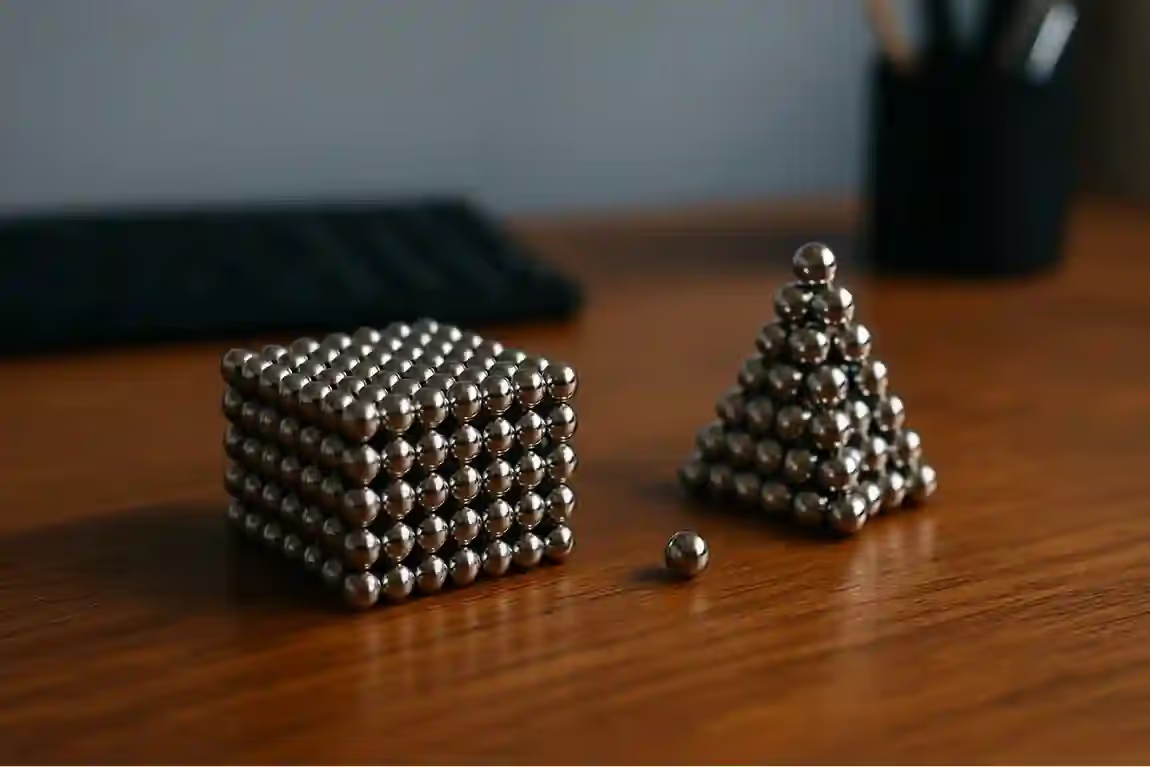
The financial investment in magnetic blocks ranges from $20 for basic sets to $200 for premium adult-oriented options. This one-time cost compares favorably to ongoing expenses of other stress management tools. Meditation apps charge $70-130 annually. Therapy sessions cost $100-250 per hour. Corporate wellness programs spend thousands per employee yearly. Magnetic blocks require no subscription, no appointments, and no ongoing costs beyond occasional replacement pieces.
From an employer perspective, providing magnetic blocks costs roughly $50 per employee—less than a single hour of productivity lost to stress-related distraction. If blocks improve focus by even 5%, the return on investment occurs within weeks. Progressive companies now include "desk wellness kits" in new hire packages, with magnetic blocks alongside ergonomic accessories and blue light glasses. They recognize that small investments in cognitive tools prevent larger costs from burnout, turnover, and stress-related health problems.
Calculate personal ROI by tracking productivity changes. Note tasks completed, errors made, and subjective stress levels for two weeks without magnetic blocks, then two weeks with them. Most users report measurable improvements in all categories. Document these changes to justify expense reimbursement through health savings accounts or professional development budgets. Several forward-thinking insurance companies now cover fidget tools as preventive mental health equipment, recognizing that small interventions prevent costly crises downstream.
The growing acceptance of magnetic blocks in professional settings reflects broader cultural evolution in how we understand and address workplace stress. Previous generations expected employees to suppress visible stress, maintaining composure regardless of internal turmoil. This stoic approach ignored neurological reality, treating stress management as character issue rather than physiological necessity that tools and techniques can address systematically.
Younger professionals, particularly millennials and Gen Z, approach workplace wellness more openly, demanding employers provide mental health resources with the same priority as physical health benefits. This shift creates space for tools like magnetic blocks that previous generations might have hidden shamefully. The normalization of therapy, meditation apps, and mental health days establishes precedent for visible stress management that magnetic blocks extend into tactile realm.
The rise of neurodiversity awareness also contributes to magnetic block acceptance. As workplaces increasingly accommodate different cognitive styles, fidget tools transition from suspicious to expected. What was once "that weird thing that person does" becomes "reasonable accommodation for different neurological needs." This framing protects all employees who benefit from tactile engagement, not just those with formal diagnoses, creating inclusive environments where diverse coping strategies receive support rather than judgment.
Remote work acceleration during recent years further normalized home office personalization that includes stress management tools. When colleagues see your background during video calls, they notice your choices. Magnetic block sculptures signal that you prioritize mental health and creative thinking—increasingly positive professional signals rather than concerning ones. The same structures that might have raised eyebrows in traditional offices become conversation starters in virtual meetings, with colleagues asking where you found them and how they help.
Quality magnetic blocks for adult stress relief cost $30-150—less than a single therapy session or monthly meditation app subscription. They require no charging, updates, or subscriptions. They won't track your data or send notifications. In an increasingly digital world, the analog nature of magnetic blocks provides necessary balance. The tactile experience grounds you in physical reality when virtual demands overwhelm.
Start with a small set to test the concept. If it resonates, invest in higher-quality pieces that enhance rather than distract from your professional image. Consider it mental health equipment as essential as ergonomic chairs or standing desks. Your brain deserves tools that support its function, not just your body.
Track the impact. Note stress levels, focus duration, and creative output before and after incorporating magnetic blocks. Most users report measurable improvements within two weeks. Some companies now reimburse magnetic blocks as wellness expenses, recognizing their therapeutic value. Document your improvements to potentially justify this expense to employers or tax deductions as medical equipment.
Magnetic blocks for adult stress relief aren't regression to childhood—they're progression toward healthier coping mechanisms. In a world that demands constant productivity while providing endless stressors, these simple tools offer profound relief. They transform nervous energy into creative expression, anxiety into architecture, and frustration into focused building.
The executives quietly building beneath their desks during crisis calls aren't playing—they're strategically managing their nervous systems for optimal performance. The surgeons constructing patterns between procedures aren't avoiding work—they're preparing their minds for precision. The programmers creating geometric art while code compiles aren't distracted—they're maintaining the cognitive flexibility essential for innovation.
Your desk deserves more than a stress ball that reminds you you're stressed. It deserves a tool that transforms that stress into something beautiful, functional, and oddly meditative. Whether you're building empires or just trying to survive your inbox, magnetic blocks offer a path to calmer, more focused, genuinely happier work days. The only question is: what will you build first when the pressure builds next?
The simple act of connecting two magnetic pieces might seem insignificant, but multiplied across weeks and months, these micro-moments of regulated focus compound into substantially improved work experiences. One click at a time, one structure at a time, you're not just managing stress—you're building the cognitive resilience that sustainable high performance requires. And unlike most workplace investments, magnetic blocks deliver returns immediately while continuing to provide value indefinitely, limited only by your imagination and willingness to engage with play in service of serious work.
NOVEMBER 20, 2025
NOVEMBER 20, 2025
NOVEMBER 20, 2025
NOVEMBER 20, 2025
NOVEMBER 20, 2025