

Magnetic Block Play as Self-Care for Moms: Stress Relief Rituals That Actually Work
NOVEMBER 20, 2025
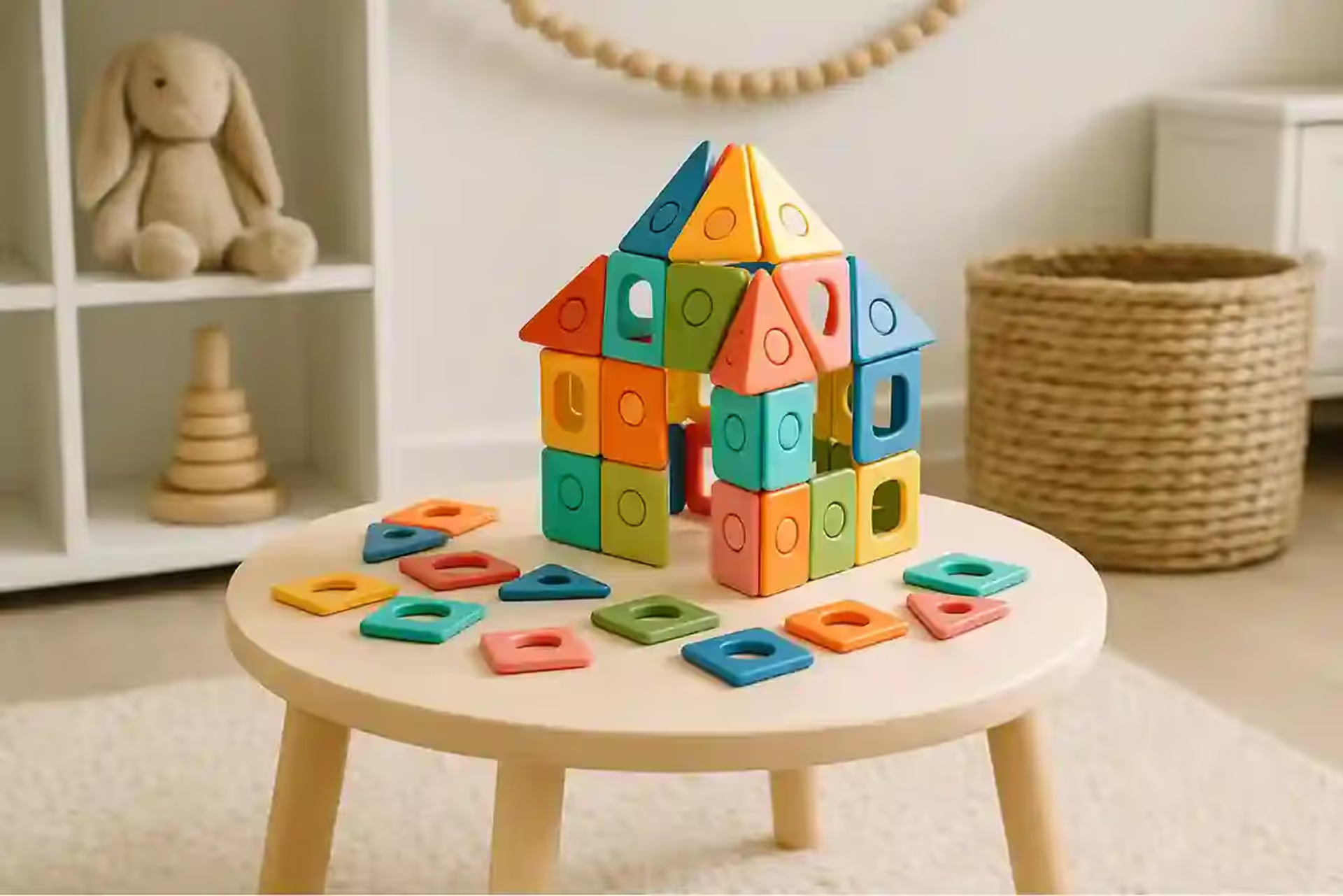
The playroom door opens to reveal… everything. Bins overflow with forgotten toys. Shelves sag under puzzles missing pieces. The floor disappears beneath a rainbow of plastic that seemed essential at purchase but now creates only chaos. Your child, surrounded by hundreds of options, whines "I'm bored" while you wonder how playing became so complicated. What if the answer isn't more toys, but radically fewer?
Enter the minimalist playroom revolution: one set of magnetic blocks replacing an entire toy store. This isn't deprivation—it's liberation. Families who've embraced the one-toy solution report calmer children, deeper play, and shocking creativity. The magnetic blocks that survive the great toy purge become portals to infinite possibilities rather than just another option. Let's explore how less truly becomes more when magnetic tiles are all that remain.
Research from childhood development specialists reveals a startling truth: children with fewer toys engage in longer, more creative play sessions. The University of Toledo study found that toddlers with just four toys played twice as long with each item compared to those with sixteen options. This "paradox of choice" affects children even more than adults—their developing brains struggle to filter options, leading to decision fatigue rather than joyful play.
Dr. Kim John Payne, author of "Simplicity Parenting," documents how toy overwhelm creates a stress response similar to adult work pressure. Children's cortisol levels spike in cluttered playrooms. They flit between activities without deep engagement, missing the flow states crucial for development. The constant visual stimulation of numerous toys actually inhibits imagination—why create a castle from blocks when a plastic one sits nearby?
Magnetic blocks solve this paradox brilliantly. One toy with infinite possibilities eliminates choice overload while maintaining variety. Children can build vehicles today, houses tomorrow, abstract art next week—all from the same materials. The consistency of having one familiar toy reduces anxiety while the open-ended nature prevents boredom. This balance creates ideal conditions for the deep, focused play that develops creativity, problem-solving, and emotional regulation.
The neuroscience behind this phenomenon is compelling. When children face too many options, their prefrontal cortex—the brain region responsible for decision-making—becomes overloaded. This cognitive overwhelm triggers a fight-or-flight response, releasing stress hormones that actually prevent the relaxed, exploratory state necessary for creative play. Research from developmental psychology shows that children in simplified environments demonstrate increased focus, longer attention spans, and more complex play sequences.
These costs compound over time, creating stress that affects the entire family system. The minimalist approach with magnetic blocks eliminates these burdens while preserving play's benefits. Consider the environmental impact alone: plastic toy waste represents a significant portion of household refuse, with most toys containing non-recyclable mixed materials that persist in landfills for centuries. By investing in one durable, reusable toy system, families dramatically reduce their environmental footprint while teaching children valuable lessons about sustainability and mindful consumption.
Not every toy could succeed as the sole playroom occupant. Magnetic blocks triumph because they're simultaneously simple and complex, structured and open-ended, individual and collaborative. They grow with children from toddlerhood through elementary school without becoming "babyish." A two-year-old stacks squares while a ten-year-old engineers architectural marvels—same toy, evolving challenge.
The tactile satisfaction of magnetic connection provides sensory feedback that screens can't match and passive toys don't offer. The click of connection, the weight of structures, the visual beauty of light through colored tiles—these sensory experiences ground children in physical reality. Unlike electronic toys that entertain, magnetic blocks require active participation. Children become creators rather than consumers.
Versatility makes magnetic blocks irreplaceable. They become vehicles for storytelling (building scenes), mathematics (exploring geometry), science (testing physics), art (creating patterns), and social skills (collaborative building). No other single toy addresses such broad developmental domains. Parents investing in one quality magnetic set provide more educational value than rooms full of single-purpose toys.
The educational framework known as STEAM learning (Science, Technology, Engineering, Arts, and Mathematics) finds its perfect expression in magnetic block play. Children naturally experiment with physics principles as they discover which structures stand and which collapse. They explore geometric concepts through pattern creation, develop spatial reasoning through three-dimensional construction, and exercise artistic expression through color combinations and design. This integrated learning approach mirrors real-world problem-solving far more effectively than isolated educational toys targeting single skills.Play CategoryTraditional Toy NeededMagnetic Block SolutionAdded BenefitsConstructionLegos, wooden blocks3D buildingNo small pieces to losePretend PlayDollhouse, play kitchenBuild any sceneUnlimited scenariosArt/CreativityArt supplies, craftsPattern making, light artNo mess, reusableSTEM LearningScience kits, math gamesPhysics, geometry explorationHands-on discovery
Transitioning to a one-toy playroom requires thoughtful execution, not abrupt elimination. Sarah Martinez, who successfully minimized her three children's playroom, shares her approach: "We didn't traumatize them by suddenly removing everything. We started by putting half the toys in storage, keeping magnetic blocks prominently displayed. Within two weeks, they only played with the blocks. The stored toys were never requested."
Begin with a "toy vacation" rather than permanent removal. Box non-magnetic toys and store them for one month. During this trial, observe your children's play patterns. Most families report initial resistance lasting 2-3 days, followed by deeper engagement than ever witnessed. Children discover capabilities within the magnetic blocks they never explored when distracted by options. If genuine distress persists beyond a week, reintroduce one additional open-ended toy.
Involve children in the minimizing process for better buy-in. Frame it as an experiment: "Let's see how creative we can be with just magnetic blocks!" Document their creations daily, creating a photo journal that validates their efforts. Some families donate purged toys together, teaching generosity while decluttering. Others sell toys and use proceeds for experiences rather than more stuff. Organizations like Goodwill make toy donation simple and provide tax deductions, while local family shelters often desperately need quality toys for children in transition.
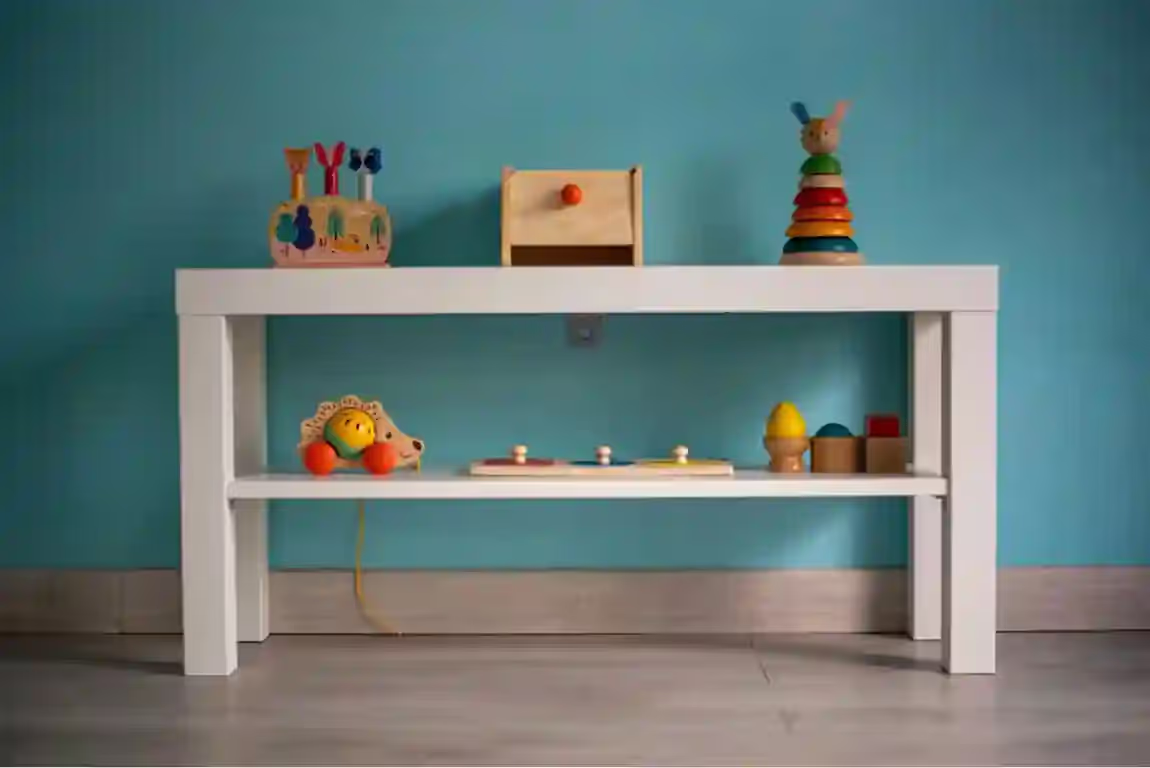
Week 1: Remove 50% of toys, keep blocks and 2-3 favorites
Week 2: Remove another 25%, observe play patterns
Week 3: Keep only blocks and one backup option
Week 4: Full minimalist mode—blocks only
Adjust timeline based on your child's adaptation. Some embrace minimalism immediately, others need gradual transition. There's no failure—find what works for your family. The psychological principle of gradual exposure, well-documented in behavioral psychology research, suggests that incremental changes create lasting habit formation more effectively than dramatic overnight transformations. This same principle applies to decluttering children's play spaces.
A minimalist playroom isn't empty—it's intentional. With magnetic blocks as your sole toy, every design element supports their use. Start with flooring: hardwood or low-pile carpet provides stable building surfaces. Avoid thick rugs that create uneven foundations. Consider designating building zones with subtle tape borders or area rugs, creating defined spaces without clutter.
Storage becomes sculpture in minimalist spaces. Display magnetic tiles in clear containers or wooden trays on accessible shelving. The tiles themselves become decor—their colors and transparency add visual interest without chaos. Some families create "tile art" on magnetic boards when not in use, turning storage into gallery walls. This visibility reminds children of possibilities while maintaining aesthetic calm.
Lighting transforms magnetic tile play. Natural light through tiles creates rainbow projections that children find magical. Position building areas near windows for optimal effect. Add a simple light table for exploring transparency and color mixing. These environmental enhancements extend play possibilities without adding toys. Interior design principles emphasize that thoughtful lighting can completely transform a space's functionality and mood, and this holds especially true for children's creative spaces.
Include documentation tools in your minimalist design. A simple clipboard for sketching building plans, a camera for recording creations, or a journal for story-writing about constructions. These tools support play without cluttering. Mount a whiteboard for collaborative planning or challenge lists. The space becomes a creative studio rather than toy storage. Many families find that this documentation process itself becomes a cherished ritual, with children eagerly photographing their best creations and writing stories about their imaginary worlds.
The concept of "environmental design" suggests that physical spaces shape behavior in profound ways. A cluttered, chaotic environment produces cluttered, chaotic thinking. A clean, purposeful space with clearly defined areas for different activities encourages focused, intentional engagement. Apply principles of Montessori education by creating child-height shelving, ensuring materials are visible and accessible, and rotating display arrangements to maintain visual interest without adding clutter.
Year 1: Color recognition, spatial awareness, fine motor control
Year 2: Pattern creation, storytelling, basic engineering
Year 3: Mathematical concepts, collaborative building, planning
Year 4: Architectural design, physics principles, artistic expression
Year 5+: Complex problem-solving, 3D visualization, creative innovation
This progression happens naturally when children have sustained access to quality magnetic blocks without distraction from other toys. The concept of "deliberate practice," extensively researched in studies of expertise development, shows that mastery requires focused, sustained engagement with specific materials over extended periods. The one-toy playroom creates ideal conditions for this type of deep learning.
Grandparents arrive with bags of new toys. Friends question your "deprivation." Your children complain their cousins have "cool stuff." The minimalist playroom faces constant external pressure. Lisa Chen, a minimalist parent, shares: "I keep a gift closet. When people bring toys, we appreciate them, then quietly store them. Some get donated, others become birthday gifts for other children. My kids understand our family's values differ from others."
Address children's comparisons directly. Explain that families make different choices—some have many toys, others have many books, your family chose deep creativity with magnetic blocks. Highlight unique capabilities: "Your cousins can't build anything they imagine like you can." Document their magnetic tile masterpieces in a special album, creating pride in their specialized skill.
When children visit toy-rich environments, they might initially gorge on novelty. This is normal and temporary. Most minimalist families report their children quickly return to magnetic blocks at home, often commenting that other toys are "boring" compared to building. The deep play skills developed through limitation serve them well in any environment.
The cultural pressure to provide material abundance for children runs deep in consumer society. Marketing messages bombard parents with claims that love equals stuff, that good parenting means constant acquisition. Resisting this narrative requires confidence in your values and evidence of your approach's success. Connect with like-minded families through minimalist parenting communities online or in your area. These support networks provide encouragement when facing criticism and practical strategies for handling gift-giving occasions without compromising your minimalist principles.
One-toy minimalism demands quality. Since magnetic blocks become your sole plaything, invest in the best. Premium brands like Magna-Tiles or Connetix cost more initially but last decades. Calculate cost-per-play: a $200 set used daily for five years equals eleven cents per day—less than cheap toys that break quickly.
Start with 100-150 pieces for single children, 200+ for siblings. This seems excessive for minimalism, but remember: this replaces hundreds of other toys. Variety within the set maintains interest—include squares, triangles, and specialty pieces. Some families gradually expand their collection for birthdays and holidays, making each addition special rather than lost in toy abundance.
Consider complementary items that enhance without cluttering. A set of play silks adds color and texture to constructions. Wooden people or animals (5-10 pieces maximum) populate built worlds. These minimal additions multiply possibilities without compromising minimalist principles. The key: each item must integrate with magnetic blocks, not compete for attention.
When evaluating magnetic tile brands, consider factors beyond price. Check magnet strength—weak magnets create frustrating structures that collapse easily. Examine edge construction; quality brands use riveted or ultrasonically welded edges that won't separate over time. Verify BPA-free, non-toxic materials since children will handle these tiles daily for years. Read reviews from families who've used sets long-term rather than initial unboxing impressions. Consumer safety information from organizations like the Consumer Product Safety Commission helps parents make informed decisions about toy quality and safety standards.
The Johnsons (3 kids, ages 4-9): "We went from a playroom that took 45 minutes to clean to one that takes 45 seconds. Our kids play together more, fight less, and create things that amaze us daily. The 4-year-old and 9-year-old collaborate now—impossible when they had separate toys."
Single mom Rachel: "I couldn't afford endless toys anyway. Investing in one excellent magnetic set seemed smarter than plastic junk. My daughter is known at school as the 'building genius.' Her teacher says her spatial skills exceed kids two grades ahead."
The Patel family: "We travel frequently for work. Our magnetic blocks come everywhere—they're our portable playroom. Hotels, grandparents' houses, even airports. One toy that packs flat but entertains endlessly. It's simplified our entire life."
The Williams household: "Our son has ADHD and was completely overwhelmed by our previous toy collection. He'd spin in circles, unable to choose anything, then melt down in frustration. Within days of switching to just magnetic blocks, his focus improved dramatically. He'll build for hours now, completely absorbed. His occupational therapist was shocked by the transformation and now recommends the approach to other families."
Empty nester perspective from Margaret: "I'm watching my daughter raise her kids with magnetic blocks after seeing my own children grow up surrounded by toy chaos. The difference is stunning. My grandchildren are more creative, more patient, and honestly, happier than my kids were at that age. I wish this approach existed thirty years ago—it would have saved me so much stress and money."
Critics assume children need constant novelty to stay engaged. The one-toy playroom proves otherwise—if you facilitate evolution within the limitation. Introduce challenges weekly: build something taller than yourself, create a marble run, design a zoo. These prompts refresh play without adding stuff. Document challenges in a special book that becomes a treasured record of growth.
Rotate building locations to maintain freshness. Magnetic blocks in the bathtub (dry) create different possibilities than living room builds. Take them outside—building on grass presents new challenges. Car trips become building opportunities with lap trays. The toy remains constant but contexts change, preventing staleness.
Create rituals around magnetic block play. Monday might be "symmetry day," Friday becomes "freestyle building." Monthly "exhibitions" where children present creations to family maintain motivation. Some families have "building seasons"—focusing on vehicles in spring, buildings in summer, abstract art in fall, holiday scenes in winter. These rhythms create anticipation without acquisition.
Consider implementing themed building challenges that connect to current interests or learning topics. If your child is fascinated by dinosaurs, challenge them to build prehistoric landscapes. Studying the solar system at school? Create planets and space stations. Reading a particular book series? Construct scenes from favorite stories. These thematic connections deepen engagement with both the building material and other learning areas, demonstrating how one versatile toy can support diverse educational goals.
Encourage social building experiences by inviting friends for collaborative construction sessions. When peers visit, the limitation becomes a feature rather than a bug—children must negotiate, share ideas, and work together since there's only one activity available. This naturally develops social skills like compromise, communication, and cooperative problem-solving. Research on collaborative play shows that shared construction activities promote empathy, perspective-taking, and conflict resolution skills that transfer to other social situations.
The one-toy playroom teaches children invaluable life skills. They learn that creativity trumps consumption, that mastery requires focus, and that limitations spark innovation. These lessons extend far beyond childhood. Adults who grew up with fewer toys report greater creativity, better problem-solving abilities, and less materialistic values.
Children from minimalist playrooms develop patience—they can't simply grab a new toy when frustrated. They must work through challenges, developing grit and perseverance. They learn to share more readily since there's only one toy to negotiate. They become resourceful, seeing potential in simple materials rather than requiring elaborate equipment.
Perhaps most importantly, they learn that happiness doesn't come from having more. Joy emerges from creation, from mastery, from imagination unleashed. The minimalist playroom with magnetic blocks isn't about what children lack—it's about what they gain when distraction disappears and deep play begins.
The philosophical concept of "constraint-based creativity" has deep roots in artistic and scientific innovation. Throughout history, brilliant breakthroughs emerged from limitation rather than abundance. Renaissance painters mixed their own limited pigments yet created masterpieces. Early computer programmers worked with severe memory constraints yet developed revolutionary software. Children in one-toy playrooms follow this same pattern—limitation forces creative problem-solving that abundance never demands.
Environmental consciousness develops naturally when children understand their single toy represents a deliberate choice for sustainability. They learn to value durability over disposability, quality over quantity. These early lessons about mindful consumption shape lifelong attitudes toward material goods and environmental stewardship. As climate change demands more sustainable lifestyles, raising children who find satisfaction in less rather than always wanting more becomes increasingly critical for our collective future.
Recent neuroscience research reveals fascinating insights into how simplified play environments affect developing brains. When children face overwhelming choices, their amygdala—the brain's emotional center—activates stress responses that shut down the prefrontal cortex regions responsible for creative thinking and complex problem-solving. In contrast, simplified environments with single-focus activities promote what neuroscientists call "flow states," where the brain releases dopamine and enters deeply focused, pleasurable engagement.
Brain imaging studies show that children engaged in open-ended construction play exhibit activation patterns across multiple brain regions simultaneously. The motor cortex fires as hands manipulate tiles. Visual processing centers engage with colors and shapes. The hippocampus encodes spatial relationships. Language centers activate during imaginative narratives about constructions. This whole-brain activation during magnetic block play creates robust neural connections that single-purpose toys cannot match.
The developing brain craves two seemingly contradictory elements: novelty and repetition. Too much novelty creates anxiety; too much repetition causes boredom. Magnetic blocks brilliantly balance these needs. The materials remain constant (providing security through familiarity), but infinite building possibilities provide novelty. This balance supports optimal brain development, particularly in regions associated with executive function, spatial reasoning, and creative problem-solving.
The minimalist playroom approach offers unexpected benefits for children with special needs. Autistic children often experience sensory overwhelm in cluttered environments filled with competing stimuli. A simplified space with magnetic blocks provides clear focus without overwhelming sensory input. The predictable magnetic click offers satisfying proprioceptive feedback that many neurodivergent children find calming and organizing.
Children with ADHD demonstrate dramatically improved attention spans in simplified environments. The visual chaos of traditional playrooms constantly triggers their attention, making sustained focus impossible. With only magnetic blocks present, there's nowhere else for attention to wander. Many parents of ADHD children report that the one-toy playroom was the first time they witnessed their child engaging in extended, self-directed play without constant redirection.
Occupational therapists increasingly recommend construction toys like magnetic blocks for developing fine motor skills, bilateral coordination, and visual-motor integration. The therapeutic benefits multiply when these materials become the primary play option, allowing thousands of repetitions that build motor skills far more effectively than brief therapy sessions with diverse materials. Children strengthen hand muscles, develop precise pincer grasps, and practice crossing midline—all while simply playing.
The beauty of magnetic blocks as a singular play material lies in their ability to support structured learning while maintaining the freedom of open-ended play. Parents can introduce mathematical concepts naturally through building challenges. Ask children to create structures using only triangles, or to build towers using an exact number of pieces. These constraints teach counting, addition, and subtraction without workbooks or flashcards. Older children can explore fractions by dividing structures into equal parts or investigate ratios by maintaining specific proportions in their designs.
Geometry education happens organically through magnetic block construction. Children discover that triangles create stable structures while rectangles alone tend toward instability. They learn about angles, symmetry, and tessellation through hands-on experimentation. Many parents report that their children grasp geometric concepts years ahead of grade-level expectations simply through accumulated building experience. The three-dimensional nature of magnetic blocks develops spatial reasoning that flat worksheets cannot match, preparing children for advanced mathematics, engineering, and architecture.
Science exploration extends beyond physics into color theory and light. When magnetic blocks overlap in front of light sources, children observe color mixing—red and blue create purple, yellow and blue make green. This optical learning happens through play rather than instruction. Some families create "light labs" using flashlights or light tables, encouraging children to experiment with transparency, opacity, and shadow. These investigations develop scientific thinking: forming hypotheses, testing variables, observing results, and drawing conclusions.
Literacy integration might seem challenging with a construction toy, but creative families find numerous connections. Children dictate or write stories about their creations, developing narrative skills and written expression. Some families create "building plans" where children sketch designs before constructing, practicing technical drawing and following instructions. Book-inspired building challenges connect reading and construction—after finishing a story, children recreate scenes or design structures described in the text. This multimodal approach to literacy strengthens comprehension and retention far more than passive reading alone.
Historical and cultural education finds expression through architectural recreation. Learning about ancient Egypt? Build pyramids and discuss their engineering marvels. Studying medieval times? Construct castles and explore defensive architecture. Investigating different cultures? Create traditional housing styles from around the world. These hands-on history lessons make abstract concepts concrete, helping children understand that history involves real people solving real problems with available materials—not unlike their own building challenges.
Small apartment dwellers might assume minimalist playrooms require dedicated space they don't have. Actually, the opposite proves true. A single bin of magnetic blocks occupies far less space than traditional toy collections, making the minimalist approach ideal for compact living. Families in studios or one-bedroom apartments successfully implement the one-toy solution by designating a corner or even a specific rug as the building zone. The tiles store flat in a drawer or slim container that slides under beds or sofas. When not in use, the playroom essentially disappears, returning valuable living space to adults.
Shared bedroom situations benefit tremendously from magnetic block minimalism. Traditional toys create conflict when siblings have different interests and separate collections compete for limited space. One shared toy eliminates territorial disputes and encourages collaboration. Children learn to negotiate, compromise, and build together rather than parallel playing with individual toys. Many parents report that switching to magnetic blocks as the primary toy dramatically reduced sibling rivalry and increased cooperative play, transforming bedroom dynamics entirely.
For families without dedicated playrooms, portable minimalism offers solutions. Some create "play stations" using lap trays or small folding tables that deploy when needed and store away when finished. Others use large flat baskets that hold magnetic blocks during play but nest into living room furniture when put away. The goal isn't creating magazine-worthy play spaces but rather providing consistent access to quality materials regardless of living situation. The minimalist approach actually levels the playing field—children in all housing situations can experience rich, creative play without requiring square footage or storage that many families don't have.
Multi-child households across age ranges face unique challenges. Can one toy truly serve a toddler, preschooler, and school-age child simultaneously? Families with age spans of five to eight years report surprising success. The magnetic blocks' developmental flexibility means each child engages at their level. Toddlers stack while older siblings engineer. Preschoolers create simple structures while elementary students attempt complex geometry. Rather than needing different toys for different ages, the family has one shared activity that brings children together across developmental stages. The older children often mentor younger ones, developing teaching skills and patience while reinforcing their own understanding through explanation.
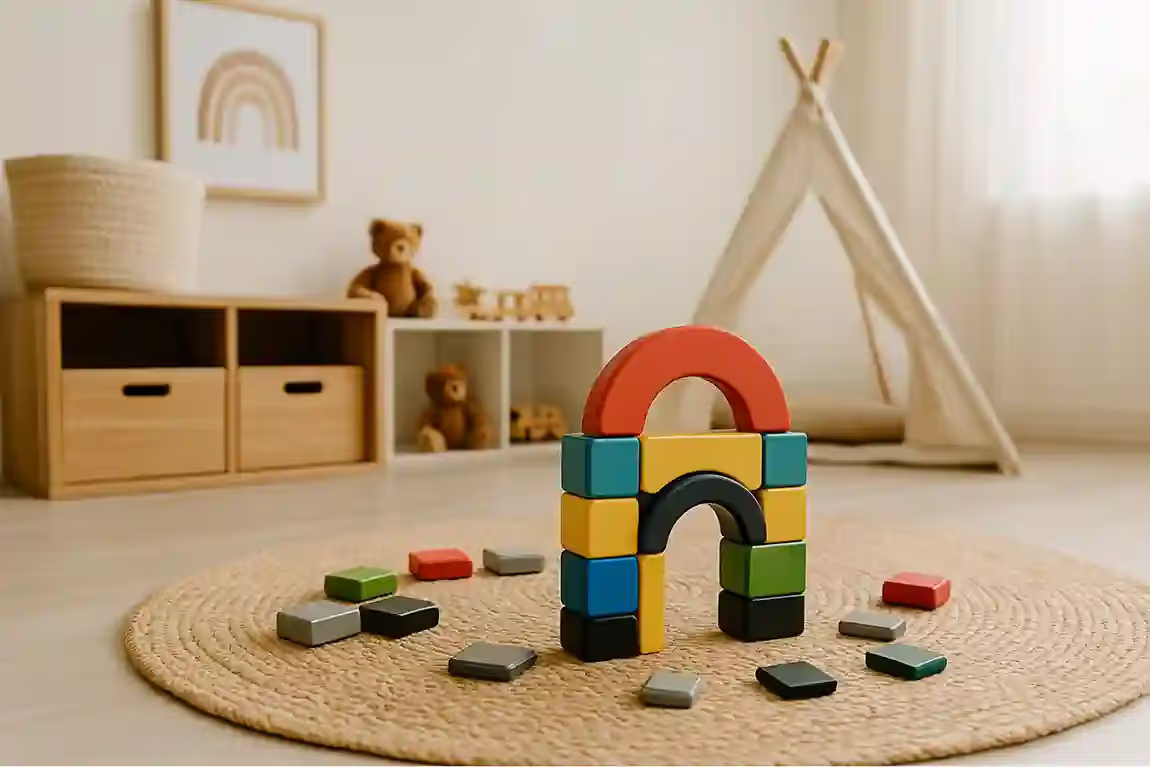
The initial toy purge creates excitement and novelty, but maintaining minimalist principles requires ongoing commitment, especially as children grow and social pressures intensify. Establish clear family policies about toy acquisition before challenges arise. Many minimalist families implement rules like "birthday money goes toward experiences, not toys" or "one in, one out—if we add something, something else leaves." These policies provide structure that prevents gradual toy accumulation from undermining minimalist benefits.
Holiday seasons test minimalist resolve when well-meaning relatives want to shower children with gifts. Proactive communication prevents hurt feelings and unwanted toys. Send family members lists of alternative gift ideas: museum memberships, zoo passes, swimming lessons, art classes, or contributions to college funds. Some families request consumables like art supplies, science kits, or books that serve purposes then disappear rather than permanently occupying playroom space. Frame these requests positively—you're helping relatives give gifts children will actually use and appreciate rather than items that get lost in toy chaos.
As children approach school age, peer influence intensifies. They notice what friends have and begin requesting specific toys advertised or mentioned at school. This normal developmental phase doesn't require abandoning minimalism but does demand thoughtful responses. Acknowledge their feelings without immediately acquiescing: "I understand you saw that toy at Emma's house and it looked fun. Our family chose to focus on building instead of having many different toys. Remember how you built that amazing space station last week? Could you build the toy you're thinking about?" Often, the conversation itself satisfies the impulse without adding possessions.
Some families allow temporary toy rentals or borrowing from libraries that increasingly offer toy lending. These programs let children experience novelty without permanent acquisition. After a two-week borrowing period, most children readily return items, especially when they realize their magnetic blocks offer more sustained interest. This approach teaches that ownership isn't necessary for enjoyment and introduces children to sharing economy principles increasingly relevant in sustainable living.
Periodic minimalism reviews keep families aligned with their values. Every few months, discuss what's working about your simplified playroom and what challenges have emerged. Has the magnetic block collection grown appropriate to needs or become excessive? Do complementary items like play silks or wooden figures still integrate well, or have they become clutter? These check-ins prevent drift toward accumulation while reinforcing shared commitment to minimalist benefits. Children appreciate being included in these discussions, developing metacognitive awareness about their own play patterns and preferences.
Children raised in minimalist playrooms often carry lessons learned into other life areas. Teenagers who grew up with simplified play spaces tend toward minimalist bedrooms, requesting fewer clothes and belongings than peers. They've internalized that satisfaction comes from depth, not breadth—quality matters more than quantity. These adolescents often show remarkable focus, pursuing interests intensely rather than dabbling superficially in numerous activities. The sustained engagement with magnetic blocks throughout childhood apparently develops general capacity for deep focus transferable to academics, athletics, arts, and other pursuits.
Young adults who experienced one-toy childhoods report interesting perspectives on consumption. Many express gratitude for learning early that happiness doesn't require constant acquisition. They describe feeling less influenced by advertising and more confident making intentional choices about purchases. In a culture drowning in consumerism, these young people possess unusual clarity about distinguishing wants from needs, often crediting their minimalist upbringing for this financial wisdom. They approach major decisions—choosing careers, partners, living situations—with similar values, prioritizing meaning over materialism.
The environmental consciousness developed through minimalist play extends into adult decision-making. Young people who understood their magnetic blocks represented a deliberate choice for sustainability often continue prioritizing environmental impact in their consumer choices. They consider product lifecycle, repairability, and sustainability in purchase decisions. They favor experiences over possessions and quality over quantity across life domains. These attitudes, increasingly crucial as environmental challenges intensify, trace directly back to childhood lessons learned in simplified playrooms.
Parenting the next generation, adults who grew up with minimalist play spaces often replicate the approach with their own children. Having experienced the benefits firsthand, they confidently resist cultural pressure toward toy abundance. This generational transmission of minimalist values suggests that the one-toy playroom isn't merely a parenting trend but potentially a lasting shift in how families approach childhood, consumption, and creativity. As these families multiply, they may influence broader cultural attitudes toward materialism, sustainability, and what children truly need for healthy development.
The minimalist playroom with magnetic blocks as the one-toy solution isn't about deprivation—it's about liberation. Liberation from the tyranny of stuff, from the constant need for new, from the chaos of choice overload. Children freed from toy overwhelm discover capabilities they never knew existed. They build not just structures but confidence, not just towers but resilience.
Parents find unexpected benefits too. No more Saturday morning toy organization marathons. No more stepping on scattered pieces in darkness. No more guilt about unused expensive toys. The mental space recovered from toy management redirects toward actual play and connection. The minimalist playroom creates more family time by eliminating time-consuming toy maintenance.
Start small if full minimalism feels overwhelming. Try a one-month experiment. Store everything except magnetic blocks and observe. Watch your children's play deepen, their creativity expand, their satisfaction grow. Most families who try the one-toy solution never return to toy abundance. They discover that in the world of play, as in life, less truly is more. The magnetic blocks that remain become not just toys but tools for discovering that everything needed for joy already exists within—it just needs space to emerge.
The minimalist playroom represents more than decluttered physical space—it creates mental and emotional space for authentic connection. When parents aren't constantly managing toy chaos, they have energy for what matters: playing alongside their children, observing their development, celebrating their creativity. The simplified environment allows everyone to breathe, to focus, to be fully present. This presence, more than any toy, is what children truly need and what they'll remember long after childhood ends. In choosing magnetic blocks and releasing everything else, families don't lose anything essential. Instead, they gain something precious: space for childhood's simple magic to unfold.
NOVEMBER 20, 2025
NOVEMBER 20, 2025
NOVEMBER 20, 2025
NOVEMBER 20, 2025
NOVEMBER 20, 2025