

Magnetic Block Play as Self-Care for Moms: Stress Relief Rituals That Actually Work
NOVEMBER 20, 2025
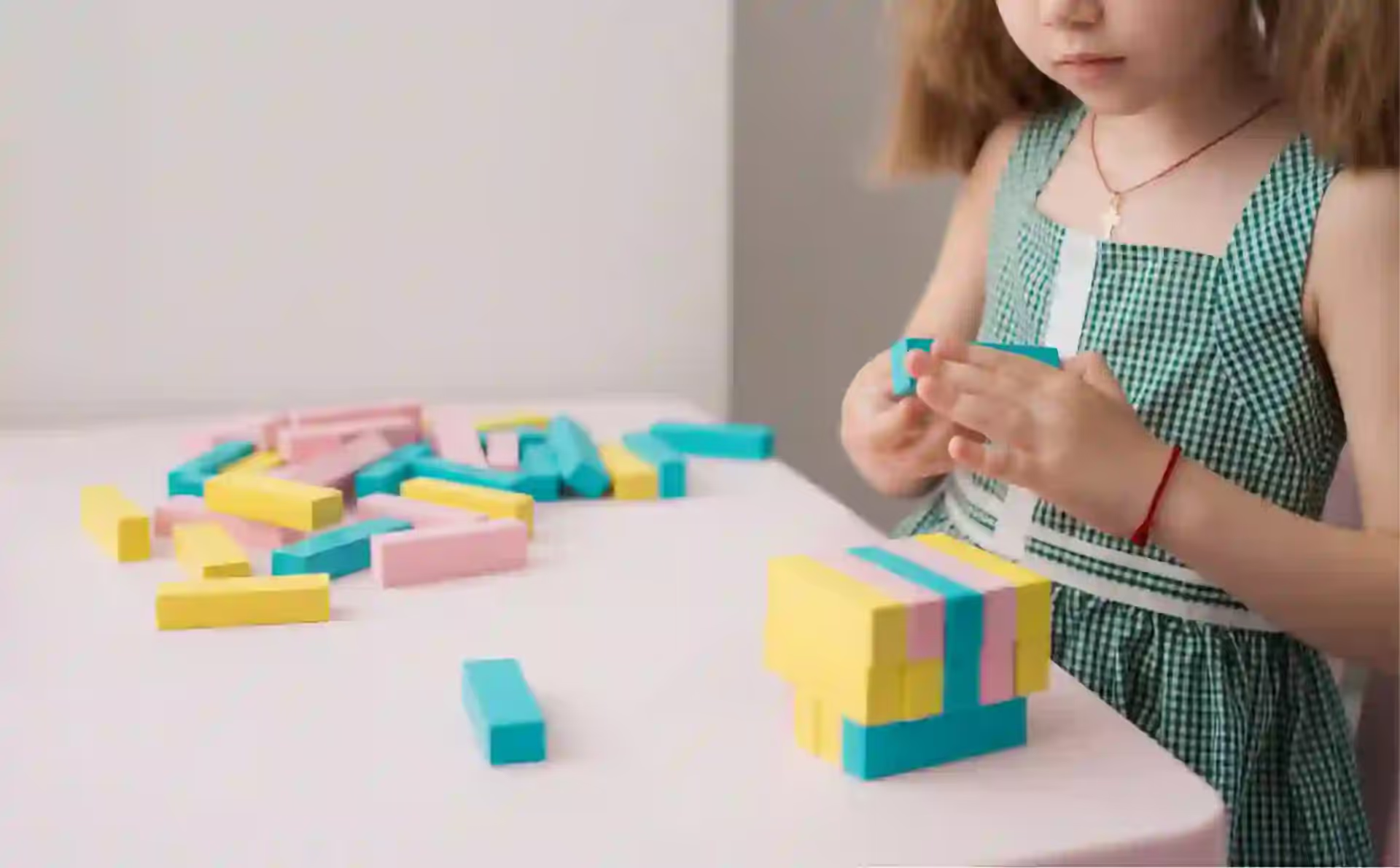
Your seven-year-old sits cross-legged on the floor, magnetic tiles spread in a semicircle around her. She picks up a blue square, holds it for a moment, then places it carefully against a red triangle. Click. She pauses, eyes following the edge where the two pieces meet. Her breathing has slowed without anyone telling her to breathe deeply. She reaches for another piece—this time a purple hexagon—and the world seems to narrow to just her hands, the tiles, and the quiet rhythm of connecting, building, noticing.
You hadn't planned a meditation session. You'd simply set out the blocks hoping for fifteen minutes of occupied time while you answered emails. But something shifted. Your daughter isn't frantically building and rebuilding like usual. She's deliberate. Present. The quality of her attention has changed from scattered to focused, from hurried to unhurried. What you're witnessing is spontaneous mindfulness—not the Instagram-perfect kind with crossed legs and burning incense, but the accessible, grounded kind that emerges when simple activities meet present-moment awareness. It's what happens when play slows down enough to become meditation.
This isn't theoretical. Research increasingly shows that mindfulness—the practice of bringing nonjudgmental attention to present-moment experience—produces measurable benefits for both children and adults, from reduced anxiety and improved emotional regulation to enhanced attention and stress resilience. According to the American Psychological Association, mindfulness-based interventions help people respond more skillfully to stress and difficult emotions.
Yet traditional meditation practices—sitting still, following breath, quieting the mind—can feel inaccessible or uncomfortable, especially for children whose developmental stage involves movement and exploration, and for adults whose racing thoughts resist stillness. This is where play-based meditation enters, meeting people where they are rather than demanding they become different first.
Magnetic blocks, with their tactile satisfaction, visual appeal, and open-ended possibilities, create ideal conditions for mindful play. This article explores how these colorful tiles can become tools for cultivating presence, emotional regulation, and calm—offering concrete activities for families, educators, and therapists seeking accessible mindfulness practices that don't feel like work.
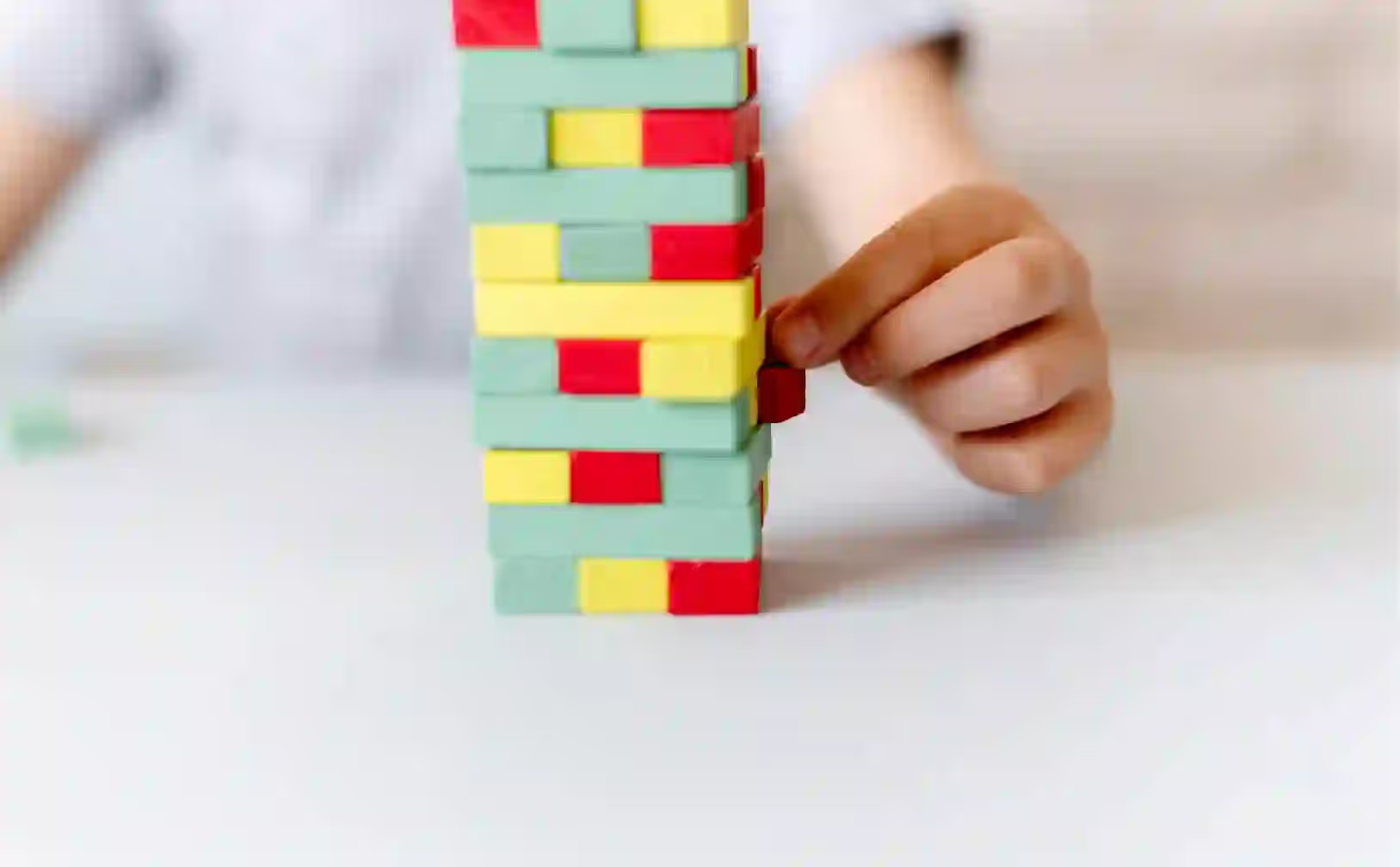
At its core, mindfulness is present-moment awareness with acceptance. It's paying attention to what's happening right now—sensations in your body, thoughts moving through your mind, emotions rising and falling, sounds in your environment—without immediately judging these experiences as good or bad, without trying to change them, and without getting swept away by stories about them.
The National Center for Complementary and Integrative Health, part of the National Institutes of Health, describes mindfulness meditation as focusing awareness on the present moment while acknowledging and accepting feelings, thoughts, and bodily sensations. It's both simpler and harder than it sounds—simple because present-moment awareness is always available, hard because our minds habitually wander to past regrets and future worries rather than staying with what's actually happening now.
Not all toys equally support mindfulness. Magnetic blocks possess specific qualities making them particularly suited for cultivating present-moment awareness.
Tactile feedback creates sensory anchors. The smooth coolness of plastic tiles, the slight resistance before magnets catch, the satisfying click when pieces connect—these sensations provide focal points for attention. Mindfulness practice often uses "anchors"—reliable sensory experiences that attention can return to when the mind wanders. Breath is the most common anchor, but tactile sensations work beautifully, especially for kinesthetic learners and active children who struggle with stillness. Running fingers along tile edges, feeling the magnetic pull as pieces approach each other, and sensing the weight of a growing structure all offer attentional anchoring opportunities.
Repetition and rhythm support meditative states. Building with magnetic blocks often involves repeated actions—selecting a piece, positioning it, connecting it, pausing to observe, selecting the next piece. This rhythmic pattern resembles traditional meditation practices using mantras or breath counts. The repetition creates a container for awareness, a predictable cycle that attention can ride without getting lost. Neurologically, repetitive rhythmic activity can induce relaxation and foster the light trance states associated with flow and meditation.
Visual focus reduces mental distraction. The colors, shapes, and emerging patterns in magnetic block structures provide gentle visual engagement. This visual focus helps quiet the verbal, narrative mind by occupying perceptual attention. You can't simultaneously narrate your worries and fully attend to the interplay of light through translucent tiles. The visual beauty of magnetic blocks isn't just aesthetic—it's functionally calming, drawing eyes and therefore attention in ways that support presence.
Open-ended design eliminates performance pressure. Unlike puzzles with correct solutions or models requiring exact replication, magnetic blocks have no predetermined "right" outcome. This removes performance anxiety that undermines mindfulness. When there's no way to fail, attention can rest in process rather than straining toward results. This nonjudgmental quality mirrors mindfulness itself—there's no "good" or "bad" building, just whatever emerges from present-moment engagement.
Three-dimensional construction demands spatial presence. Building in three dimensions requires continuous attention to balance, proportion, and structural integrity. You must stay present to notice how pieces relate spatially, whether structures remain stable, and how forms emerge. This necessity for attention supports mindfulness naturally—mind-wandering leads to toppled towers, providing immediate feedback that gently returns attention to the present.
Low cognitive demand allows mental rest. While magnetic block play engages spatial thinking and creativity, it doesn't demand intensive cognitive processing the way homework or work tasks do. This allows the prefrontal cortex—the brain region handling executive function and often overworked in modern life—to rest somewhat. The activity is engaging enough to hold attention but not so demanding that it creates stress, occupying what psychologists call the "optimal arousal zone" for relaxation and restoration.
Silence-compatible activity supports quiet practice. Unlike many toys that incorporate sounds, lights, or social interaction demands, magnetic blocks work beautifully in silence. This compatibility with quiet makes them ideal for meditative practice. The primary sounds—the click of connection, the slight scrape of adjustment—are soft and can actually enhance rather than disrupt mindful attention through their gentle rhythmic quality.
These qualities combine to create what mindfulness researchers call "engaging absorption"—the state where attention focuses naturally on present activity without force or strain. This is distinct from the effortful concentration required for difficult tasks and the passive absorption of entertainment like screen time. It's active but not stressful, engaging but not depleting—the sweet spot for both learning and restoration.
Research on flow states, described by psychologist Mihaly Csikszentmihalyi, reveals that activities producing optimal experience share characteristics magnetic blocks embody: clear immediate feedback, balance between challenge and skill, and intrinsically rewarding engagement. While flow and mindfulness aren't identical, they share the quality of present-moment immersion that characterizes meditative states.
Children's developmental needs make traditional seated meditation challenging. Their bodies are designed for movement, their attention spans are naturally shorter, and abstract concepts like "watching your thoughts" often exceed their cognitive capacity. Play-based mindfulness meets children in their developmental reality rather than expecting them to access adult meditation forms.
Research documented by child development experts and mindfulness researchers shows that mindfulness practices adapted for children's capabilities produce meaningful benefits. Studies examining school-based mindfulness programs find improvements in attention, behavior regulation, stress management, and even academic performance when interventions match developmental stages.
According to Edutopia's research on mindfulness in early education, young children benefit from mindfulness activities that are short (5-10 minutes), movement-based, playful, and sensorially engaging. Abstract instruction to "notice your thoughts" often falls flat, while concrete direction to "feel your feet on the ground" or "listen for the quietest sound" works beautifully.
Importantly, mindfulness for children should feel playful rather than forced. The moment it becomes another demand or task, the benefits erode. The goal is creating opportunities where children naturally experience present-moment focus, then gently reinforcing that state through encouragement and modeling rather than instruction and expectation.
To make magnetic block mindfulness accessible and memorable, a simple framework helps structure practice. The B.R.E.A.T.H.E. Method provides a gentle guide:
B – Begin with Body Awareness
Start each session by briefly checking in with physical sensations. Before touching blocks, notice how your body feels. Are shoulders tense? Is breathing shallow or deep? Where do you feel relaxed or restless? This baseline awareness creates contrast, making it easier to notice shifts as play progresses.
R – Reach with Intention
Instead of grabbing pieces randomly or impulsively, reach for blocks deliberately. Feel the movement of arm extending, hand opening, fingers closing around the tile. This simple slowing transforms automatic movement into conscious action, practicing the impulse regulation and intentionality central to mindfulness.
E – Experience the Sensations
As you handle blocks, deliberately notice tactile information. What temperature are the pieces? How do edges feel against fingers? What's the weight in your palm? This sensory focus anchors attention in present physical reality rather than mental abstraction.
A – Attend to the Click
When magnets connect, fully attend to that moment—the satisfying sound, the slight resistance then release, the subtle vibration. This click becomes an auditory cue returning wandering attention to the present, similar to how a meditation bell brings awareness back to breath.
T – Track Your Breathing
Without forcing changes, notice breathing throughout building. Does it speed up when constructing something complex? Does it slow during simple repetitive action? Can you synchronize breath with movement—inhaling while reaching, exhaling while placing? This awareness, not control, is the practice.
H – Honor What Emerges
Whatever structure develops, whatever thoughts arise, whatever emotions appear—let them be without judgment. If you feel frustrated, notice frustration. If the building feels pointless, notice that thought. The practice isn't forcing particular experiences but accepting whatever occurs with gentle awareness.
E – End with Reflection
After building, spend a moment noticing how you feel now compared to the beginning. Not evaluating whether it was "good" meditation, just observing what shifted or didn't. This brief reflection reinforces metacognitive awareness—the capacity to notice your own mental states.
This framework isn't rigid rules but a gentle structure supporting mindful engagement. Some days you might follow each step explicitly. Other times, simply remembering one element—like really noticing the click or tracking breathing—suffices. The framework serves attention, not demands service.
These concrete activities adapt for different ages, settings, and goals. None require previous meditation experience. All invite present-moment awareness through structured play.
1. Color-Breath Towers
Age range: 3-10 years
Time: 5-15 minutes
Objective: Connecting breath awareness with building, calming anxiety, transitioning from activity to rest
Steps:
Choose one color of magnetic tiles—perhaps blue for calm or green for peace. Explain you'll build a tower matching breath to building. For each piece, take one full breath cycle—inhale while reaching for the tile and positioning it, exhale while connecting it to the structure. Build as tall as possible while maintaining this breath-building rhythm. When focus wavers or breathing disconnects from movement, pause to reset rather than pushing through. The tower height doesn't matter—breath awareness does.
Variations: Use different colors for different emotions children want to cultivate—yellow for happiness, purple for creativity. Create breath patterns—two short breaths for small pieces, one long breath for large pieces. Build together with a child, taking turns and matching each other's breathing pace.
2. Silent Slow-Build Challenge
Age range: 5-adult
Time: 10-20 minutes
Objective: Practicing patience, building frustration tolerance, experiencing spaciousness
Steps:
Set a timer for 10-15 minutes. Challenge yourself to build as slowly as humanly possible. Every movement happens in slow motion—reaching for pieces, positioning them, making connections. Notice the impulse to speed up and deliberately resist it. Count to five between each piece placement. When you catch yourself rushing, gently slow down again. Build in complete silence, making the click of magnetic connection the only sound. Let this extreme slowness reveal details usually overlooked—micro-movements in your hands, subtle variations in tile colors, the precise moment magnetic attraction begins.
Variations: Do this as a family with everyone building at the same exaggerated slow pace, perhaps with quiet background music setting the tempo. Make it a compassionate competition—who can maintain the slowest pace longest without judgment about the resulting structure.
3. Feel-and-Listen Block Meditation
Age range: 4-adult
Time: 5-10 minutes
Objective: Cultivating sensory awareness, practicing non-visual attention, building interoceptive skills
Steps:
Close your eyes or wear a soft blindfold. Spread magnetic tiles within reach. For several minutes, simply explore pieces through touch and sound without opening eyes. Pick up tiles feeling their shape, size, temperature, and texture. Try connecting pieces by feel alone, attending to the magnetic pull and the click when they join. Notice how vision's absence heightens other senses. When the mind wanders into thoughts about what you're building or judgment about "doing it right," gently redirect attention to pure sensation—what you feel and hear right now.
Variations: Work with a partner where one person has eyes closed and the other verbally guides: "reach left, now forward, feel for the triangle." This builds trust and collaborative awareness. For children who resist eye-closing, use a "mystery box" where they reach into an opaque container exploring blocks inside without seeing them.
4. Worry-Tower Release
Age range: 4-10 years
Time: 10-15 minutes
Objective: Processing difficult emotions, practicing letting go, externalizing internal states
Steps:
Talk about worries or difficult feelings children are carrying. For each worry, have them select a block—perhaps choosing colors matching how the worry feels (dark colors for scary worries, gray for sad ones). As they place each block into a growing structure, they "give" that worry to the tower. The tower holds their concerns so they don't have to carry them alone. Build together, both adding worries if you like. When finished, take a few breaths looking at the tower holding all those feelings. Then, when ready, gently deconstruct it. As the tower comes apart, notice the worries didn't multiply or explode—they're just thoughts and feelings that can be held, examined, and released. The blocks can be reorganized into new, different structures, just like difficult feelings can transform.
Variations: For children uncomfortable verbalizing worries, let them silently choose colors representing feelings without naming them. After releasing the tower, build something explicitly beautiful or joyful together, representing what's possible when worries don't dominate all space.
5. Breath-Synchronized Building Circle
Age range: 3-adult
Time: 5-10 minutes
Objective: Group cohesion, co-regulation, shared calming practice
Steps:
Sit in a circle with family or a small group. One person begins by taking a visible breath (hand on belly rising and falling), then places one block in the center. Moving around the circle, each person takes one breath, places one block, adding to the collaborative structure. No talking except perhaps gentle breath sounds or occasional whispers like "breathe." The shared rhythm creates group coherence and co-regulation—nervous systems synchronizing through shared activity. Continue until everyone has contributed several pieces or until the structure feels complete.
Variations: Use different breathing patterns for variety—breath holds before placing blocks, sighing exhales when connecting pieces. Create a tradition where families do this weekly, photographing completed collaborative structures as records of shared calm moments.
6. Mindful Deconstruction
Age range: 4-adult
Time: 5-15 minutes
Objective: Practicing non-attachment, finding calm in letting go, exploring impermanence
Steps:
Build a structure—it can be elaborate or simple, beautiful or random. Once complete, pause to appreciate what you've created. Notice any attachment or pride arising. Now, slowly and mindfully deconstruct it. Don't smash or carelessly scatter pieces. Instead, deliberately disconnect each piece, feeling the magnetic release, hearing the separation, watching the form dissolve. Notice thoughts about destruction, endings, or loss of effort. These are just thoughts—let them be while continuing the mindful dismantling. Appreciate that the blocks aren't destroyed, just returning to potential for new forms. This mirrors life's constant cycle of building and releasing, forming and reforming.
Variations: Build something representing a difficult experience or period, then ritually deconstruct it as a symbolic release. Do this seasonally—building winter structures then mindfully releasing them to make space for spring forms.
7. Gratitude Geometry
Age range: 5-adult
Time: 10-15 minutes
Objective: Cultivating positive emotions, practicing appreciation, building optimism
Steps:
For each thing you're grateful for, add one block to a structure. Start with basics—"I'm grateful for water" (place a blue block), "I'm grateful for my bed" (place a block of any color). Move to relationships—"I'm grateful for my friend Sarah," "I'm grateful when my sister shares." Include small moments—"I'm grateful for sunshine today," "I'm grateful I figured out that math problem." With each placement, pause briefly feeling the gratitude rather than rushing to the next one. Watch the structure grow as a visual representation of abundance already present in life. The practice subtly trains attention toward appreciation rather than lack.
Variations: Do this as a family dinner ritual where everyone contributes one gratitude block. Create themed gratitude structures—blue blocks for people you're grateful for, green for nature gratitudes, yellow for accomplishments you're proud of. Photograph gratitude structures during hard times to remember good still exists.
8. Body-Scan Building
Age range: 6-adult
Time: 10-20 minutes
Objective: Developing body awareness, practicing somatic mindfulness, connecting mind and body
Steps:
Sit comfortably with blocks nearby. Begin a traditional body scan—bringing attention slowly through the body from feet to head, noticing sensations in each area without trying to change anything. As you notice each body part, select and place one block. Feet awareness—place a block. Leg sensations—add another. Belly feelings—another block. The structure grows as awareness moves through the body. If you notice tension somewhere, perhaps choose a dark color for that block. Areas feeling relaxed might get bright colors. The final structure becomes a three-dimensional map of body awareness. No correct form exists—it's just an externalization of internal experience.
Variations: Do this for emotional body scans, placing blocks where you feel different emotions physically. After the scan, look at the structure noticing patterns—do anxious feelings cluster in shoulders and chest? Does happiness spread through the whole form?
9. Five-Senses Building
Age range: 4-10 years
Time: 10-15 minutes
Objective: Grounding in present moment, reducing overwhelm, practicing sensory awareness
Steps:
Build a structure while deliberately engaging each sense. See—really look at the colors, shapes, how light plays through translucent pieces. Hear—notice every sound, from the click of connection to ambient room noise. Touch—feel textures, temperatures, weights. Smell—bring a piece close and notice any subtle scent from the plastic. Taste—this one skip for safety, but notice the taste already in your mouth. Move slowly through the senses, perhaps naming them aloud: "Now I'm really seeing the blue... now I'm listening for sounds... now I'm feeling the smoothness." This explicit sensory engagement grounds awareness in immediate physical experience, pulling attention from anxious thoughts or overwhelming emotions into body-based present-moment reality.
Variations: Play "sense detective"—someone challenges you to notice three new details with each sense you hadn't noticed before. Create sense journals where children draw or describe what each sense revealed during building.
10. Breath-Visible Structures
Age range: 5-adult
Time: 10-20 minutes
Objective: Making breath awareness visual, creating meditation objects, practicing extended focus
Steps:
Create structures representing breath patterns. Build a tower that rises and falls like inhaling and exhaling—growing taller for several pieces (inhale), then wider but not taller for several pieces (exhale), then taller again. Or create wave-like structures mimicking breath's rhythm. As you build, synchronize actual breathing with the pattern you're creating—breathing in as the structure rises, breathing out as it spreads. The structure becomes a visualization of breath cycles, making this abstract process concrete and observable. When complete, use the structure as a meditation focus—visually "breathing" along with the form's rises and falls.
Variations: Build breath structures representing different states—calm breathing (slow, steady patterns), anxious breathing (quick, irregular patterns), deep breathing (large, expansive forms). Creating these externalizations helps children recognize and modify their own breathing patterns.
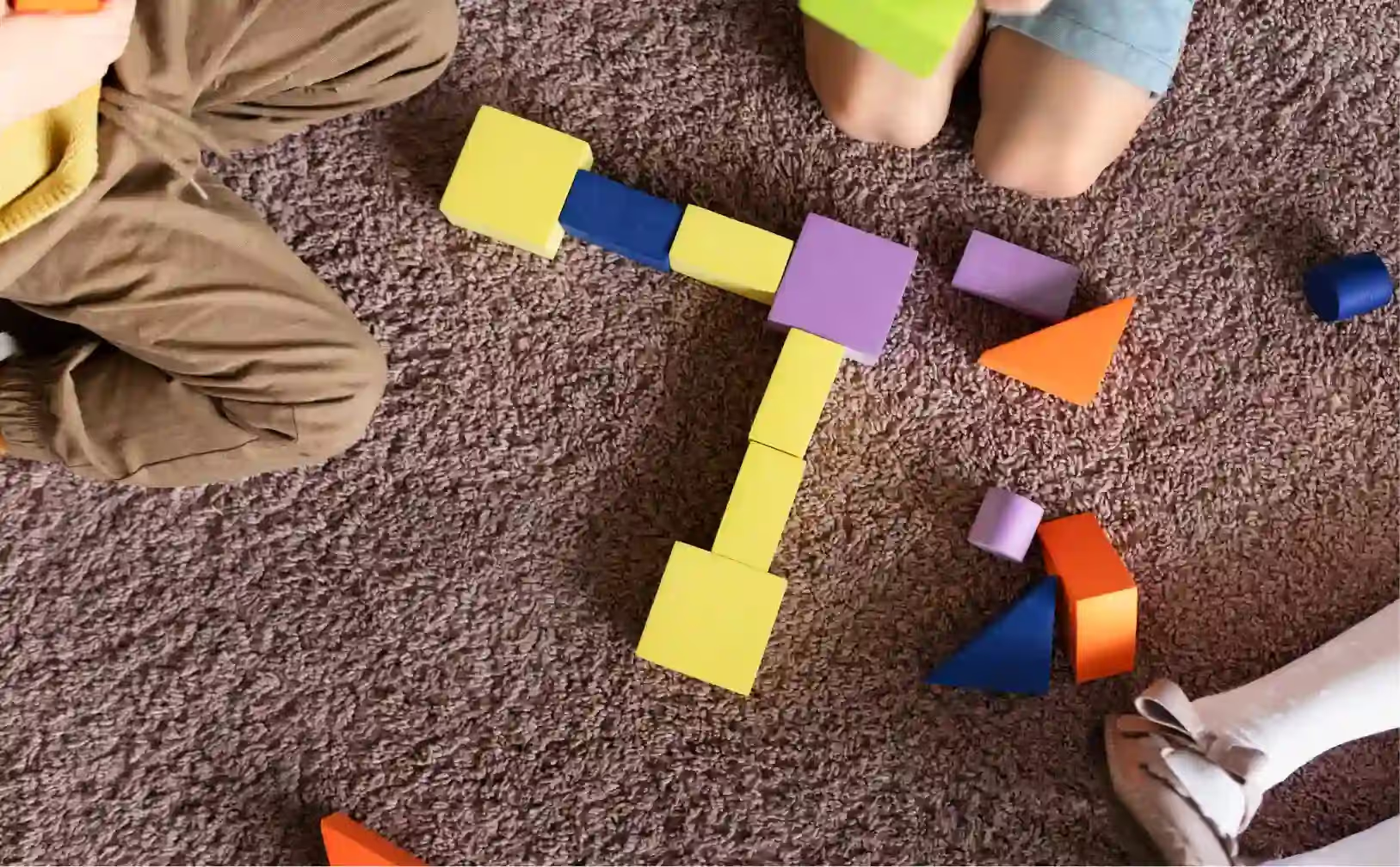
Mental health professionals and educators increasingly incorporate mindfulness into their work with children. Magnetic blocks offer developmentally appropriate tools for these settings.
A therapist might guide a child through Worry-Tower Release when processing anxiety, using the externalization to help the child observe rather than be overwhelmed by concerns. For children with attention challenges, repeated practice with slow-building activities develops sustained focus in low-pressure contexts. For those with emotion regulation difficulties, tracking body sensations while building helps develop the interoceptive awareness needed to recognize emotions early, before they become overwhelming.
Sample therapeutic script for building with awareness:
"Let's see if we can build really slowly today, noticing everything that happens. First, before you touch any blocks, just notice how your body feels. Where are you tight? Where are you relaxed? Okay. Now reach for one block. Feel your arm move, your hand open. Good. Hold the block. What do you notice? The temperature? The smoothness? Now place it. Listen for the click. Did you hear it? How does your breathing feel right now? Is it fast or slow? Deep or shallow? Let's do one more. Reach slowly... hold it... feel it... place it... listen... breathe. You're doing great at noticing. That's all we're practicing—just noticing."
Group work with magnetic blocks supports social-emotional learning. Small groups can practice collaborative building with mindfulness guidelines: one person builds at a time while others breathe and watch silently, taking turns without grabbing or interrupting. This exercises patience, turn-taking, impulse control, and empathy as children must attend to others' building choices with acceptance. Reflecting afterwards—"What was hard about waiting?" "How did it feel when someone used the piece you wanted?" "Did anyone notice their breathing changing?"—develops metacognitive awareness of social-emotional experience.
Educators using these approaches should remember that consistency matters more than intensity. Five minutes three times weekly teaches more than an hour-long session once monthly. Brief regular exposure allows skills to consolidate and become accessible when needed. Additionally, adult modeling significantly impacts children's engagement—teachers and counselors who themselves practice mindful awareness in their work cultivate classroom cultures where mindfulness feels normal rather than weird.
Mindful magnetic block play isn't just for children. Adults facing work stress, digital overwhelm, and general life pressure benefit from these practices too.
The modern workplace creates conditions undermining mental health: constant connectivity, multitasking demands, back-to-back meetings, overwhelming information streams, and performance pressure. According to research documented by the National Center for Complementary and Integrative Health, mindfulness meditation helps adults reduce stress, manage anxiety, and improve overall psychological wellbeing.
Yet many adults resist formal meditation, feeling they "can't meditate" because minds won't stop thinking (a universal experience, not a personal failing), lacking time for 20-30 minute sessions, or finding sitting-still practices uncomfortable or boring. Play-based meditation offers accessible alternatives.
Five-minute block breaks between work tasks provide mini-meditations without requiring leaving your desk. Keep a small set of magnetic blocks in a desk drawer. Between Zoom calls, after finishing a challenging report, or when noticing stress mounting, spend five minutes slowly building. Not designing anything specific—just connecting pieces deliberately, feeling each click, watching colors interact. This brief engagement activates the parasympathetic nervous system, quiets mental chatter, and creates a micro-rest for the overworked prefrontal cortex. Five minutes isn't long enough to fully resolve stress, but it's enough to interrupt escalation and provide a reset point.
Silent shape repetition uses magnetic blocks as meditation objects similar to traditional mantras or breath focus. Choose one simple structure—perhaps a square made from four triangles. Build it slowly and mindfully. Deconstruct it. Build it again. Deconstruct. Repeat for 10-15 minutes, letting the repetition become meditative. The structure doesn't matter—the practice is repeatedly building and releasing with full attention. This can be done at a table, on the floor, or even in bed when struggling to sleep. The gentle repetitive activity calms racing thoughts more effectively than lying still trying not to think.
Tactile meditation instead of doom-scrolling offers a healthier alternative during downtime. Most people scroll phones during breaks—waiting for appointments, commercial breaks, children's activities. This behavior rarely refreshes; it often increases anxiety through exposure to negative news or social comparison. Carrying a small magnetic block set in a bag or car provides an alternative. During waiting periods, building slowly and attentively offers genuine rest rather than additional stimulation. The tactile engagement grounds attention in physical sensation rather than abstract digital information, providing the mental break the brain actually needs.
Walking meditation with magnetic blocks combines two mindfulness practices. During slow walks (in nature, around the office, at home), carry a block in your pocket. Periodically stop, take the block out, really look at it, feel it, perhaps place it somewhere and retrieve it, using it as a focal point returning wandering attention to present-moment sensory experience. The block becomes a mindfulness reminder—whenever you feel it in your pocket, you remember to notice where you are, what you're experiencing, how you're breathing.
Partner co-regulation uses magnetic blocks for adult couples or friends seeking calm together. Sitting across from each other, build one shared structure in complete silence, taking turns placing pieces. No planning discussions, no verbal coordination—just building together in present awareness. This creates intimate connection without words, shared focus providing co-regulation (nervous systems calming each other through synchronized activity and proximity). After 10-15 minutes of silent collaborative building, partners often report feeling more connected and individually calmer.
Creative worry break provides an alternative to rumination. When anxious thoughts loop repetitively, trying to think yourself out of anxiety often deepens it. Instead, set aside 10 minutes to build with magnetic blocks while allowing thoughts to continue. Don't fight the worried thoughts—just build while they're present. Often, the dual focus (worried thinking plus physical building) reduces thought intensity. The building provides just enough engagement to prevent complete rumination spiral while not demanding enough attention to increase stress. Afterwards, evaluate whether 10 minutes building with awareness helped more than 10 minutes trying to reason through anxiety.
These practices complement rather than replace traditional meditation. Someone maintaining a daily formal meditation practice might add brief magnetic block breaks during stressful days. Someone new to mindfulness might use blocks as an entry point, building comfort with present-moment awareness in accessible contexts before attempting more challenging practices like silent breath meditation.
The key understanding is that mindfulness is portable and flexible, not confined to meditation cushions or yoga studios. Any moment attention meets present experience with acceptance, mindfulness is happening. Magnetic blocks simply provide engaging, accessible vehicles for that meeting.
Real-world obstacles arise when implementing mindful magnetic block play. Anticipating challenges and having flexible responses helps maintain practice despite imperfections.
"My child is too hyper to sit still for mindfulness."
This is incredibly common and doesn't mean your child can't benefit from mindfulness—it means sitting-still practices aren't the right entry point. Begin with very brief sessions (2-3 minutes) using movement-based activities like Color-Breath Towers. Active children often succeed with practices involving rhythm and motion rather than stillness. Accept that "calm" for your child might look energetic compared to other children but still represent meaningful progress toward self-regulation. Use building itself as the calming activity rather than expecting calm before building begins.
"We don't have time for another thing."
Mindful block play doesn't need to be additional—it can replace other activities. Instead of random play before bed, make it mindful building. Instead of screen time decompression after school, try slow building for 10 minutes. Frame it as "we're already doing these activities; we're just doing them more intentionally" rather than adding to overwhelmed schedules. Even five minutes makes a difference—perfectionism about duration creates barriers.
"My kids fight over pieces during collaborative activities."
Conflict provides opportunities to practice mindfulness with difficult emotions. When disputes arise, pause and explicitly name what's happening: "You both want the same red square. Notice what you're feeling right now—maybe frustration or anger. Can you feel it in your body?" This metacognitive labeling itself is mindfulness practice. Then problem-solve together: take turns using contested pieces, decide each person gets certain colors, or practice letting go of attachment to specific pieces. The conflict becomes curriculum rather than obstacle.
"I feel awkward or uncomfortable doing mindfulness myself."
Many adults carry self-consciousness about mindfulness, worried they'll "do it wrong" or feeling too cynical or restless. Start by recognizing these are just thoughts and feelings—notice them without needing to eliminate them. Begin with the easiest practices for you rather than what seems most impressive. If sitting with eyes closed feels weird, do eyes-open building meditation. If silence feels uncomfortable, use gentle background music. Practice alongside your child rather than instructing from the side, modeling that you're also learning. Your willingness to try despite discomfort teaches more than perfect execution.
"Attention spans are too short—we can't maintain focus."
Short attention spans are precisely why practice is needed! Start with 2-3 minute activities matching current capacity, gradually extending as focus strengthens. Accept that minds will wander constantly—that's normal. The practice isn't preventing wandering but noticing it and gently returning attention. When focus breaks, that's not failure; it's an opportunity to practice the returning movement that strengthens attention over time. If a particular activity never works, try different ones rather than forcing engagement with what doesn't resonate.
"My child only wants to crash and smash builds."
Destruction can be mindful too. If your child prefers energetic play, create activities incorporating that preference mindfully. The Mindful Deconstruction activity explicitly practices demolishing structures with awareness. Challenge them to smash as slowly as possible, noticing each moment of destruction. Or build things designed to be dramatically knocked down, making destruction the intended outcome rather than failure. Some children need to expend energy before they can settle—accept energetic building or destroying as a valid expression and look for the calm that often naturally follows the energy discharge.
Magnetic blocks provide an accessible entry point and valuable supplementary practice but aren't designed to replace comprehensive mindfulness instruction. They work beautifully for children developmentally unready for formal meditation and for families preferring hands-on approaches. For children showing deeper interest or facing significant anxiety or attention challenges, magnetic block practice can complement but not substitute for age-appropriate mindfulness curricula or professional therapeutic support.
Start shorter than you think necessary—2-5 minutes for young children (ages 3-5), 5-10 minutes for school-age children (ages 6-10), and 10-20 minutes for teens and adults. Duration matters less than consistency and quality of attention. Five focused minutes teach more than twenty distracted minutes. As skills develop, sessions can naturally extend, but forcing long sessions early creates resistance. Let duration grow organically as engagement strengthens.
Energetic play has value and can incorporate mindfulness too. Rather than fighting the crashing impulse, work with it. Create build-to-crash activities where destruction is the goal, but practiced mindfully—slow-motion demolition, noticing sounds and sensations during collapse, discussing emotions arising during destruction. Often children need to discharge energy before settling into calmer building. Honor that need while gently incorporating awareness practice into whatever form play takes.
Yes, particularly calming activities like Color-Breath Towers, Silent Slow-Build, or Breath-Visible Structures. The combination of focused attention, rhythmic breathing, and gentle activity can shift nervous systems from activation to calm, supporting sleep preparation. Practice 30-45 minutes before bed rather than immediately before lights-out, allowing enough time for the settling to deepen without the pressure of needing to fall asleep instantly. Pair with other sleep hygiene practices like reduced screens, dimmed lights, and consistent routines.
Research on mindfulness suggests that regular brief practice produces better results than sporadic intensive practice. Aim for 3-5 times weekly, even if sessions are only 5-10 minutes. Daily practice brings the most benefit but isn't necessary for meaningful progress. Consistency matters more than frequency—three predictable times weekly beats sporadic daily attempts that peter out after a week. Build practice into existing routines rather than creating separate new obligations.
Many children with attention or anxiety challenges benefit substantially from mindfulness practices adapted to their needs. The hands-on nature of magnetic block activities often works better than sitting-still meditation for children with ADHD. However, expectations should be realistic—this complements rather than replaces professional treatment when needed. For children with diagnosed conditions, consult with healthcare providers about integrating mindfulness practices into comprehensive treatment plans. The activities here can absolutely help but aren't therapeutic interventions.
The colorful magnetic tiles scattered before you hold more potential than entertainment value or educational benefit. They offer portals into present-moment awareness—the capacity to be here, now, with whatever arises, without immediately judging, fixing, or fleeing. This capacity, called mindfulness, represents one of humanity's most valuable psychological skills and one increasingly necessary in our distracted, overstimulated, anxiety-provoking modern world.
The practice needn't look like monk-on-mountaintop meditation. It can look like a parent and child slowly building together in evening quiet. It can look like a classroom of second-graders breathing in rhythm while constructing collaborative structures. It can look like an overwhelmed adult taking a five-minute block break between meetings, hands engaged while mind settles. It can look like a therapist guiding an anxious child through worry-release building, making internal states external and manageable.
The blocks themselves aren't magical. They're plastic and magnets. Their power comes from how they're used—the intention brought to the handling, the attention given to sensation, the acceptance offered to whatever thoughts and feelings arise during building. When regular play slows down just enough to notice, it transforms into something more: play-based meditation that trains attention, builds emotional regulation, and cultivates the very calm our hurried, harried lives so desperately need.
Start tonight if you're ready. Don't wait for the perfect moment, the ideal setup, or complete understanding. Pull out magnetic blocks you already have or grab a small inexpensive set. Sit with your child, or alone if you don't have children nearby. Set a timer for just five minutes. Pick up a tile and really feel it. Place it deliberately. Listen for the click. Take a breath. Pick up another. Notice the colors. Feel the click. Breathe. Build for five minutes with that much attention and awareness. Just five minutes. Just noticing.
That's all mindfulness is—repeatedly bringing awareness to present-moment experience, over and over, gently and without judgment. The magnetic blocks simply provide structure, engagement, and tactile anchoring that make this ancient practice accessible to modern families navigating modern challenges.
Consistency matters more than perfection. A slightly distracted five minutes three times this week teaches more than waiting for the mythical "right" conditions to begin. Imperfect, messy, distracted practice beats no practice. Each moment of noticing—however brief, however interrupted—strengthens the neural pathways supporting attention and emotional regulation. Each session builds capability cumulating over weeks and months into genuine transformation.
The structures you build will fall. The mindfulness practice will be imperfect. Your children will resist sometimes. You'll feel awkward sometimes. None of that negates the value. The goal isn't perfect practice but practiced imperfection—showing up repeatedly, gently returning attention when it wanders, accepting whatever arises, building not just magnetic structures but also the internal architecture of awareness and calm.
So gather those tiles. Slow down. Notice the click. Feel the smooth coolness. Watch the colors. Breathe. Be here. Build calm, one block, one breath, one present moment at a time.
NOVEMBER 20, 2025
NOVEMBER 20, 2025
NOVEMBER 20, 2025
NOVEMBER 20, 2025
NOVEMBER 20, 2025