

Counterfeit Magnetic Tiles on Amazon: Spotting Fake Brands
NOVEMBER 21, 2025
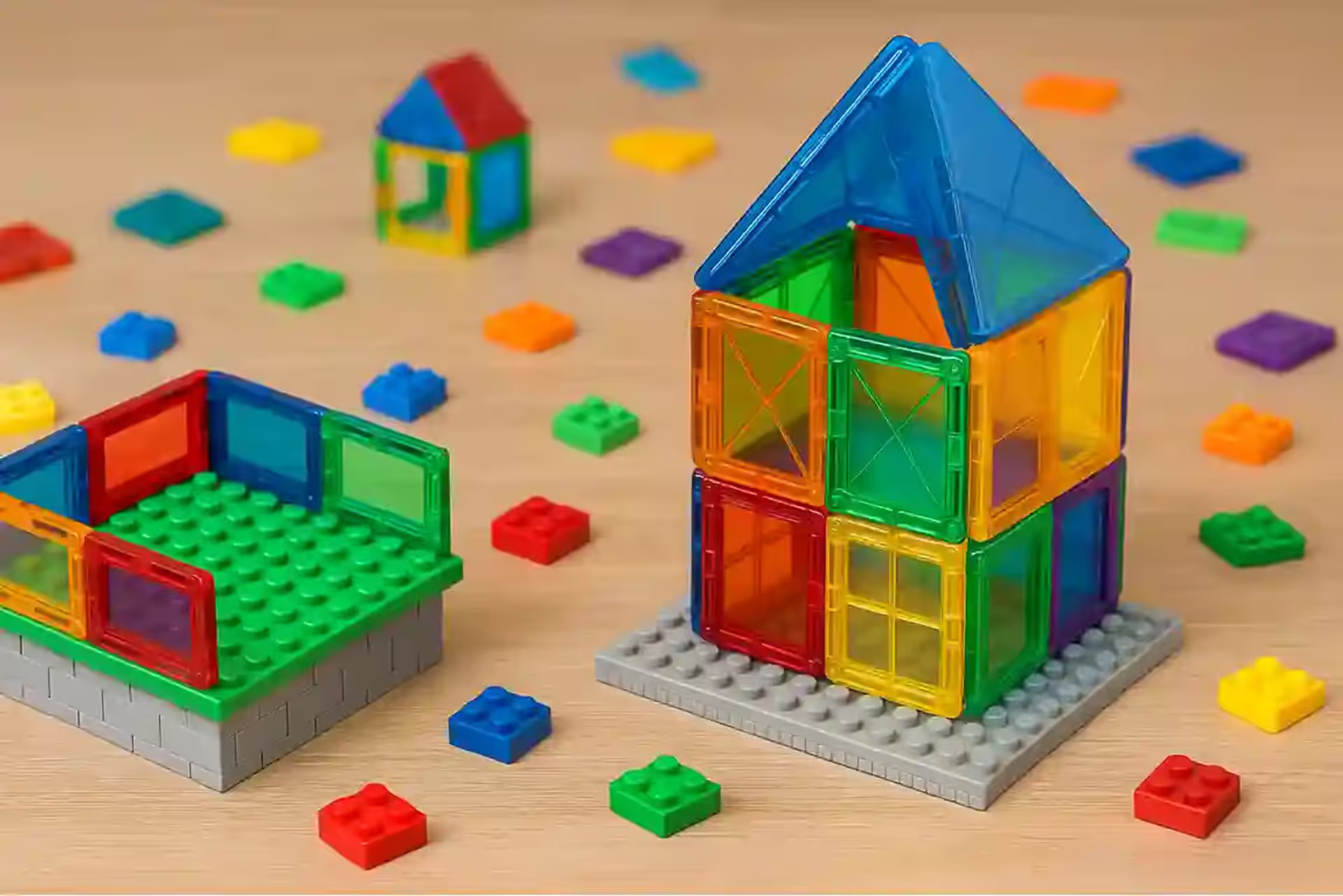
Your child wants to attach their magnetic tile castle to a LEGO baseplate. They're holding a Magna-Tile in one hand and a LEGO brick in the other, determined to make them work together. This isn't just childhood stubbornness – it's engineering intuition recognizing that these two building systems could create something neither achieves alone. The good news? Several manufacturers have solved this compatibility puzzle, creating magnetic blocks that genuinely integrate with LEGO's iconic stud system.
The challenge of merging magnetic and interlocking brick systems goes beyond simple physical compatibility. Each system operates on fundamentally different connection principles – magnets rely on polar attraction across flat surfaces, while LEGO uses friction-based mechanical interference between precisely manufactured studs and tubes. Successfully combining these systems requires clever engineering that respects both connection methods while creating new building possibilities that transcend either system's individual limitations.
To understand which magnetic blocks work with LEGO, we first need to examine why most don't. LEGO's system relies on incredibly precise measurements – each stud is exactly 4.8mm in diameter with 8mm spacing between stud centers. This precision, maintained to tolerances of 0.01mm, creates the satisfying click and reliable hold that defines the LEGO experience. The underside of LEGO bricks contains tubes and supports positioned to grip these studs with exactly the right amount of friction – too tight and pieces won't connect, too loose and structures collapse.
Traditional magnetic tiles like Magna-Tiles or PicassoTiles operate on completely different dimensional standards. Their edges measure in centimeters rather than LEGO's module system, and their flat surfaces lack any mechanical connection points. The magnets are typically embedded within the plastic frame, creating smooth surfaces that can't grip LEGO studs. Even when dimensions occasionally align (a 3-inch magnetic square roughly equals 9.6 LEGO studs), the lack of mechanical interface means the pieces simply sit on top of each other without meaningful connection.
The thickness disparity presents another compatibility barrier. LEGO bricks measure 9.6mm tall (not including studs), while magnetic tiles typically range from 6-8mm thick. This height difference means that even if horizontal dimensions aligned, vertical building would create unsightly gaps and structural weaknesses. The weight distribution also differs dramatically – magnetic tiles concentrate mass at their edges where magnets reside, while LEGO bricks distribute weight evenly. These fundamental incompatibilities explain why simply placing magnetic tiles on LEGO structures rarely produces satisfactory results.
Successful hybrid systems must satisfy two competing physics requirements. The magnetic connection needs sufficient field strength to hold pieces together while building, typically requiring neodymium magnets with 1000-1500 Gauss surface strength. Simultaneously, the mechanical connection must provide 2-5 Newtons of clutch power (the force needed to separate LEGO bricks) without interfering with the magnetic fields. Understanding basic physics principles helps explain why this dual requirement creates such significant engineering challenges.
This dual requirement creates design constraints that few manufacturers successfully navigate. Adding LEGO-compatible studs to magnetic blocks increases thickness, potentially weakening magnetic attraction. Embedding magnets in LEGO-compatible bricks risks compromising the precise tolerances that make LEGO connections reliable. The solution requires innovative engineering that preserves both systems' strengths while addressing the inherent conflicts between magnetic and mechanical connection methods.
Several manufacturers have cracked the compatibility code, creating magnetic blocks that genuinely integrate with LEGO systems. PIXIO blocks represent one approach – these 8mm cubes contain rare-earth magnets and precisely match LEGO's dimensional standards. Each PIXIO cube equals exactly one LEGO plate in height and width, allowing seamless integration. The magnetic connection remains the primary joining method, but the dimensional compatibility means PIXIO structures can incorporate LEGO elements without awkward transitions or adapters.
Tegu blocks take a different approach, embedding magnets within wooden blocks sized to LEGO standards. Their "Magnetic Wooden Block" line includes pieces with dimensions that correspond to standard LEGO brick sizes – their 2×4 block matches LEGO's 2×4 brick footprint exactly. While Tegu blocks don't feature studs for direct LEGO connection, their precise sizing allows them to stack cleanly with LEGO structures, with magnetism providing lateral stability that pure LEGO builds sometimes lack.
The most direct compatibility comes from brands like Brick-A-Brack and LEGO's own experiments with magnetic elements. These products feature actual LEGO-compatible studs and tubes alongside embedded magnets. The studs maintain standard LEGO dimensions and clutch power, while strategically placed magnets add connection options that traditional LEGO lacks. These hybrid blocks can attach to vertical surfaces, create cantilevered structures, and enable building techniques impossible with friction-based connections alone.
Creative builders have developed numerous DIY solutions for connecting incompatible magnetic blocks with LEGO. The simplest involves using LEGO baseplates as transition zones. By attaching flat magnetic tiles to the smooth underside of baseplates, builders create a magnetic surface that accepts standard magnetic blocks on one side while maintaining LEGO compatibility on the other. This technique works particularly well for creating magnetic walls or backgrounds for LEGO scenes.
3D printing has opened new possibilities for custom adapters. Makers have designed adapter plates that feature LEGO-compatible studs on one side and recesses sized for specific magnetic tile brands on the other. These adapters can be printed in various sizes and configurations, creating bridges between systems that manufacturers never intended to connect. The STL files for many adapter designs are freely available online, allowing anyone with access to a 3D printer to create custom compatibility solutions.
Another approach involves strategic use of LEGO Technic elements. Technic beams and pins can create frameworks that hold magnetic tiles in position without requiring direct connection. By building LEGO frames that match magnetic tile dimensions, builders can create hybrid structures where magnetic panels fill LEGO-defined spaces. This technique proves particularly effective for creating large walls or windows in LEGO buildings, where magnetic tiles provide transparent or colored surfaces that would require hundreds of specialized LEGO pieces to achieve.
Different compatibility systems offer varying connection approaches and optimal applications. PIXIO provides dimensional matching through magnetic attraction combined with size alignment, working best for decorative details integrated into LEGO builds. Tegu offers size compatibility through magnetic attraction and physical stacking, excelling at mixed-material builds combining wood and plastic aesthetics. Brick-A-Brack delivers full integration through actual LEGO-compatible studs plus embedded magnets, ideal for true hybrid structures requiring both connection types. 3D-printed adapters create custom bridges through physical interfaces designed for specific connection needs. The baseplate method establishes surface transitions by creating adhesion zones suitable for large-area coverage where tiles and bricks meet.
Once you have compatible magnetic blocks and LEGO, entirely new building techniques become possible. Magnetic connections excel at creating angles and curves that challenge LEGO's rectangular geometry. By using magnetic blocks as joint systems between LEGO sections, builders can create articulated structures with moving parts that maintain position through magnetic force rather than friction. Imagine a LEGO robot with magnetic joint blocks allowing smooth, poseable limbs that hold their position without the clicking increments of LEGO joints.
The combination enables architectural features difficult to achieve with either system alone. Magnetic tiles can span gaps between LEGO supports, creating transparent roofs or bridges without the sagging that affects large LEGO spans. The magnetic connection distributes weight differently than LEGO's point-contact system, allowing for dramatic cantilevers and overhangs. A LEGO tower might feature magnetic tile observation decks extending far beyond what LEGO's clutch power could support alone. Resources on engineering principles demonstrate how these hybrid techniques mirror professional structural engineering approaches.
Hybrid building also solves one of LEGO's persistent challenges: creating strong connections at unusual angles. While LEGO excels at 90-degree connections, other angles require specialized pieces or compromised stability. Magnetic blocks can create stable angle transitions, allowing LEGO structures to branch at 45, 60, or any other degree. This angular freedom transforms architectural possibilities – geodesic domes become feasible, spiral staircases gain stability, and organic shapes emerge from the combination of rigid and magnetic connections.
When combining systems, consider load distribution carefully. LEGO connections handle compression well but struggle with lateral forces. Magnetic blocks excel at lateral connection but may separate under vertical load. Design hybrid structures that use each system's strengths – LEGO for vertical support and compression, magnetics for lateral bracing and tension elements. Temperature affects both systems differently. LEGO maintains clutch power across wide temperature ranges, while magnetic strength decreases slightly with heat. In hot environments, rely more heavily on LEGO connections for structural integrity. In cold conditions, magnetic connections actually strengthen, making them ideal for load-bearing elements.
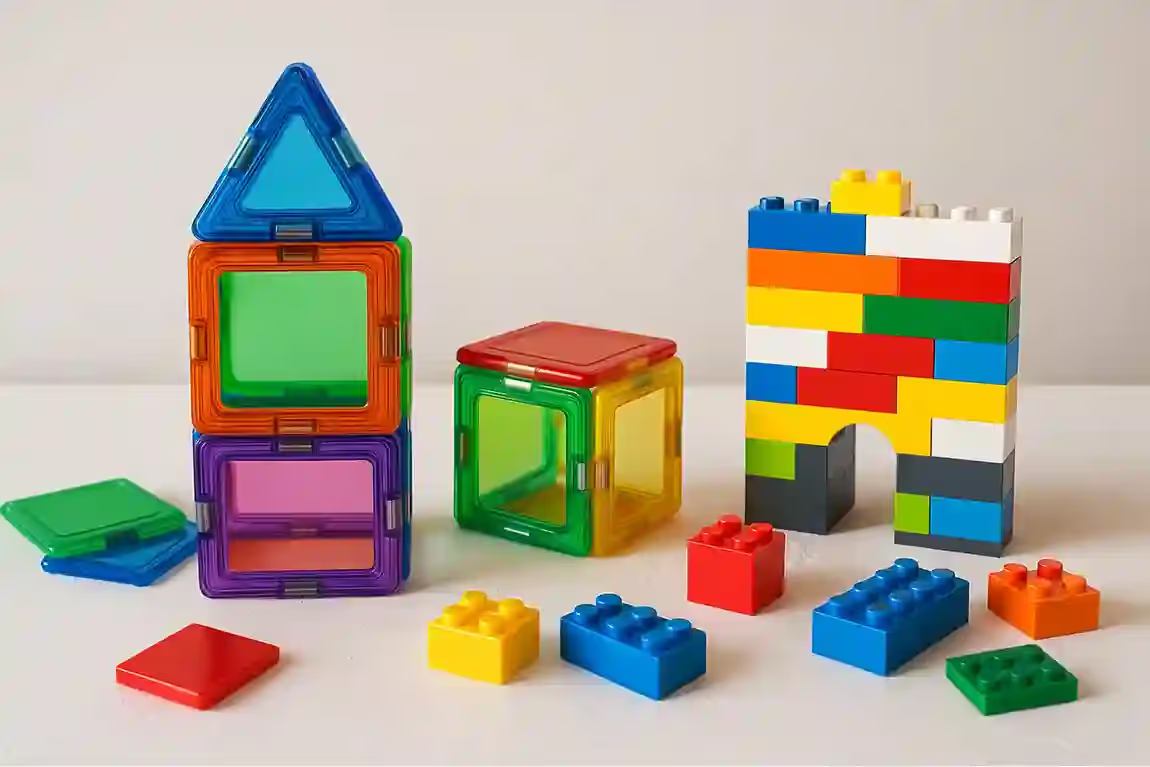
Combining magnetic blocks with LEGO creates unique educational opportunities that neither system provides independently. Children working with hybrid systems must understand two different connection philosophies, developing cognitive flexibility as they switch between magnetic and mechanical thinking. This dual-system literacy builds engineering intuition – children learn that different problems require different solutions and that the best designs often combine multiple approaches. Research on STEM education confirms that multi-system building experiences develop broader problem-solving skills than single-system approaches.
The physics lessons embedded in hybrid building run deeper than either system alone offers. Children discover that magnetic force operates through LEGO bricks, leading to questions about magnetic field penetration and material properties. They learn about force vectors when magnetic angles meet LEGO's rectangular constraints. The interplay between attractive/repulsive magnetic forces and LEGO's friction-based grip introduces concepts of competing forces and equilibrium that pure LEGO or magnetic building doesn't naturally demonstrate.
Problem-solving complexity increases exponentially with hybrid systems. A challenge like "build a bridge that opens" might use LEGO for the structural towers, magnetic blocks for the moveable span, and a combination for the hinge mechanism. Children must evaluate which system best serves each component's requirements, developing analytical thinking and material selection skills. This multi-system approach mirrors real-world engineering, where professionals choose from various materials and connection methods to optimize designs.
Before investing in LEGO-compatible magnetic blocks, consider the financial implications. True hybrid systems cost significantly more than standard magnetic tiles. PIXIO blocks run $0.50-1.00 per piece, compared to $0.20-0.40 for standard magnetic tiles. Brick-A-Brack and similar studded magnetic blocks can cost even more, approaching or exceeding LEGO's per-piece pricing. For the cost of a modest hybrid collection, you could purchase either a substantial LEGO set or a comprehensive magnetic tile collection.
However, the value proposition extends beyond simple piece count. Hybrid systems can breathe new life into existing collections, making dormant LEGO sets exciting again through magnetic enhancement. The ability to create structures impossible with either system alone might justify the premium for builders who have exhausted single-system possibilities. Consider it an investment in extended play value rather than just additional pieces – the combinations enabled by compatibility multiply building options exponentially.
The longevity factor also affects value calculations. While standard magnetic tiles might lose their appeal as children age into more complex building desires, hybrid systems grow with the builder. Young children enjoy the simple satisfaction of magnetic connection, while older builders appreciate the engineering possibilities of combined systems. This extended age range means hybrid systems might remain engaging for 8-10 years versus 3-4 years for single systems, effectively doubling or tripling their value per year of use. Guidance on toy value assessment helps families make informed purchasing decisions based on long-term use rather than initial cost alone.
Even with compatible systems, builders encounter challenges that require creative solutions. Magnetic interference represents one common issue – strong magnets can affect nearby LEGO constructions, causing metallic elements like Technic pins or motor components to shift or malfunction. The solution involves strategic spacing and using non-magnetic buffer zones between highly magnetic sections and sensitive LEGO mechanisms. Consider using wooden blocks or non-magnetic spacers to create separation without breaking visual continuity.
Weight distribution problems emerge when heavy magnetic blocks sit atop LEGO structures. Magnetic tiles concentrate weight at their edges where magnets reside, creating point loads that can overwhelm LEGO connections below. Solve this by distributing magnetic block weight across multiple LEGO support points, using plates to spread loads, and reinforcing critical connections with overlapping bricks. Think of it like engineering a real building – concentrated loads require additional structural support.
Aesthetic integration challenges arise from different visual languages – LEGO's studded texture versus magnetic tiles' smooth surfaces can clash visually. Address this by using magnetic blocks strategically as accent elements rather than random insertions. Create defined zones where each system dominates, using transition pieces to blend boundaries. Consider spray-painting 3D-printed adapters to match either system's color scheme, creating visual bridges that make the combination appear intentional rather than forced.
Hybrid collections require special storage consideration. Magnetic blocks can magnetize metal LEGO elements over time, affecting their function. Store magnetic and traditional LEGO pieces in separate containers, particularly keeping magnetics away from LEGO motors, sensors, and other electronic components. Use plastic dividers rather than metal organizational systems that might become magnetized. Advice on toy organization emphasizes separation strategies that prevent component damage while maintaining accessibility.
Cleaning hybrid builds requires extra care. Magnetic blocks often trap LEGO dust in their frames, while LEGO bricks can scratch magnetic tile surfaces. Disassemble hybrid constructions before cleaning, wash systems separately using appropriate methods for each, and ensure complete drying before reassembly to prevent rust in magnetic components.
Beyond the mechanical and educational benefits, hybrid building systems offer psychological advantages that single-system building cannot replicate. The cognitive challenge of managing two connection philosophies simultaneously engages working memory and executive function in ways that routine building doesn't. Children must maintain mental models of both systems, switching fluently between magnetic and mechanical thinking depending on immediate needs. This cognitive flexibility developed through play transfers to academic and social situations requiring similar adaptability.
The satisfaction of solving hybrid building challenges differs qualitatively from single-system successes. When builders successfully integrate magnetic and LEGO elements to achieve something impossible with either system alone, they experience genuine creative breakthrough moments. These experiences build confidence and reinforce growth mindset principles – difficult problems become opportunities for innovation rather than insurmountable obstacles. The hybrid building context makes abstract concepts like "combining resources" and "leveraging different tools" concrete and memorable.
Frustration tolerance develops differently with hybrid systems than with single systems. When a pure LEGO build fails, the solution typically involves trying different pieces or configurations within one system. When a hybrid build fails, children must diagnose whether the problem stems from the magnetic connection, the LEGO connection, or their interaction. This diagnostic complexity requires systematic troubleshooting that builds analytical skills applicable far beyond building toys. Children learn to isolate variables, test hypotheses, and modify approaches based on evidence – essentially conducting experiments through play.
The hybrid building community represents a fascinating intersection of LEGO enthusiasts and magnetic block builders, each bringing expertise from their original specialization. Online forums dedicated to hybrid building showcase techniques and designs that blur the boundaries between systems. Building communities share innovations, troubleshoot problems collectively, and push the boundaries of what's possible when systems combine. These communities have developed their own vocabularies, techniques, and aesthetic principles distinct from either parent system.
Collaborative building takes on new dimensions with hybrid systems. When two builders work together, one might specialize in LEGO structural engineering while another focuses on magnetic elements' aesthetic and functional contributions. This specialization and collaboration mirrors professional design teams where different experts contribute complementary skills. Children who engage in collaborative hybrid building develop teamwork skills, communication abilities, and appreciation for diverse expertise that single-builder or single-system experiences don't cultivate as effectively.
Competitions and challenges centered on hybrid building have emerged in maker spaces and building clubs. These events set constraints requiring both systems – for example, "build the tallest tower using exactly 100 LEGO bricks and 20 magnetic tiles." Such challenges force builders to optimize their use of each system's strengths while managing their weaknesses. The competitive element adds urgency and motivation while the dual-system requirement ensures builders can't rely solely on mastery of one system.
The building toy industry increasingly recognizes the value of system compatibility. LEGO's own experiments with magnetic elements, though discontinued, demonstrated market interest in hybrid capabilities. Current patent filings suggest major manufacturers are developing new approaches to system integration, potentially including magnetic blocks with retractable studs, LEGO bricks with switchable magnetic fields, and universal adapter systems designed for multiple building platforms.
Smart building blocks represent the next frontier in hybrid systems. Imagine magnetic blocks that detect their connection to LEGO smart hubs, enabling programmable magnetic structures within LEGO robotic builds. Or LEGO bricks that change color when connected to magnetized elements, creating interactive feedback systems. These technological integrations could transform both systems from static building tools to dynamic, responsive construction platforms. Developments in educational technology suggest that smart toy integration will accelerate as sensors and microcontrollers become smaller and cheaper.
The maker movement continues driving innovation through open-source adapter designs and compatibility solutions. Online communities share increasingly sophisticated 3D-printed interfaces, custom magnetic LEGO modifications, and hybrid building techniques. This grassroots development often outpaces commercial offerings, creating solutions for specific compatibility needs that manufacturers haven't addressed. The future of hybrid building might be less about official compatibility and more about community-created bridges between systems.
Each tier offers different trade-offs between cost, compatibility depth, and building possibilities. Families should assess their current collections, building interests, and budgets before committing to any particular approach. Starting small with a budget option allows testing hybrid building appeal before major investment, while premium systems suit committed builders ready to fully explore combined-system possibilities.
Architecture students at MIT have used hybrid LEGO-magnetic systems to create complex structural models that demonstrate both compression and tension forces. By combining LEGO's precise modularity with magnetic blocks' ability to show force lines, they've created educational models that visually represent invisible structural forces. These hybrid models have become teaching tools, helping students understand how buildings stand and why certain designs fail.
FIRST Robotics teams have incorporated magnetic block elements into their LEGO robot designs, using magnetic connections for quick-release mechanisms and modular attachments. One team created a robot arm that could swap end effectors using magnetic connections, allowing rapid tool changes during competition. The magnetic elements added functionality impossible with pure LEGO while maintaining compatibility with LEGO's Mindstorms programming system. Resources on robotics education document numerous examples of hybrid building techniques in competitive robotics contexts.
Therapy centers have found hybrid systems particularly valuable for occupational therapy. The combination of magnetic and mechanical connections provides varied sensory feedback and motor challenges. Children who struggle with LEGO's precise alignment requirements can start with magnetic connections, gradually incorporating LEGO elements as fine motor skills develop. This progressive approach has helped numerous children develop dexterity and spatial reasoning skills through graduated challenge levels impossible with single systems.
Museums and educational exhibits increasingly feature hybrid building systems for interactive displays. The Chicago Children's Museum includes a building zone where visitors can combine magnetic and LEGO elements to create architectural designs, teaching principles of structural engineering through hands-on experimentation. These installations demonstrate hybrid building's educational potential beyond home use.
The question isn't whether magnetic blocks can work with LEGO – several systems prove they can. The real question is whether hybrid building serves your specific needs. If you have extensive LEGO collections feeling stale, magnetic compatibility might reinvigorate building enthusiasm. If you're choosing between systems for a new builder, starting with one system and mastering it might prove more valuable than immediately introducing complexity.
Consider your building goals. Hybrid systems excel at architectural models, artistic sculptures, and engineering prototypes where combining connection methods adds value. They might overcomplicate simple building fun or frustrate builders who prefer single-system mastery. The premium pricing of truly compatible systems means careful consideration of whether the added possibilities justify the cost. Understanding child development stages helps parents assess whether their children are ready for the cognitive demands of hybrid building or would benefit more from single-system mastery first.
Ultimately, the magic happens when builders stop seeing magnetic blocks and LEGO as separate systems and start viewing them as complementary tools in a unified building arsenal. Whether through purpose-built compatible products, clever adapters, or creative workarounds, the combination of magnetic and mechanical connections opens building possibilities that neither system achieves alone. The future of construction play might not be choosing between systems but discovering how they work together.
The hybrid building philosophy extends beyond toys to life lessons about integration, synthesis, and combination thinking. Children who learn to bridge different systems develop intellectual flexibility valuable in our interconnected world where solutions increasingly require integrating diverse approaches. The magnetic blocks and LEGO bricks sitting on your floor aren't just toys – they're training grounds for the kind of integrative thinking that characterizes innovation across fields from technology to art to social problem-solving. The initial frustration of incompatibility transforms into creative problem-solving that teaches resilience, adaptability, and the power of thinking beyond prescribed boundaries. These lessons, learned through the concrete experience of making different systems work together, form cognitive foundations that serve builders long after childhood ends.
While combining magnetic blocks with LEGO creates exciting possibilities, it also introduces safety considerations that single-system building doesn't present. The magnetic components in hybrid systems pose ingestion risks, particularly when smaller magnetic pieces integrate with LEGO builds that children might disassemble and reassemble frequently. Parents should maintain vigilance with children under six, ensuring that magnetic elements remain securely attached and that broken or damaged pieces are immediately removed from play. The combination of small LEGO pieces and magnetic components requires awareness of both choking hazards and the specific dangers of swallowed magnets.
Structural integrity becomes more complex in hybrid builds due to differing connection strengths between magnetic and mechanical systems. A structure that appears solid might have weak points where magnetic and LEGO connections meet, creating unexpected failure modes. Children should learn to test hybrid structures before adding significant weight or height, understanding that visual appearance doesn't always indicate actual stability. Teaching children to recognize stress points and potential failure modes builds both engineering knowledge and safety awareness applicable beyond toy building contexts.
The weight characteristics of hybrid builds differ from single-system structures. Magnetic tiles add concentrated weight at connection points while LEGO provides distributed weight, creating unusual balance points in combined structures. Tall hybrid towers might topple unexpectedly due to these weight distribution complexities. Builders should start with smaller hybrid projects, developing intuition about how combined systems behave before attempting ambitious large-scale structures where collapse could cause injury or property damage.
Different developmental stages suit different hybrid building approaches. Preschool children (ages 3-5) benefit most from simple dimensional compatibility where magnetic blocks and LEGO pieces can stack together without requiring precise alignment. Products like Tegu blocks work well at this age, allowing toddlers to combine systems without frustration while developing motor skills through varied connection methods. The magnetic attraction assists rather than challenges fine motor control still developing at this age.
Elementary-age children (ages 6-9) possess the manual dexterity and cognitive flexibility to handle true hybrid systems with both magnetic and mechanical connections. They can understand why certain combinations work better than others, troubleshoot connection problems, and plan structures that exploit each system's strengths. This age group benefits most from deliberate instruction in hybrid building techniques, learning principles they can apply independently as skills develop. Adult guidance should focus on asking questions rather than providing solutions, supporting discovery-based learning.
Tweens and teens (ages 10+) can handle sophisticated hybrid projects incorporating engineering principles, aesthetic design, and functional mechanisms. At this stage, hybrid building transitions from play to legitimate design practice, preparing students for architecture, engineering, or design careers. Projects might involve precise calculations, scale modeling, or functional machines where magnetic and mechanical connections serve specific purposes. Resources on engineering for kids provide project ideas and challenges appropriate for advanced builders ready to apply hybrid building skills to increasingly complex problems.
The environmental impact of hybrid building systems deserves consideration as families accumulate multiple toy systems. Magnetic blocks and LEGO both represent significant resource investments in manufacturing, shipping, and eventual disposal. However, both systems offer excellent longevity and resale value, making them more sustainable than many toy alternatives. The combination approach might actually reduce overall toy consumption if hybrid building maintains interest longer than either system independently would.
Magnetic components complicate recycling since the magnets must be separated from plastic before processing. However, the durability of quality magnetic blocks means they rarely enter waste streams during typical product lifespans. LEGO's take-back programs and strong secondary markets provide end-of-life solutions that keep pieces circulating rather than languishing in landfills. Families concerned about environmental impact should focus on purchasing quality hybrid-compatible products likely to last decades rather than cheaper alternatives requiring frequent replacement.
The second-hand market for both LEGO and magnetic blocks remains robust, allowing families to build hybrid systems economically while reducing demand for new production. Thrift stores, garage sales, and online marketplaces often feature both systems at substantial discounts. Building hybrid collections gradually through second-hand purchases reduces environmental impact while making these premium systems accessible to budget-conscious families. The timeless appeal of both systems means even decades-old pieces remain fully compatible with current products.
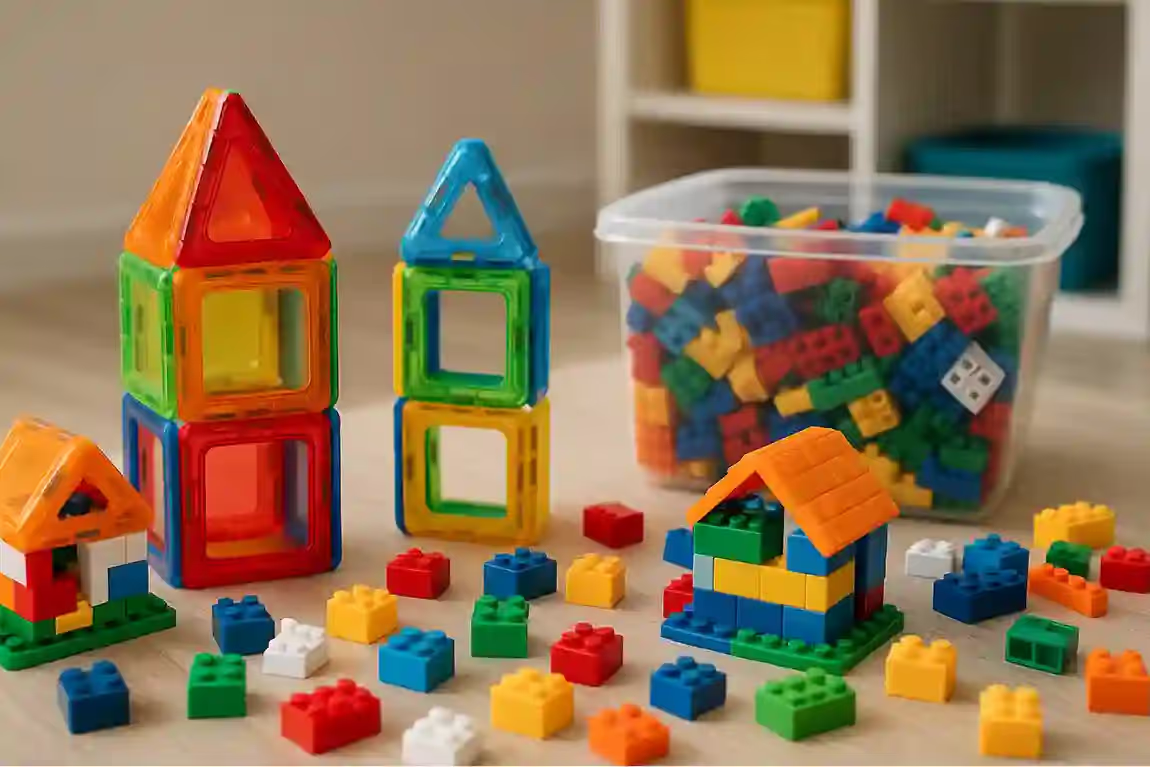
Building toys vary globally in availability, pricing, and cultural significance. While LEGO enjoys worldwide recognition, magnetic block brands vary by region. Asian markets feature magnetic block brands rarely seen in North America, some offering unique compatibility features or design approaches. European manufacturers like Geomag provide magnetic building systems with different philosophies than American magnetic tiles, creating alternative hybrid possibilities. Families with international connections might access hybrid solutions unavailable domestically.
Cultural attitudes toward toy building also influence hybrid system adoption. Some cultures emphasize following instructions and replicating designed models, while others prioritize free building and creative exploration. Hybrid systems appeal more strongly to cultures valuing innovation and creative problem-solving, where combining systems represents desirable ingenuity rather than inappropriate mixing. Understanding these cultural dimensions helps explain varying adoption rates of hybrid building approaches across different regions and communities.
The global maker movement and online communities transcend cultural boundaries, creating international dialog about hybrid building techniques. Builders in Japan share innovations with counterparts in Germany, who collaborate with enthusiasts in Brazil, creating a worldwide exchange of ideas that accelerates hybrid building development. This internationalization of building culture exposes children to diverse perspectives and approaches, preparing them for globalized adult worlds where cross-cultural collaboration proves increasingly essential.
Hybrid building systems offer unique therapeutic value for children with various developmental challenges. The combination of magnetic and mechanical connections provides graduated difficulty levels appropriate for occupational therapy contexts. Children can begin with larger magnetic blocks requiring less precise alignment, progressively incorporating smaller LEGO elements as fine motor control improves. This built-in progression allows therapists to individualize challenge levels while maintaining consistent activity contexts that build confidence through familiarity.
Children with autism spectrum disorders often respond positively to hybrid building's structured yet flexible nature. The predictable mechanical properties of both magnetic and LEGO connections provide comforting consistency, while the combination possibilities prevent rigid thinking patterns. The sensory feedback differences between systems—magnetic clicks versus LEGO snaps—provide varied input supporting sensory integration therapy goals. Therapists report that hybrid building motivates sustained engagement longer than single-system building, creating extended practice opportunities for skill development.
Visual-spatial processing challenges benefit from hybrid building's requirement to translate between flat magnetic structures and three-dimensional LEGO builds. Children must mentally rotate, flip, and combine shapes across systems, exercising spatial reasoning in practical contexts. The immediate feedback from successful or failed connections provides self-correction opportunities that develop visual-spatial skills more effectively than worksheet-based approaches. Occupational therapists incorporate hybrid building into treatment plans addressing everything from attention deficits to motor planning difficulties.
Photographing and documenting hybrid creations presents unique challenges due to the visual contrast between systems. Magnetic tiles' transparency and smooth surfaces photograph differently than LEGO's opaque, textured bricks. Achieving good photos requires attention to lighting, angles, and backgrounds that showcase both systems fairly. Natural light works best for magnetic tiles, revealing their translucent beauty, while diffused artificial light prevents harsh shadows on LEGO's textured surfaces. Builders sharing their hybrid creations online should experiment with lighting and angles to capture structures' full complexity.
Video documentation proves particularly effective for hybrid builds featuring moving parts or connection details difficult to convey through still images. Time-lapse videos showing assembly sequences demonstrate how magnetic and mechanical connections integrate, providing educational value beyond simple display. Slow-motion footage of structure failures reveals how magnetic and LEGO connections respond differently to stress, offering insights that advance hybrid building understanding. The video format allows creators to narrate their building process, explaining decisions about when to use each system and why particular approaches worked or failed.
Building instructions for hybrid projects require special consideration since two connection types must be conveyed clearly. Standard LEGO instruction conventions don't address magnetic connections, necessitating new visual languages that communicate both system requirements simultaneously. Successful hybrid instructions use color coding, connection type symbols, and detailed notes about magnetic polarity and orientation. Creating clear instructions for complex hybrid builds challenges even experienced builders, but well-documented projects enable others to replicate successful designs and build upon them, advancing the entire hybrid building community's knowledge.
The skills developed through hybrid building extend far beyond childhood play into professional competencies valued across careers. The ability to assess multiple solution approaches, select appropriate tools from diverse options, and integrate different methodologies into cohesive systems mirrors real-world problem-solving across fields from engineering to business strategy. Children who develop these skills through toy building apply them later in academic projects, career challenges, and personal endeavors requiring synthesis of disparate elements.
Spatial reasoning abilities enhanced through hybrid building correlate with success in STEM fields, architecture, and design careers. The mental rotation, three-dimensional visualization, and structural planning required for successful hybrid building develop neural pathways supporting mathematical thinking, engineering analysis, and creative design. Research on spatial intelligence consistently shows that hands-on building experiences during childhood create foundations for advanced spatial reasoning in adolescence and adulthood.
The metacognitive awareness developed through hybrid building—thinking about thinking, evaluating approaches, and adjusting strategies—represents perhaps the most valuable long-term benefit. Children who learn to step back from building challenges, analyze what's working and what isn't, and deliberately choose different approaches develop executive function skills essential for academic success and life management. This reflective practice, embedded naturally in hybrid building through the necessity of switching between systems, becomes a cognitive habit supporting learning and problem-solving across all domains.
NOVEMBER 21, 2025
NOVEMBER 21, 2025
NOVEMBER 21, 2025
NOVEMBER 20, 2025
NOVEMBER 20, 2025