

Cleaning Magnetic Blocks After Stomach Flu: Disinfection Without Damage
NOVEMBER 20, 2025
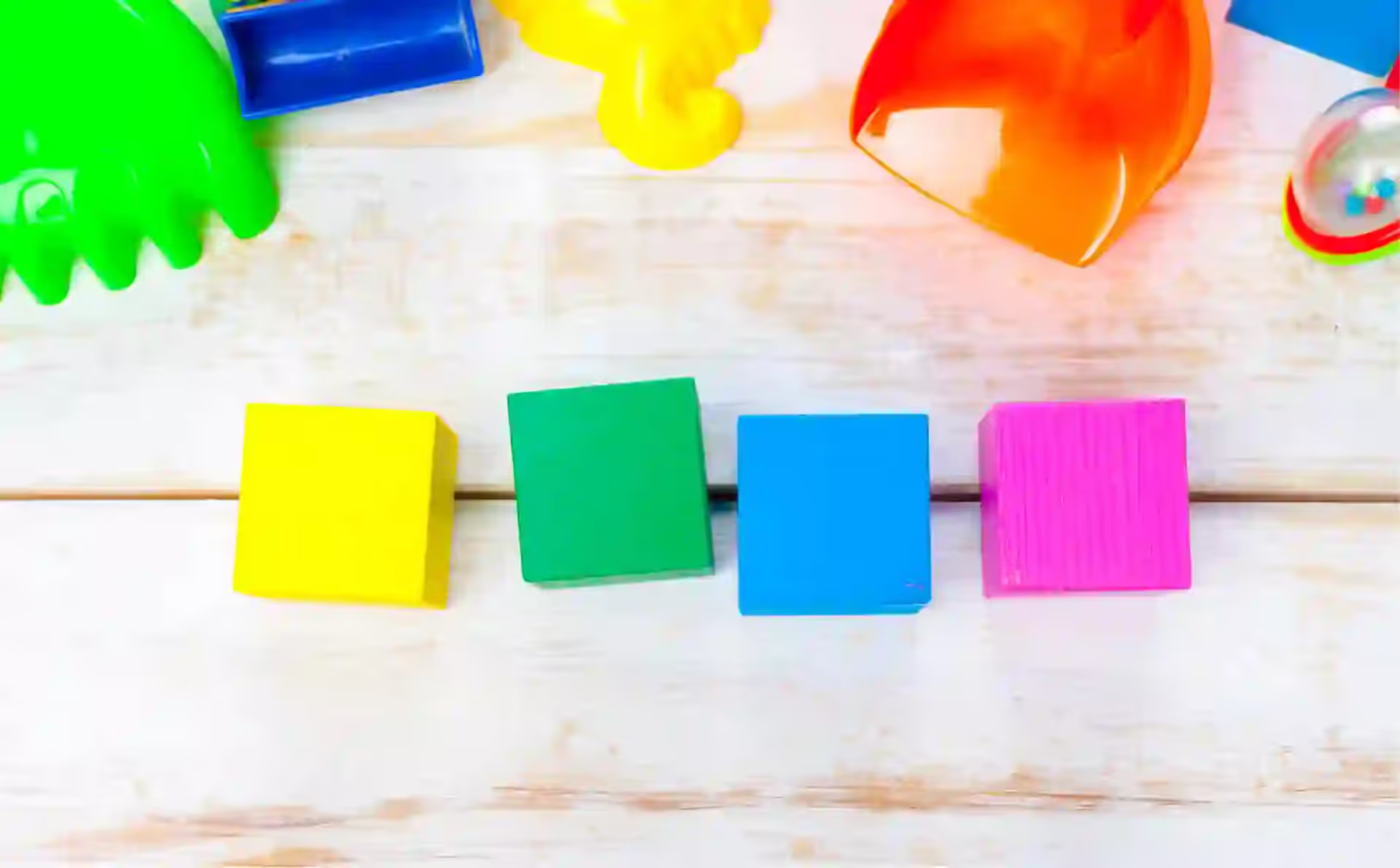
Your 22-month-old reaches for the colorful magnetic tiles her older sibling just built into a tower. Her eyes light up as the pieces snap together with that satisfying click. She immediately puts one in her mouth to explore—a completely normal developmental behavior that, in this moment, could be life-threatening.
This scenario plays out in homes across America every day. Magnetic building toys have exploded in popularity over the past decade, becoming a staple in playrooms, preschool classrooms, and therapy centers. Parents love them for promoting creativity, spatial reasoning, and open-ended play. Kids are mesmerized by the magical way pieces connect and hold together.
But beneath the educational benefits and Instagram-worthy creations lies a serious safety concern that's sent thousands of children to emergency rooms. The very feature that makes these toys so engaging—powerful magnets—creates hazards that can be catastrophic for young children, particularly those under age three.
The question isn't whether magnetic blocks are inherently dangerous. It's whether they're appropriate for toddlers who are developmentally programmed to explore everything with their mouths, lack the judgment to understand consequences, and play with toys in ways manufacturers never intended. This isn't about fearmongering or declaring magnetic blocks universally unsafe. It's about understanding specific risks, recognizing what makes toddlers uniquely vulnerable, knowing which products and circumstances create danger, and making informed decisions based on your individual child and situation.
The stakes are real. According to the U.S. Consumer Product Safety Commission, an estimated 2,400 magnet-related emergency department visits occur annually, with children under age 6 accounting for the majority. Many involve magnetic building toys. Some cases result in surgery, intestinal perforation, and life-threatening complications.
Yet with proper understanding, supervision, and age-appropriate product selection, magnetic play can be introduced safely to young children in specific contexts. The key is knowing exactly what you're dealing with, what can go wrong, and how to prevent it.
To grasp why magnetic blocks pose particular dangers for children under three, you need to understand toddler development and how it intersects with toy safety.
Oral exploration isn't optional—it's developmental necessity. From birth through approximately 24-36 months, children learn about their world primarily through mouthing objects. This isn't misbehavior or poor parenting. It's how toddler brains are wired. The mouth has more sensory nerve endings than hands at this age, making it the most effective tool for gathering information about texture, size, shape, and properties of objects.
Pediatric research documented by child development experts shows that hand-to-mouth behavior peaks around 12-18 months and gradually decreases but doesn't disappear until closer to age 3 or 4. Some children maintain mouthing behaviors longer, particularly those with sensory processing differences or developmental delays.
This means that no matter how closely you supervise, no matter how many times you say "don't put that in your mouth," toddlers will mouth toys. It's not a question of if but when. Toy safety for this age group must assume mouthing will occur.
Toddlers lack impulse control and risk assessment. The prefrontal cortex—brain region responsible for judgment, impulse control, and understanding consequences—doesn't fully develop until the mid-20s. In toddlers, it's barely beginning development. They can't think "this could hurt me" or "I should stop." They see something interesting, they explore it. Period.
This developmental reality means relying on toddlers to "be careful" or "remember the rules" is futile. Safety must be built into the toy itself and the environment, not dependent on toddler judgment.
Fine motor skills are emerging but unreliable. Between 18-36 months, children develop pincer grasp, can manipulate objects with increasing precision, and begin intentional construction play. However, these skills are inconsistent. A toddler might carefully build one moment and throw blocks the next. They might handle toys gently during supervised play and bash them against the wall when you're not looking.
This unpredictability matters for magnetic toys because their safety often depends on intact housing keeping magnets enclosed. A toy that survives gentle play might crack under toddler's rougher handling, suddenly exposing magnets that were safely encased moments before.
Small object fascination is intense at this age. Toddlers are drawn to tiny objects—beads, buttons, coins, small toy parts—with magnetic intensity (pun intended). The smaller and more manipulable, the more fascinating. This makes small magnetic balls and loose magnets particularly dangerous because they're exactly the size and type of object toddlers find irresistible.
Not all magnetic blocks are created equal. Understanding different types, how they're constructed, and where magnets are positioned helps assess risk levels.
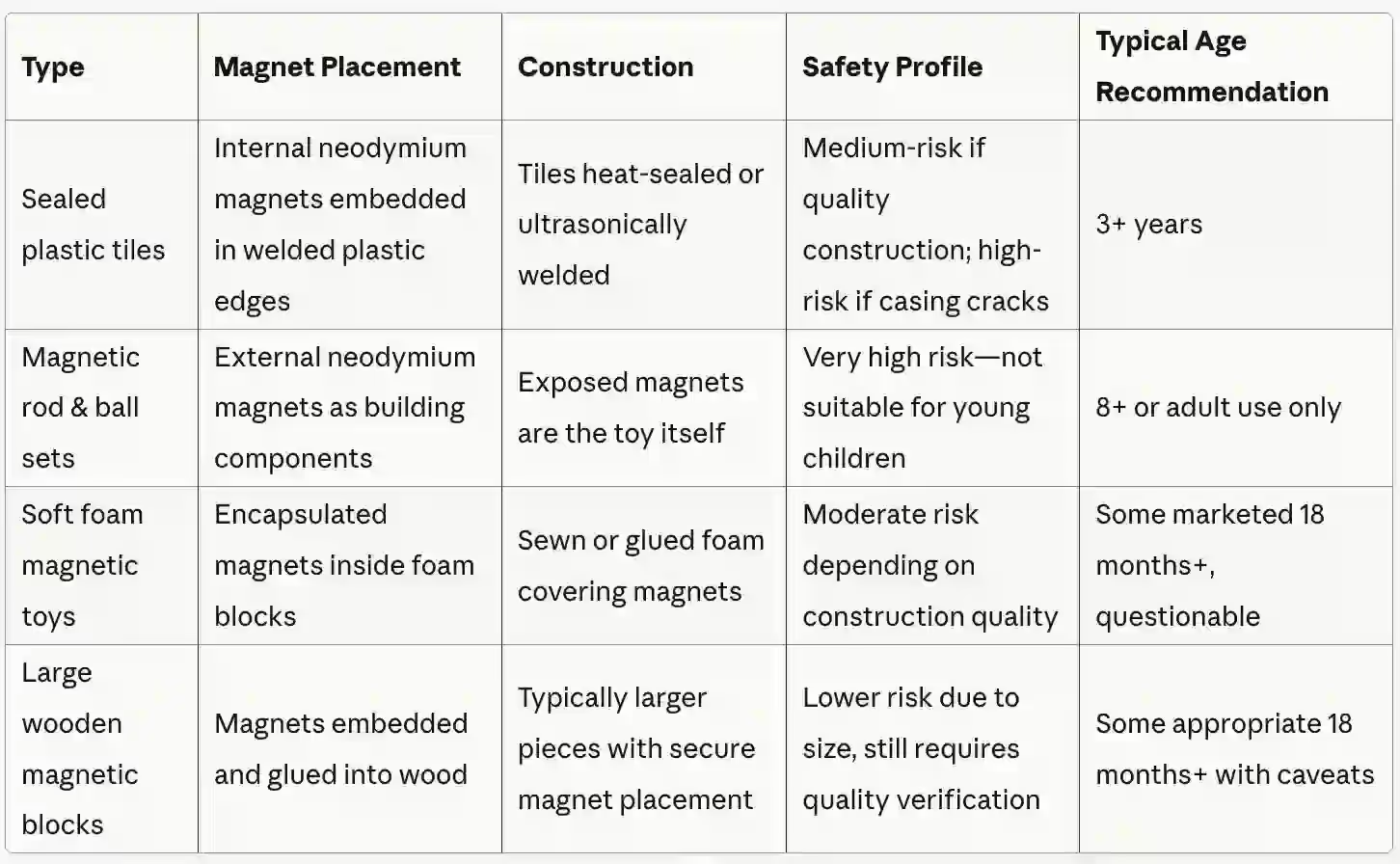
However, "wooden" doesn't automatically mean "safe." Quality matters enormously. Cheap wooden magnetic toys might have loose magnets that can be pried out, or small pieces still posing choking risks. Size is also critical—blocks need to be large enough that the entire piece can't fit in a toddler's mouth, even if magnets are secure.
If you scan magnetic building toy packages, nearly all major brands prominently display "3+" or "Ages 3 and up" labels. This isn't overprotection or manufacturers being overly cautious—it's based on multiple intersecting safety factors.
Legal liability drives age labeling as much as safety science. When a product contains components meeting small parts definitions or other age-restricted features under CPSC and ASTM standards, manufacturers must label appropriately. Failing to do so opens them to liability if injuries occur.
A "3+" label provides legal protection if a parent gives the toy to a younger child who then chokes or swallows magnets. The manufacturer can argue they provided appropriate warning. Without proper labeling, liability increases substantially.
This legal reality means companies err toward caution. Even if testing suggests a toy might be safe for some children under 3, the liability risk of inadequate labeling outweighs potential market expansion into younger age groups.
Durability testing reveals safety degradation over time. New magnetic tiles straight from the package might have perfectly sealed magnets. But ASTM testing subjects toys to repeated drops, impacts, flexing, pulling, and stress simulating months or years of play. If magnets become accessible during this testing, the toy receives 3+ labeling regardless of initial construction quality.
This matters because toys in real homes don't stay pristine. They're dropped, stepped on, thrown, left outside, run over with ride-on toys, and subjected to creative destruction. A toy that seems safe initially might develop cracks or weak points exposing magnets after weeks of toddler use.
Three-year-olds are presumed to have moved beyond constant mouthing, developed some judgment about what goes in mouths, and play somewhat less destructively than toddlers. While this isn't universally true, it's the developmental assumption underlying 3+ labeling.
The gap between "labeled 3+" and "marketed to parents of toddlers" creates problems. Walk into any toy store and you'll see magnetic tiles displayed prominently in toddler sections, featured in "18 months+" catalogs, and marketed with images of very young children playing. This creates disconnect between legal safety requirements and marketing practices.
Some companies navigate this by creating "toddler-specific" lines with larger pieces, claiming enhanced construction, or different materials. These products might be labeled 18 months+ or 2+. Whether they're genuinely safer or just clever marketing varies dramatically by manufacturer and specific product.
Parents face the dilemma of seeing younger kids playing with magnetic blocks everywhere—in playgroups, daycare, friends' homes, social media—while packages clearly state 3+. This normalization makes age warnings feel like excessive caution rather than legitimate safety guidance.
Voluntary recalls illuminate ongoing risks. The CPSC regularly announces recalls of magnetic toys for various defects: magnets becoming detached, stronger than allowed magnetic strength, inadequate age labeling, or products marketed incorrectly to younger ages.
These recalls prove that 3+ labeling isn't just legal cover—it reflects real risks manufacturers and regulators have identified. Products violating safety standards or causing injuries get pulled from the market, but often only after problems emerge. Checking CPSC recall lists before purchasing any magnetic toy isn't paranoia—it's due diligence ensuring the specific product you're considering hasn't been identified as problematic.
The unequivocal answer to "should toddlers under 3 use standard magnetic tiles?" is no—not without extraordinary circumstances and precautions. However, some contexts and products allow limited, heavily supervised magnetic play for younger children when specific conditions are met.
Truly oversized magnetic blocks designed for toddlers exist but remain rare. A few manufacturers produce magnetic building toys specifically engineered for 18+ months with genuine safety adaptations:
These products undergo additional testing and often cost more due to specialized construction. They're not just standard tiles with an optimistic age label—they're fundamentally different designs. Even so, adult supervision remains essential.
Supervised play means something specific—not just "in the same room." Many parents hear "supervise young children" and interpret it as being nearby while occasionally glancing over. That's inadequate for toddlers with potentially dangerous toys.
Appropriate supervision for a toddler with magnetic toys means:
This level of supervision is exhausting and unsustainable for long periods. It's why even with "toddler-safe" magnetic toys, many experts recommend waiting until children naturally age out of constant mouthing before introducing magnetic play.
Environmental controls reduce but don't eliminate risk. If allowing magnetic play with a toddler, setup matters:
Even perfect setup doesn't prevent a determined toddler from pocketing a piece, hiding one in a toy, or finding it later after you've counted and stored the set.
Regular inspection catches deterioration before it becomes dangerous. Magnetic tiles don't last forever. Plastic cracks, seams weaken, repeated impacts create stress points. What was safe initially might develop problems over time.
Before each play session, examine every piece:
This inspection takes time but catches problems before a toddler discovers them with their mouth.
The cognitive burden of "safe" toddler magnetic play often outweighs benefits. Many parents who tried allowing carefully controlled magnetic play with toddlers report that the constant vigilance, anxiety about pieces being mouthed, frequent piece counting, and restriction of play duration made the experience stressful rather than enjoyable.
Waiting until age 3+ when kids naturally mouth toys less frequently and can better understand safety guidance often creates better, more relaxed play experiences for everyone involved.
Developmental readiness varies individually, not just by age. Some 2.5-year-olds have completely stopped mouthing toys and demonstrate mature play behavior. Others at 4 still explore everything orally. Age recommendations provide guidelines, but parents know their specific child's development.
A child who no longer mouths toys, follows directions reasonably well, has moved beyond throwing/banging play phase, and demonstrates capacity for careful manipulation might be ready for supervised magnetic play before official 3+ recommendation. Conversely, a 3.5-year-old who still mouths everything isn't ready regardless of chronological age.
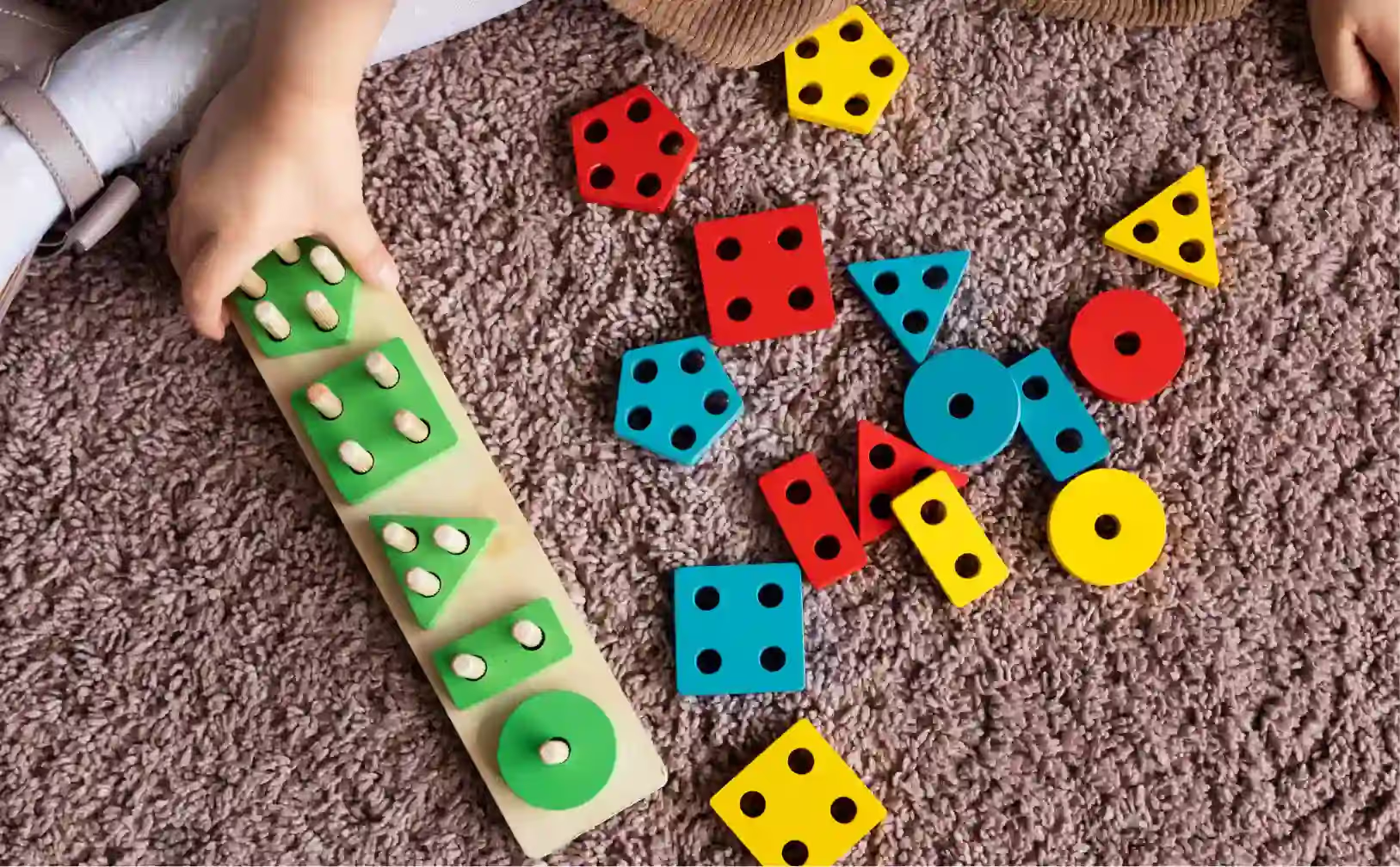
Acknowledging dangers doesn't require dismissing genuine developmental benefits magnetic toys offer when used appropriately by children who are developmentally ready.
Parents wanting construction toys for toddlers have numerous options providing developmental benefits without magnet ingestion risks.
Large wooden unit blocks remain gold standard for toddler construction play. Simple wooden blocks in various shapes—cubes, rectangles, cylinders, triangles—offer unlimited creative possibilities. They're hefty enough that even small pieces don't pose choking hazards for toddlers (when appropriately sized). They're durable enough to last generations. And they require children to build with balance and gravity rather than relying on magnets to defy physics. Quality wooden blocks aren't cheap, but they're investments lasting through multiple children and often becoming family heirlooms. They develop all the same spatial reasoning, engineering thinking, and problem-solving skills magnetic toys offer without any ingestion danger.
Soft foam building blocks provide tactile variety. Large foam blocks (8+ inches) allow whole-body construction play, fort-building, and imaginative scenarios. They're light enough for toddlers to manipulate easily but large enough to eliminate choking concerns. The soft material means no injury from falling structures—important for enthusiastic toddler builders.
Silicone stacking toys combine flexibility with safety. Silicone cups, rings, and other stackable toys are easy to grasp, can be mouthed safely (silicone is non-toxic and doesn't splinter or break), and offer tactile interest. They don't connect like magnetic tiles, but they stack, nest, and balance in ways that teach similar concepts.
Chunky bristle blocks have interlocking features without magnets or small parts. These blocks feature large bristles that connect when pressed together, providing some of the satisfying connection magnetic tiles offer. Pieces are sized appropriately for toddlers (3+ inches), construction is sturdy, and the bristle mechanism has no small parts to ingest.
Mega-sized interlocking blocks scale traditional building blocks for toddler safety. Several manufacturers make oversized versions of traditional interlocking blocks—essentially giant Lego-style toys specifically engineered for toddlers. Pieces are 2-4 times standard size, eliminating small parts concerns while teaching the same building and connection concepts.
Cardboard construction kits offer creative, eco-friendly building. Large cardboard pieces (tubes, panels, connectors) allow building forts, vehicles, and structures at child scale. They're inexpensive, recyclable, and develop spatial skills through three-dimensional construction without any ingestion risk.
Natural materials—stones, sticks, pinecones—provide open-ended building opportunities. Outdoor loose parts play with natural objects combines construction with sensory experience and nature connection. These materials are appropriately sized (especially if curated by adults), completely non-toxic, and encourage creativity without predetermined forms.
The common thread: all these alternatives share large size, durable construction, and no small parts. They teach the same concepts magnetic blocks offer—spatial reasoning, engineering, creativity, problem-solving—while being developmentally appropriate for children still exploring the world through mouthing.
Can toddlers use magnetic toys if supervised?
"Supervised" is subjective and often overestimated. For true safety with toddlers under 3, supervision must mean constant, arm's-reach attention with ability to immediately intervene when toys approach mouth. This level of supervision is exhausting and unsustainable for extended periods. Even with perfect supervision, ingestion incidents happen in seconds—the moment you answer the doorbell or glance at your phone.
Additionally, supervision doesn't prevent pieces from being hidden in pockets, stuffed in couch cushions, or found later when you're not supervising. Unless using genuinely oversized toddler-specific magnetic blocks (rare and expensive) or wooden magnetic blocks with deeply embedded, inaccessible magnets, the risks typically outweigh benefits even with supervision. Waiting until age 3+ when children naturally mouth less frequently creates safer play with less stress.
How big should a toy part be to be safe for toddlers?
The CPSC small parts cylinder test provides official guidance: objects fitting entirely within a cylinder measuring approximately 1.25 inches diameter by 2.25 inches deep pose choking hazards for children under 3. In practical terms, if a toy or toy part is smaller than a toilet paper tube interior or a medicine dosing cup, it's potentially dangerous.
For magnetic toys specifically, the entire piece needs to exceed small parts dimensions—a 3-inch magnetic tile is safe by size, but if the magnets inside can come loose, those individual 8-10mm magnets are absolutely choking hazards. This means size safety requires both large overall pieces AND construction quality ensuring no small internal components become accessible.
Are magnets in toys regulated by law?
Yes, but with complexity. The Consumer Product Safety Improvement Act (CPSIA) mandates compliance with ASTM F963 toy safety standards, which include specific magnet requirements. Toys for children under 8 must have magnets either below certain strength thresholds or inaccessible through normal use and abuse testing.
However, enforcement relies partly on manufacturer self-certification. The CPSC conducts spot testing and investigates complaints, but they can't test every product entering the U.S. market. This means some unsafe magnetic toys slip through, particularly imports from manufacturers ignoring U.S. regulations.
Additionally, magnetic items not marketed as toys (adult desk toys, craft supplies, science equipment) aren't covered by toy safety standards but still end up in children's hands. This regulatory gap has contributed to injuries from products like magnetic ball sets.
How do I tell if a magnetic toy is truly sealed?
Examine the toy closely before purchase and regularly during use:
What if my toddler already uses magnetic tiles without problems?
"We've been lucky so far" doesn't eliminate risk going forward. Many ingestion incidents happen after months or years of safe play—the toy develops a crack, a piece gets stepped on, repeated drops finally break a seal, or a child who previously didn't mouth toys suddenly puts one in their mouth.
Consider transitioning away from magnetic tiles for your under-3 child even if they've used them without incident. If you choose to continue, implement strict protocols: constant supervision, regular inspection for damage, piece counting before and after each session, and having alternative toys available for when you can't provide intensive supervision.
Remember that developmental norms mean most children under 3 will mouth objects. Your specific child might be an exception, but many parents who thought their toddler "didn't put toys in their mouth" discovered otherwise when emergency room visits revealed ingested magnets.
Are there certifications that guarantee magnetic toy safety?
No certification guarantees absolute safety—only that the product met specific standards at time of testing. However, legitimate certifications indicate substantially better safety than products without them.
Look for:
These certifications mean the product underwent testing for magnet strength, accessibility, durability, and chemical safety. Products without clear certification documentation should be avoided regardless of price or marketing claims.
Even certified products require regular inspection during use. Certification confirms initial safety, not immunity to damage from abuse or wear.
Can magnetic toys be used in therapy or educational settings with toddlers?
Occupational therapists and early educators sometimes use magnetic toys with toddlers under carefully controlled conditions completely unlike home use:
These clinical/therapeutic contexts involve professional training, liability considerations, and safety protocols far exceeding typical home situations. What's appropriate in occupational therapy sessions doesn't translate to safe home play.
If your child uses magnetic toys in therapy, discuss with the therapist whether home use is recommended and under what conditions. Many therapists advise against home use for under-3 precisely because maintaining clinical supervision standards at home isn't feasible.
The question "are magnetic blocks safe for toddlers under 3?" doesn't have a simple yes or no answer. It depends on which magnetic blocks, under what conditions, with which individual child, and balanced against what alternatives.
Standard magnetic building tiles labeled 3+ are not safe for toddlers under that age. The age recommendation exists for legitimate safety reasons backed by developmental science, injury data, and engineering testing. Parents who give these toys to younger children—whether due to marketing normalization, sibling hand-me-downs, or belief that their child is unusually mature—are accepting risks that have resulted in thousands of emergency room visits and multiple deaths.
That said, limited magnetic play might be introduced to some nearly-3 toddlers under extraordinary supervision with genuinely oversized, toddler-specific magnetic blocks from reputable manufacturers. This represents edge-case exception requiring exhausting vigilance, not general recommendation.
For the vast majority of toddlers under 3, safer alternatives—wooden blocks, foam builders, large interlocking toys, natural materials—provide the same developmental benefits without ingestion risks. The developmental window for learning spatial reasoning and engineering concepts is years long. Waiting a few months or a year to introduce magnetic toys doesn't deprive children of educational opportunities. It just postpones them until children are developmentally ready to benefit fully without serious safety risks.
Your responsibility as a parent isn't just following age labels—it's understanding why they exist. Age recommendations aren't arbitrary liability protection or overprotective caution. They're based on documented injuries, developmental science, and safety testing. Treating them as guidelines to be carefully considered rather than obstacles to be dismissed protects your child and children who might inherit or share toys you purchase.
Examine toys proactively rather than assuming packaging claims are accurate. Look for specific certifications, research brands, check recall lists, inspect construction quality, and verify age appropriateness through multiple sources beyond marketing. The toy industry has legitimate safety leaders and also cheap importers ignoring regulations. Your due diligence determines which products enter your home.
Never rely solely on supervision to make unsafe toys safe. Constant toddler supervision is impossible to maintain. Ingestion happens in seconds during inevitable moments of distraction. Building safety into the toy itself through appropriate age selection and quality products creates defense that survives human imperfection.
The goal isn't eliminating all risk from childhood—impossible and undesirable. It's making informed decisions that preserve developmental opportunities while avoiding preventable catastrophic harm. Magnetic blocks offer wonderful play experiences at appropriate ages. For toddlers under 3, waiting until they're ready creates better, safer play for everyone.
When that magnetic tower finally comes tumbling down after your 3.5-year-old carefully constructs it, the crash should be dramatic, exciting, and completely safe. Not a rushed trip to the emergency room because a toddler swallowed what they were developmentally programmed to explore with their mouth. Build wisely. Build safely. And build when the time is right.
NOVEMBER 20, 2025
NOVEMBER 20, 2025
NOVEMBER 20, 2025
NOVEMBER 20, 2025
NOVEMBER 20, 2025